


 Shkruar nga Pamfleti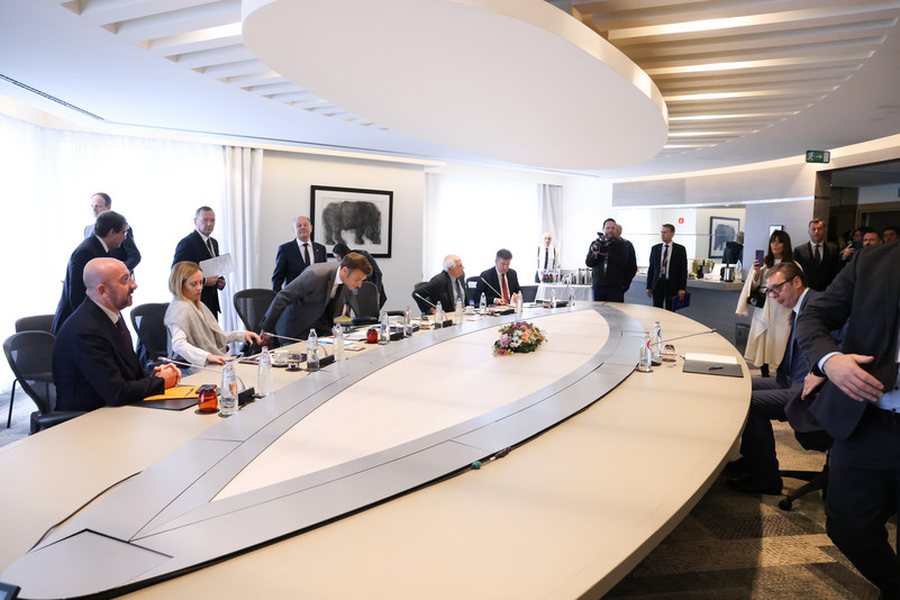
Kurti and Vucic do not like each other very much. It is not about mutual trust. They will only comply with strong pressure from the EU, especially from its largest member states, and from the US. This pressure must be accompanied by credible guarantees that there will be consequences for going back on agreed commitments...
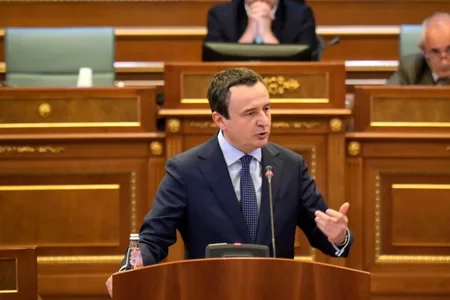
Kosovo Prime Minister Albin Kurti and Serbian President Aleksandar Vucic met separately with senior European leaders on the sidelines of the European Council in Brussels last week to discuss a new US-EU plan to normalize their relationship.
Although the talks failed, the US-EU proposal, which would require mutual compromise and promises mutual benefits, is likely to be the best deal the two sides will reach. They must embrace it and the EU must stand by it, using its enlargement policy and its financial aid as tools.
Kosovo fought to break away from Serbia in the late 1990s and declared independence in 2008. But Belgrade has never recognized Pristina, and tensions between the neighbors have flared this year over demands for autonomy by ethnic Serbs living in north of Kosovo.
In February, Brussels announced that Kosovo and Serbia had agreed on a plan for a "path to normalization". Indeed, they only pretended to agree. Since then, neither has spent on implementing any of its key provisions. And in September, a Serbian paramilitary group clashed with Kosovo police.
Belgrade and Pristina have many differences, but two of them stand out. The first concerns Kosovo's relations with other countries and its membership in international organizations. Serbia sees Kosovo as a breakaway province rather than an independent state and pressures others not to recognize it or accept it as a member.
Five EU member states – Cyprus, Greece, Romania, Slovakia and Spain – do not recognize Kosovo. Spain won't even accept their passports. The second concerns the Serbian minority of Kosovo. This numbers about 100,000, about half living near the Serbian border in northern Kosovo. While Serbia officially claims all of Kosovo as its own, it really only wants the four northern municipalities where Serbs are a large majority.
Belgrade and Pristina both exercise sovereign functions in this territory in an unstable and increasingly dangerous balance. Kosovo runs the police, while Serbia runs the schools. Kosovo operates the border points, while Serbia runs the hospitals and clinics. Both work with municipal governments. Serbia spends much more than Kosovo for this area and the population is loyal to it.
The newly proposed normalization plan (a small change to the EU's February 2023 plan) deals with both major disagreements. It asks Serbia to act as if it recognizes Kosovo: to stop opposing the decisions of other governments to recognize it or to accept it as a member of international organizations, including the UN.
For its part, Kosovo must fulfill previous commitments to give its Serbian minority a degree of self-government and access to Serbian services. The latest escalation raises the specter of a return to conflict and thus makes the acceptance of this plan by both sides more urgent. The main fault in the recent intensification of hostilities lies in the overlapping claims of Pristina and Belgrade to the northern municipalities.
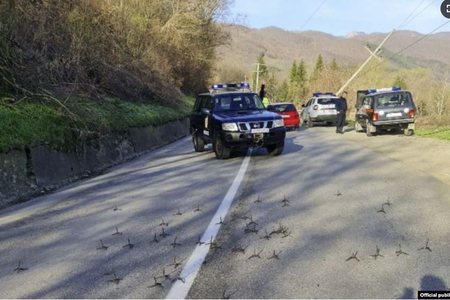
In September, a Kosovo policeman and three Serbs died in a clash between police and a Serbian paramilitary group, and police found a large cache of military-grade weapons. Milan Radoicic, a local politician and businessman with close ties to President Vucic, has claimed responsibility for the clash; he is already under US and UK sanctions, and the EU may similarly consider imposing an asset freeze and travel ban.
The newly proposed scheme, presented by the five European and American envoys in separate meetings with Kurt and Vučić, would end the volatile and violence-prone situation of Serbia and Kosovo asserting overlapping sovereignty over northern Kosovo. . In its place, the Serbs of northern Kosovo would be governed primarily within the wider framework of Kosovo.
The Serbs of northern Kosovo are the key to the success or failure of this agreement. If the self-governing institutions it provides for them function well and meet their needs, their community can thrive. Belgrade and Pristina will have to cooperate in providing education, medical care, a safe and secure environment, jobs and social security, among others, with Belgrade providing resources and respecting Kosovo's jurisdiction.
Mutual dislike
Reciprocity and cooperation should be the glue that holds the rest of the deal together. But if both sides fail, relations between these neighbors will remain in deep freeze. The risks of further deadly violence – and possibly armed conflict – will persist.
Kurti and Vucic do not like each other very much. It is not about mutual trust. They will only comply with strong pressure from the EU, especially from its largest member states, and from the US. This pressure must be accompanied by credible guarantees that there will be consequences for going back on agreed commitments.
The EU can also promise rewards for implementation, such as lifting punitive measures it has imposed on Kosovo for past non-compliance and forwarding Kosovo's membership application to the European Commission for consideration. Serbia, already in membership talks, would welcome promises for investments from member states.
Even this may not be enough. If further talks succeed, Belgrade and Pristina may be unwilling to do more than once again pretend they agree. The challenge for the EU will then be to do what it can to prevent escalation while pushing the parties to accept whatever modest improvements can be achieved. If nothing else, the current agreement will at least keep alive the hope that the various leaders in tomorrow's Kosovo and Serbia can finally find a way to get along./ Adapted "Pamphlet" from "Euobserver"


Lini një Përgjigje