


 Shkruar nga Pamfleti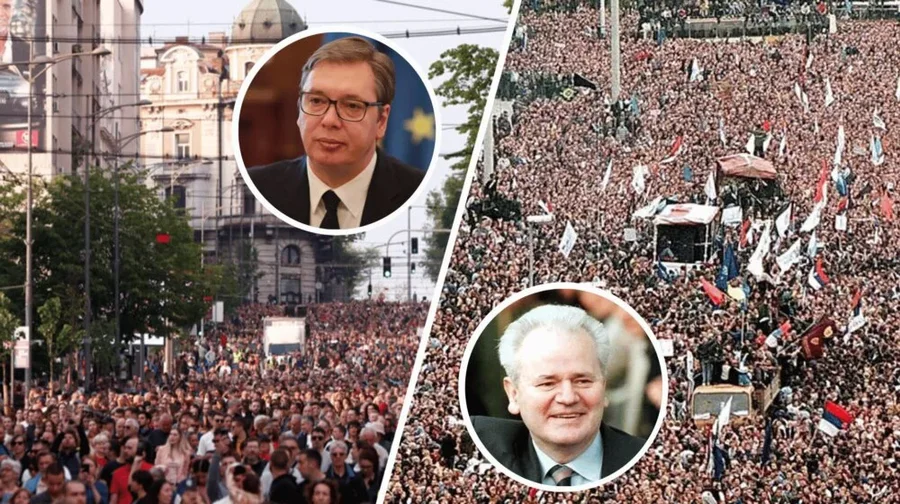
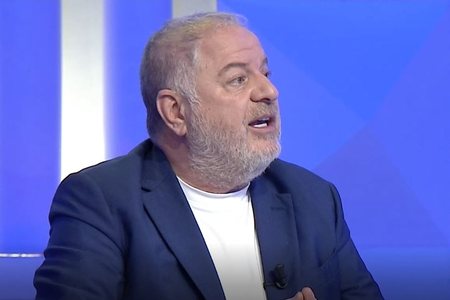
The Serbian analyst, Milosh Bešič, emphasized that there is a possibility that Kosovo itself will be the reason for the fall of the regime of Aleksandër Vučič.
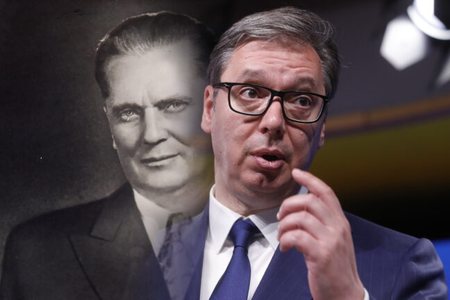
Comparisons between the former Milosevic regime and the current one are increasingly common and quite logical. But, the question arises, what was the breaking point of the fall of the first and could it be, perhaps, the same as that of the fall of the second?
Similarities exist, from election theft, poverty, inflation, partiocracy or possible "threats of a new war"?
For various Serbian analysts, the wars and sanctions were not decisive for Milosevic's "removal" from the historical scene, and therefore, they add, it is unlikely to be the cause of the fall of Aleksandar Vučić's regime.
But between the two regimes, according to them, there are similarities but also big differences. For Milosh Bešić, a professor at the Faculty of Political Sciences in Serbia and a political analyst, there is no doubt that there are similarities between the Milosevic and Vučić regimes, but, as he points out, there are some essential details that make the difference, such as international support, which Vucic enjoys.
" The first and key difference is that Milosevic, in his mature and later stages, operated under conditions of complete international delegitimization. This international community imposed sanctions on Milosevic and invested very, very actively in the non-governmental sector and the anti-government media of the time. The resistance was directly financed with substantial sums of money. Today's Western international community has, at least, a sympathetic attitude towards Vučić. We can even say that he supports it, because apparently this government is strategically fulfilling the agenda of the power centers of the Western bloc countries. Therefore, this power is not only not delegitimized by the West, but quite the opposite, the West, in order to achieve its agenda, always finds ways to legitimize it and give it authority to the extent that it is necessary and in which it it helps keep him in power ," he said.
Another difference is that during Milosevic's time there was open media manipulation, especially by the public service, but those media did not have the same approach as today under the control of the SNS authorities, the party led by Vucic, who use sophisticated methods to silence the opposition.
" In them, the opposition was then an abstract concept that was spoken in the third person plural, where "they" were described as "traitors" and the like. However, there were no ad hominem attacks and tabloid reports, but the journalists of that time made those personal attacks completely not objectively but quite professionally. The strategy of the current media is very simple - that the opposition does not exist, if it exists, what it has to say is not heard, and if it announces something, everyone makes sure that no one hears it ," said Serbian analyst Bešić.
The third difference, according to the Serbian analyst, is that in all the mechanisms of the dominant SPS party, Milosevic, there was a certain measure, to what extent and to what extent it goes and what is simply not done. But according to him, under Vucic's rule, there are no limits.
" Today there is simply no limit and everything is allowed to justify the legitimacy and strength of the dominant party ", he emphasized.
According to Besic, the important difference for this kind of comparison is that the existing government learned a number of things from the mistakes of the SPS led by Milosevic.
" There is no "moderate" control of the institutions, but complete. Even within those institutions there are no "moderate" instructions on what will happen in them, but only direct planning. Of course, even in the time of Milosevic, the institutions were not independent and worked in the service of the regime, but they never worked in a coordinated way to achieve some specific goals ", he emphasized.
The factor of Milosevic's downfall for Miloš Bešić was simple - Kosovo.
Milosevic, regardless of inflation, international sanctions and everything else, Milosevic would not have lost power if he had not lost the war in Kosovo. According to him, the signing of the Kumanovo Agreement was what brought the end of the Milosevic regime.
"Of course, Kosovo is symbolic and we must not forget that the level of nationalism in Serbia is very high and strong - regardless of the civil discourse, the left forces or the supporters of the European Union, it is not phraseology when talking about Kosovo and its meaning mythical for the citizens of Serbia. It is something that has a special connotation, so at the moment when the army left Kosovo after the signing of the Kumanovo Agreement, at that moment his regime was delegitimized, it was the final straw ," said Bešič.
The Serbian analyst, Milosh Bešič, emphasized that there is a possibility that Kosovo itself will be the reason for the fall of the regime of Aleksandër Vučič.
" Everything can be rehabilitated in Serbia, with constant media stories about development and foreign investment being portrayed as "phenomenal". But if Kosovo were to get a seat in the United Nations, no media (re)construction would help. This government presents itself as the "guardian of Kosovo" and a large number of their voters sincerely believe that they will keep Kosovo as part of Serbia. This is the only danger for this government at the moment ", concluded Serbian analyst Milosh Bešič. / Adapted "Pamphlet" from " Danas "



Lini një Përgjigje