


 Shkruar nga Pamfleti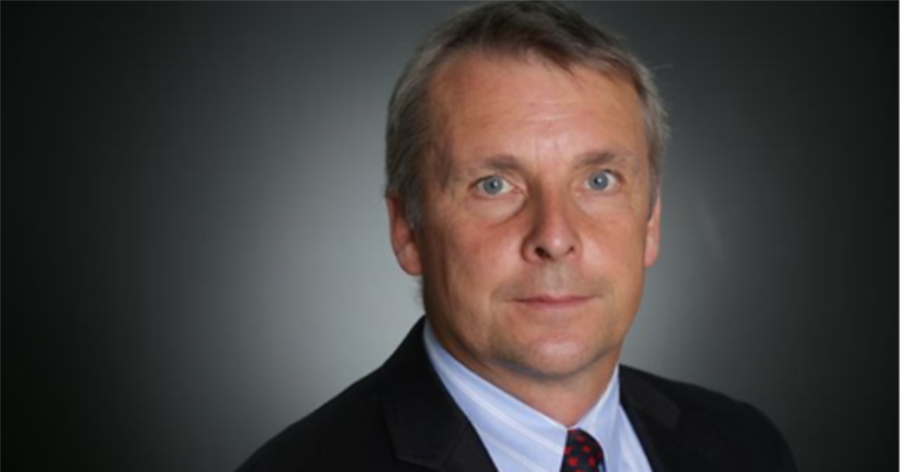
The German Ambassador to Pristina, Jorn Rohde, said on Wednesday that he had expressed to the President of Kosovo, Vjosa Osmani, his growing concern over the delays in the formation of new institutions in Kosovo.
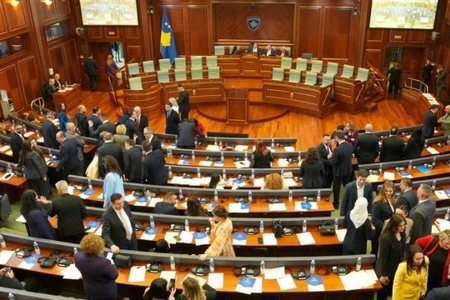
Nearly three months after the February 9 parliamentary elections, Kosovo has still not formed its institutions, due to disagreements among some of the largest parliamentary parties over the post of Speaker of the Assembly.
In a reaction on the Bluesky social network, Rohde said that political parties in Kosovo must act quickly to form institutions and must put state interests before party interests.
"In today's rapidly changing global landscape, swift action is imperative and matters of state must always come before party politics," Rohde wrote.
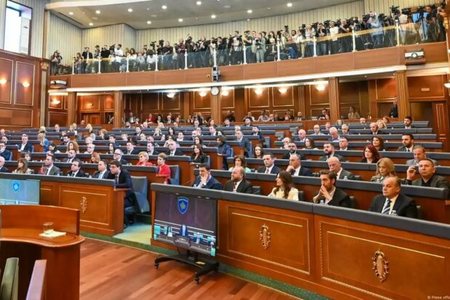
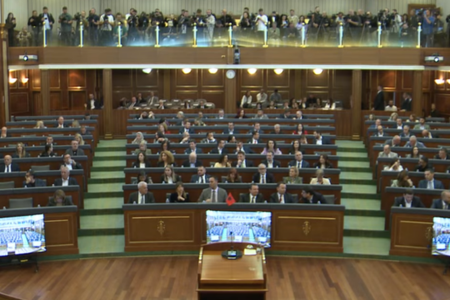
The constitution of the Assembly - launched on April 15 - has failed eight times in a row so far, because the winning party, the Vetëvendosje Movement, is failing to secure the necessary 61 votes for its candidate for president, Albulena Haxhiu.
Only after the constitution of the Assembly can the path for the formation of the new Government be opened. Vetëvendosje has 48 seats out of the 120 seats in the Kosovo Assembly, and Haxhiu has so far received the most votes, 57.
Haxhiu is seen by the Democratic Party of Kosovo (PDK) and the Alliance for the Future of Kosovo (AAK) as a "divisive figure", while the Democratic League of Kosovo (LDK) does not want to vote for any candidate from the winning party.
Vetëvendosje insists that Haxhiu is a deserving candidate and, despite calling for a political agreement, has rejected the possibility of proposing any other candidate besides her.
Vetëvendosje won the February 9 elections, with about 42 percent of the vote, or 48 seats. It needs at least 61 votes to form a new government. After LVV, PDK won the most votes, with 24 seats, and then LDK with 20.
AAK and Nisma won eight seats, three of which belonged to the latter. The European Union said days ago that Kosovo must quickly form new institutions./ REL



Lini një Përgjigje