


 Shkruar nga Pamfleti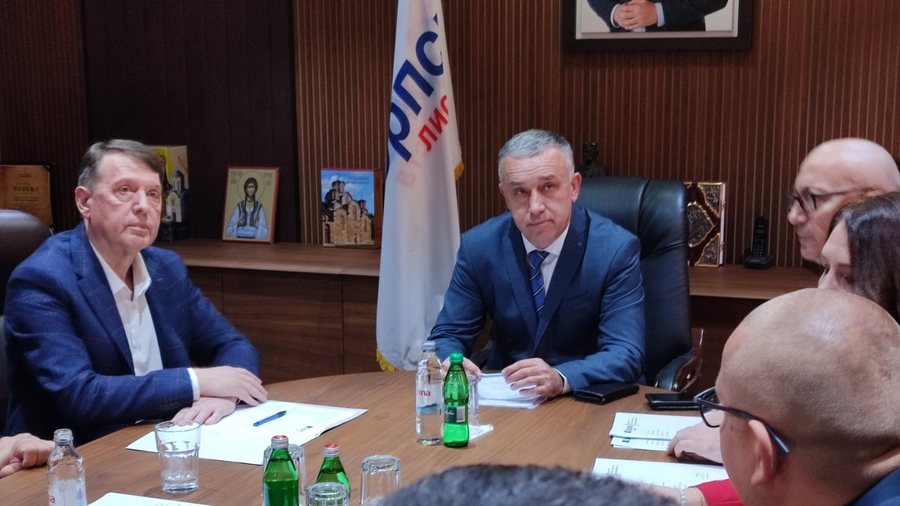
Lista Serbe, the largest entity of Serbs in Kosovo, has announced that it will complain to the Electoral Panel for Complaints and Submissions (PZAP), a day after the Central Electoral Commission of Kosovo (CEC), did not certify it for participation in the 9th elections February.
The chairman of the Serbian List, Zlatan Ellek, said that the decision of the CEC is undemocratic and against the Serbs.
"During the day we will submit a complaint to PZAP and I expect a clear decision that will reject this absurd, anti-Serbian and undemocratic decision of [Albin] Kurti", declared the head of the Serbian List, Zlatan Ellek in a press conference.
Ellek said that the decision of the CEC was ordered by the Prime Minister of Kosovo, Albin Kurti, for whom he said that he "wants to eliminate the Serbs from these lands".
"This is institutional and legal violence against the Serbian people and the Serbian List, because Kurti does not want to see the deputies of the Serbian List in the Parliament of Kosovo, but wants to have convinced Serbs as the so-called minister, Mr. [Nenad] Rashiq", emphasized Ellek.
The Central Election Commission (CEC) on Monday did not certify the Serbian List for participation in the February 9 parliamentary elections, after two CEC members from the ruling party, Lévizja Vetëvendosje - Sami Kurteshi and Albin Krasniqi, voted against.
Justifying this decision, Kurteshi stated that the Serbian List does not recognize Kosovo as a state and regularly uses the term "Kosova and Metohia" or the phrase "Long live Serbia."
But, responding to Kurtesh's claims, the chairman of the Serbian List, Ellek, said that the term "Kosovo and Metohia is completely legal, because it represents a toponym".
"And the fact that instead of 'Long live the Republic of Kosovo' I said 'Long live the Republic of Serbia'. Here, today I am telling you clearly that, first of all, I am proud to be a Serb and proud to have said those words. I stand strong after every word uttered", declared Ellek.
The decision for non-certification of the Serbian List was made despite the fact that the Office for Registration and Verification of Political Entities had recommended the certification of the Serbian List for the February 9 elections.
However, at Monday's meeting, Kurtesi leveled multiple criticisms of Lista Serba, including its ties to Serbian President Aleksandar Vučić and the party's former vice-president Milan Radočić, who resigned after claiming responsibility for the armed attack in Banjska.
Kosovo described the attack in which the police sergeant Afrim Bunjaku was killed as a terrorist act.
Meanwhile, the international community expressed concern that the process of certification of political entities was being influenced by political motives and called for the Serbian List to exercise its right to appeal to the Electoral Panel for Complaints and Submissions.
The US Embassy in Pristina stated that "it is imperative that the voters, not the political bodies, decide who represents them".
The Ambassador of Germany in Kosovo, Jörn Rohde, emphasized that an equal application of the law is necessary for everyone and that the certification process should not be politicized.
Similar reactions came from the European Union and the OSCE Mission.
The non-governmental organizations that monitor the election processes assessed that the CEC made a decision "contrary to the law and other regulations in force."
The February 9 elections will be the first regular parliamentary elections held in Kosovo since the declaration of independence in 2008.
Lista Serbe has previously announced that it will participate in the elections after a two-year boycott of political processes in Kosovo.
In addition to the Serbian List, five political entities representing the Serbian community have also been registered to participate in the February 9 parliamentary elections: Serbian Democracy, the Serbian National Movement for Freedom, Justice and Survival, the Party of Kosovo Serbs and the Civic Initiative for People's Justice./ REL


Lini një Përgjigje