


 Shkruar nga Madi Çurkoviç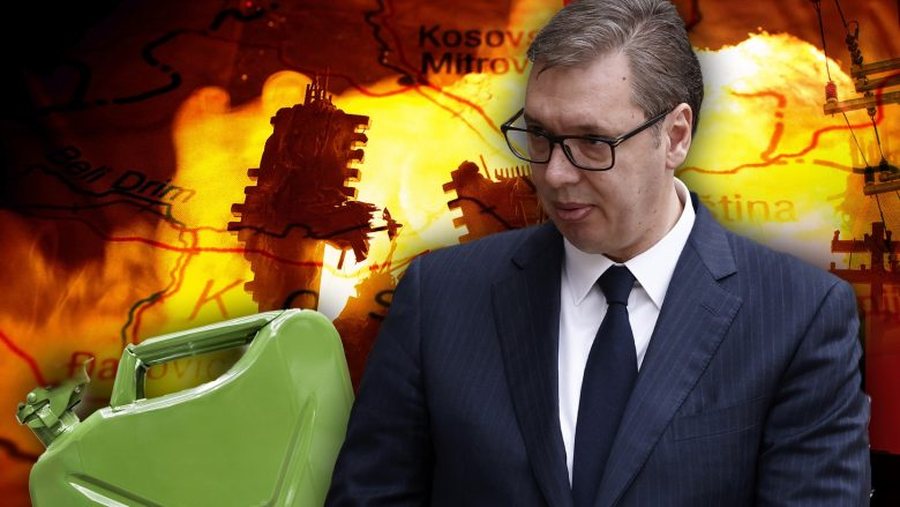
Now Vucic is relying on the old playbook of scapegoating the Kosovar Albanians to avoid anger and disillusionment with his regime. He has nothing to offer his citizens other than the distraction of a war to expand Serbia's regional control.
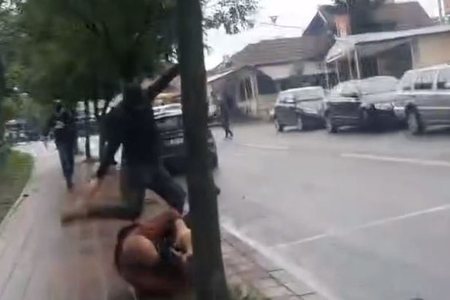
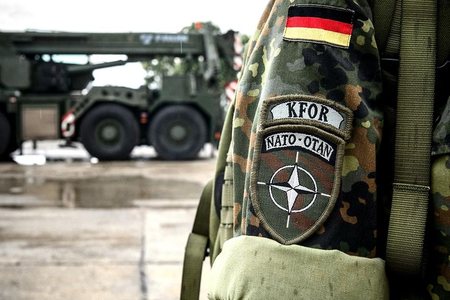
Violent clashes between Serb nationalists and NATO-led peacekeepers in northern Kosovo are the latest escalation of tensions between Serbs and Albanians, who make up the majority of the population. Burned cars, tear gas and stun grenades evoked images of the carnage of the 1990s last month, when locals in the Serb-dominated town of Zveīan protested the installation of a Kosovo Albanian mayor. Kosovo is located between Serbia and Albania and has been the site of terrible conflicts for decades.
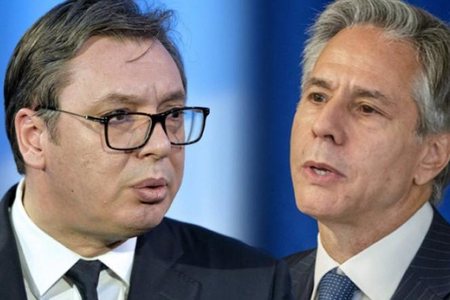
Then came the familiar nationalist fury from both sides. The Prime Minister of Kosovo, Albin Kurti, told CNN that many of the protesters "are being paid and ordered by Belgrade and admire President Putin."
Serbian President Aleksandar Vucic accused Kurt of creating a "big conflict between Serbs and NATO" and vowed to keep his armed forces on the Kosovo-Serbia border on the highest alert.
The denial of Kosovo's right to self-determination is a main pillar of Serbian nationalist ideology. Even today, Serbia does not recognize the independence of Kosovo, which was declared in 2008.
Ethnic tensions in the north of Kosovo are the product of drawing and resetting borders in the Balkans for more than a century. Many different ethnic groups are spread throughout the region, but none are tightly clustered in the same patch of land. Ethnic minorities fall within the boundaries of a different, dominant group, or in some cases like Serbia/Kosovo countries have claimed lands populated by an ethnic majority other than their own. Groups that differ from the dominant ethnicity of their state face intense oppression. After the breakup of Yugoslavia in the 1990s, areas that were particularly multi-ethnic were hit hardest by violent nationalist divisions. The goal of the nationalist leaders was to create ethnically or religiously based states,
After the Balkan wars of 1912 and 1913, then again after World War I and II, Kosovo's status was decided by the major imperialist powers of the time. From 1945, Kosovo was not an independent state, but an autonomous province within the Yugoslav Republic of Serbia. In this agreement, there was little consideration for the wishes of 90 percent of the ethnic Albanian population. In 1981, student protests sparked a province-wide demonstration demanding republican status for Kosovo. They faced intense repression from the Yugoslav army and a racist anti-Albanian campaign from Serbian nationalist leaders. When the economic crisis threatened the collapse of Yugoslavia in 1989, Serbian President Slobodan Milosevic saw an opportunity in the chaos and revoked Kosovo's autonomy completely.
Albanian workers resisted. In February 1989, workers at the Trepça mine staged an occupation and went on a hunger strike, which was followed by a general strike in 1990. The initial demands were for the reinstatement of the Kosovo Albanian leaders replaced by Milosevic, but the conflict soon turned. in the war for independence.
Milosevic's regime did not hesitate to take control of Kosovo by force, thousands of Serb police who suppressed the strike and enforced apartheid. Instead of accepting defeat, Kosovo Albanians continued to fight for self-determination in the 1998 war.
The United States, eager to expand its influence in Europe after the collapse of Yugoslavia and the USSR, smelled blood. For the US, a stronger Serbia (which was allied with Russia) was unacceptable. Former President Bill Clinton launched a bombing campaign of Serbia through NATO, and Serbia's rule over Kosovo was ended by force in 1999. But this was not the humanitarian act to save the Kosovo Albanians, as it has been so widely portrayed. In the bombing, around 1,500 people were killed as NATO forces targeted bridges, hospitals and schools in Serbia. Despite using Kosovar refugees as their main moral argument for intervention, the bombings provoked an intensification of the ethnic cleansing of Albanians: more than 600,000 people were forced to leave Kosovo.
The US overthrew Serbian rule, but only to establish itself as the new master of Kosovo. Today, not much has changed. Kosovo is very dependent on the USA and the powerful EU states, which in turn shape its institutions. For example, its standing army, KFOR, is still led by NATO. Camp Bondsteel in Kosovo is the largest US military base in the Balkans, capable of hosting more than 7,000 troops. A human rights envoy described the camp as a "smaller version of Guantanamo" in the mid-2000s.
The rulers of Kosovo are satisfied with this agreement: imperialist domination over Kosovo in exchange for military protection and large economic investments. Time magazine even described it as "the most pro-American country in the world." One only has to look at the boulevards in Pristina named after Bill Clinton and George W. Bush—or the eleven-foot statue of Clinton—to see how servile Kosovo's ruling class is to the US.
With notoriously poor infrastructure and a staggering unemployment rate of 45 to 50 percent, Kosovar workers have not reaped the benefits of NATO-protected quasi-statehood. Kosovo is the poorest country in Europe, according to the International Monetary Fund. Although many who supported the Albanian struggle against Serbian rule in the 1990s welcomed the US intervention, it carries an extremely negative legacy. The "humanitarian" intervention allowed the worst warlords and gangsters to dominate Kosovo politics, a trend that continues today. Ramush Haradinaj had to resign as prime minister in July 2019 to face war crimes charges in The Hague.
The recent violence on Kosovo's northern border has been the most intense in years. It is taking place in the context of negotiations between Belgrade and Pristina, which are trying to reach an official agreement to ensure stability and a "normalization" of relations between the two countries.
The EU is the main source of foreign investment in both Kosovo and Serbia. Even Vucic, despite still enjoying Russian political support, makes great efforts to create an optimal foreign investment climate by imposing austerity measures and offering cheap labor. He and Kurt know not to bite the hand that feeds them. Moreover, the US and EU are desperate to avoid another Russia-Ukraine style ethnic conflict, given that there is already a war raging in Europe.
By stoking nationalist tensions, Vucic and Kurti are playing the game. Each leader is trying to extract as many concessions from the other as they both struggle to get the most out of the EU. So, Vucic's revival of Serbian nationalist violence and Kurti's provocation by accompanying KFOR troops to the office of the new Kosovo Albanian president all go towards strengthening their negotiating positions. These rulers follow a long tradition of Balkan leaders deliberately stoking ethnic hatred to strengthen their grip on power.
Ordinary Serbs, like Kosovars, do not benefit from this conflict. The inflation rate in Serbia is 14.8 percent - food, housing and transport have increased in price the most. The average worker earns less than A$790 a month and pensioners receive less than A$320.
For decades, the Serbian state has encouraged a culture of violence and increasingly militarized its police force. Serbia has one of the highest rates of gun ownership in the world. After two mass shootings in May, tens of thousands of protesters took to the streets of Belgrade to demand funding for schools, not the police, along with the sacking of the interior minister, the director of the Security Intelligence Agency and Vucic himself.
Now Vucic is relying on the old playbook of scapegoating the Kosovar Albanians to avoid anger and disillusionment with his regime. He has nothing to offer his citizens other than the distraction of a war to expand Serbia's regional control.
Contrary to popular assumptions about the region, ethnic violence and severe poverty are not a natural characteristic of the Balkans. There is an alternative, and it lies in the power of ordinary people across the Balkans, regardless of their ethnicity, to challenge the elites who have destroyed their lives for generations. / "Redflag"



Lini një Përgjigje