


 Shkruar nga Pamfleti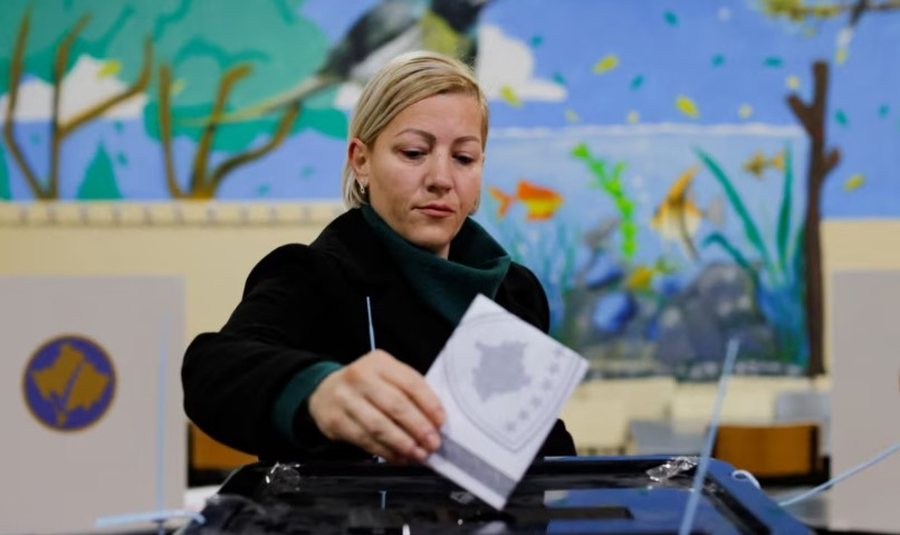
Preliminary results, published by the Central Election Commission (CEC) for the runoff elections in 18 municipalities in Kosovo, held on November 9, created a new local balance between political parties – with almost equal strength. Based on both rounds of voting for mayors in 38 municipalities, the Vetëvendosje Movement (LVV) and the Democratic League of Kosovo (LDK) each won seven municipalities. The Democratic Party of Kosovo (PDK) won six, while the Alliance for the Future of Kosovo (AAK) maintained its lead in five.
The Social Democratic Initiative, the Turkish Party KDTP and the Ramiz Lladrovci Initiative secured one municipality each. Meanwhile, the Serbian List has control in all ten municipalities with a Serb majority.
A politically fragmented result
Sociologist and political analyst, Artan Muhaxhiri, estimates for Radio Free Europe that these results have not produced a clear winner or loser at the party level.
"Overall, it's a very diverse distribution of winners – which, logically, doesn't allow for absolute winners or losers. But, anyway, the parties will interpret it according to their wishes," he says.
Political scientist Dritëro Arifi is also in the same line, emphasizing that the Vetëvendosje Movement has demonstrated a wider geographical spread than in previous elections, although at the assembly level it remains the third force.
"It's an interesting balance. With assemblies, LVV is in third place, but with municipalities (mayors) it's better than it was four or eight years ago. I would say that we are seeing a fragmentation of local government - with a slight decline even of PDK at the head of municipalities, but not at the assembly level," Arifi explains to Radio Free Europe.
Concentration in main centers
According to Muhaxhir, parties will measure their success based on victory in key centers.
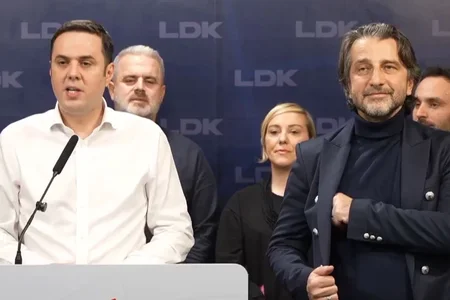
"LDK will rely on the victory in Pristina, but it must be taken into account that it has lost two traditional bastions: Fushë Kosovë and Obiliq. On the other hand, LVV has made significant progress, especially with the victory in South Mitrovica," says Muhaxhiri.
He adds that PDK did not perform well in these elections, but managed to retain Prizren – one of the most important municipalities in the country.
AAK retained all the municipalities it previously governed, which, according to Muhaxhir, is a sustainable result.
Consequences on the national stage
The local elections took place at a time of political uncertainty at the central level, as the question of whether Kosovo will have a new government or go to early parliamentary elections remains open.
This will be clarified by November 19, when the deadline for the LVV mandate holder, Glauk Konjufca, to form and present the government to the Assembly ends.
Analysts say local results give parties a clear picture for preparing for eventual national elections. Arifi points out that only two municipalities – Pristina and South Mitrovica – have real weight in measuring party strength.
"The victory in Pristina gives a slight advantage to the LDK, but it is not an absolute victory, because the turnout was low and many voters do not belong to the LDK. But, the mayor and the runoff are not a good indicator. Often this can be misleading," says Arifi.
In the same vein, he adds that in South Mitrovica, where Faton Peci of LVV won over Arian Tahiri of PDK, the municipal assembly remains fragmented – reflecting the complexity of the local vote.
According to Muhaxhir, the results of the local elections show that no major changes are expected on the national political scene, unless the parties change their approaches.
If the parties continue in the same style, the LVV "will remain in populism," while the others will suffer from "a lack of creativity and courage to change," he says.
"If this situation is 'photocopied' at the central level, we will not have major differences from today," adds Muhaxhiri.
Declining turnout – a signal for parties
Turnout in the election was low: around 40 percent in the first round and only 32 percent in the runoff.
According to Arifi, this shows that citizens are disappointed with political offers, which still focus on basic issues, such as sewage and water supply.
"I haven't seen a candidate who has really invested a lot in a vision or program that can be implemented in the next four years. We're still talking about sewage and water - in 2025," Arifi says.
Muhaxhiri sees the decline in voter turnout as a lack of motivation and a warning signal for parties ahead of possible parliamentary elections.
"Voters have real and accurate criteria. They did not see a credible offer... The message is clear: rational and less polarizing politics are needed," Muhaxhiri concludes./ REL


Lini një Përgjigje