


 Shkruar nga Pamfleti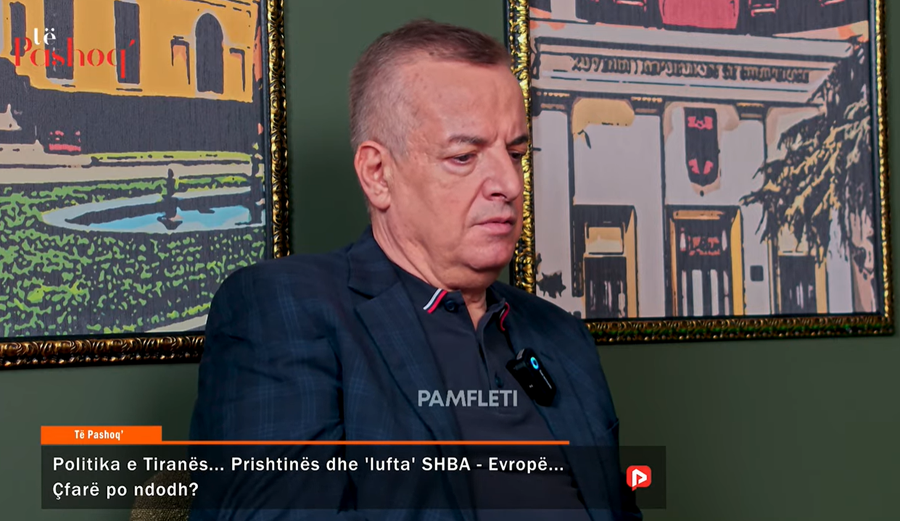
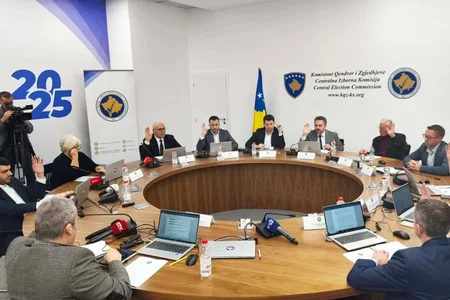
Analyst Mentor Nazarko, speaking about the parliamentary elections to be held on December 28 in Kosovo, stated that just like those in September, these elections will not bring any change.
In an interview for the show "Të Pashoj" on Pamflet's YouTube channel, Nazarko went further, saying that the result of December 28 will be a photocopy of that of February, where according to him the crisis will remain. For Nazarko, the only way for Kosovo to get out of this impasse is if the parties compromise and enter a coalition.
Excerpt from the interview:
-Let's move on to Kosovo. Since we are just a few days away from the extraordinary elections, the new elections that will be held after the failure of the first ones due to the history that we know how it went - a deep political, institutional crisis, etc. How do you see the process that will be held on December 28 in Kosovo? What will it produce this time?
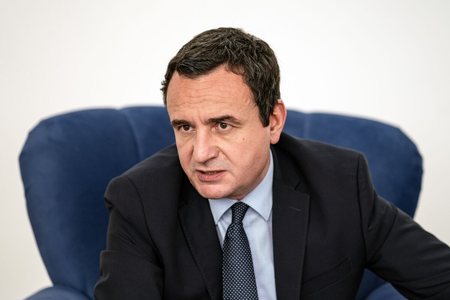
Nazarko : I don't expect major changes. This may sound a bit pessimistic, but I don't see a major change in mentality, neither on one side—that is, Kurti's government or his party—nor on the opposition. Not even on the opinion makers, the elite of public opinion in Kosovo. Consequently, I don't expect any major change. Of course, in that public environment there are some theses, some stagings, some creations that aim to weaken the opposition, saying that they want to cooperate with the Srpska list, and others of this kind, which are worn-out propaganda instruments. But I don't believe that this will bring a change in the electoral orientation. The date of December 28 was chosen with the idea that the diaspora will continue to strongly support Kurti, even physically. However, I think that the result could be a photocopy of the one in February. The difference we could have is in the possible coalitions; perhaps one party of the current opposition could be more inclined to form a coalition with Kurti. But it seems like there is an implicit objective from the opposition parties: if he goes below 40 MPs, then they have more negotiating skills, more opportunities to impose conditions on him or to avoid him as prime minister. Because it is clear from the Western factor, which is decisive in Kosovo, that they no longer want Kurti at the head of a future government.
– Why?
Nazarko : Because Kurti has disappointed not only the Americans—both Republicans, both Democrats, both administrations—as is known with the strong measures, the interruption of strategic dialogue, but also those who were his big supporters, for example the Germans at the beginning of 2021, when he won the elections.
– When was Angela Merkel?
Nazarko : Yes, when he won the elections. Because Kurti, in the name of a Kosovar-centric agenda—because you can't say it's a pan-Albanian agenda; his most prominent test was his involvement in the Albanian elections, where he failed—has disappointed the Europeans. He, in the name of a sovereignist agenda (not in the sense used by Trump), has narrowed the legal space for the political activity of the Serbian community. He has done this in an uncoordinated manner with the Westerners. Third, he has not respected agreements that, according to the EU, have legal value. Fourth, there is no prudence seen either in the government or in the political elite to make Kosovo a reliable partner in such a sensitive area. And above all, with his actions, he has increased the chances and premises for conflict on the Kosovo-Serbia line.
This conflictuality functions as an open wound, where the risks of “infections” from abroad increase. According to the Western reading, Kurti created a wound in the political state organism of Kosovo, where there is a risk of Russian influence. The conflictuality attracts foreign players to the scene, and this is the concern that has made the West be harsher with Kurti, that is, with Kosovo, which is their creation, than with Serbia, which is in a sense under their control.
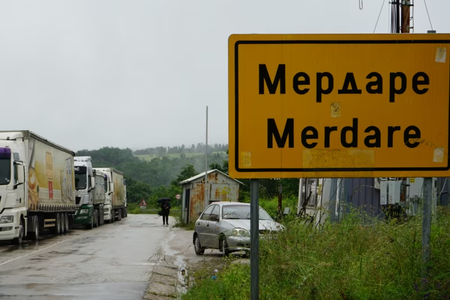
Anyone who does not understand this is short-sighted. Because if Serbia were to choose an extremist scenario, we would have crises simultaneously in Montenegro, in Republika Srpska in Bosnia, in Macedonia and in northern Kosovo. Today's Serbia has been strongly conditioned by the USA, especially by Ambassador Hill, with whom I had the opportunity to exchange some ideas the day before yesterday. This Serbia that we see today, also hit by student protests, where there are strange, anti-European, pro-Russian elements that are against Vučić, is nevertheless a Serbia that provides weapons to Ukraine and even uses the Niš airport as a stopover for planes with military supplies coming from America to Ukraine. So, it is a Serbia with diverse positions, but which has not created major problems and does not disappoint the West as a whole. Meanwhile, Kosovo, which is their creature and ally, is creating troubles for them, which have been said and done. Even today, although we can accept that Kurti established order in the north, achieved a smooth transition of local government from Albanian mayors to Serb ones, there are still no signs that the sanctions will be lifted.



Lini një Përgjigje