


 Shkruar nga Pamfleti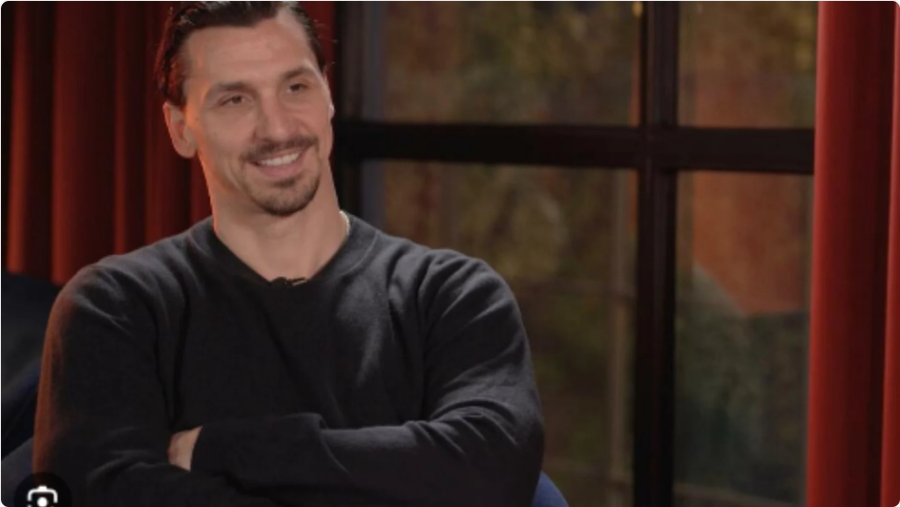
Zlatan Ibrahimovic has chosen a unique way to narrate a very personal part of his life.
For the first time, the football legend has given a long interview in Bosnian, on the show "(Ne)uspjeh prvaka" on "Arena Sport", in a candid conversation with Slaven Bilic.
The main theme was his childhood in Sweden and the shadow that the war in Bosnia and Herzegovina left on his family and community.
Raised in the Rosengard neighborhood of Malmö, Ibrahimovic emphasizes that, although his family roots are from Bosnia, he was not directly exposed to the horrors of war.
However, the atmosphere of that period and the changes it brought did not pass without leaving a trace.
He describes Rosengard as a place where national and religious differences had no weight, where children grew up together, including Albanians, without prejudice or division.
" In that Rosengard we were all together. For us, they were all the same: Bosniaks, Croats, Serbs, Albanians... It didn't matter where we came from, we had respect for each other. Then the war started. In those years we didn't read newspapers, I didn't even have a phone. I had a TV, but I didn't watch the news ."
Zlatan says that the only way he sensed that something serious was happening was through the behavior of his father, who was constantly on the phone trying to help the family in Bosnia.
A particular episode from that time remains deeply in his memory.
“ All I felt was that my father was always on the phone. I realized he was talking to his family in Bosnia, to help him. I would go to my mother’s, I would usually go there to eat. They lived nearby, five minutes away, for the sake of the children. One day I went to my mother’s and they were all dressed in black .”
He explains that his family tried to protect him from the truth, letting him live like an ordinary child, without the burden of the pain of war.
" I asked them why they were all wearing black and they told me to go outside, play football. They didn't want to tell me. My grandmother had died in the war. They taught me to act like a little child, to enjoy life and play football. They didn't want to tell me anything about it ."
Another significant moment, according to Ibrahimovic, was the arrival of refugees from the former Yugoslavia in Sweden, who brought with them divisions and tensions that previously did not exist in the community where he had grown up.
" My father made me play football. They would leave me outside so I wouldn't feel what was going on. Then the refugees came to Sweden and they had a different mentality. I'm Bosnian, you're Serb, that's what they thought. When they came to that ghetto in Rosengard, the mentality was different ."
In contrast, Zlatan emphasizes that he himself saw reality differently, without artificial boundaries between people.
" In my head it was different, for me it was Yugoslavia. I had all my friends and we didn't see who was who, but they were very different. We fought with them. They didn't accept that everything was so mixed. For me it was different ."
A strong and emotional narrative, where Ibrahimovic not only speaks about himself, but also about an entire generation that grew up between football, emigration, war and coexistence.


Lini një Përgjigje