


 Shkruar nga Pamfleti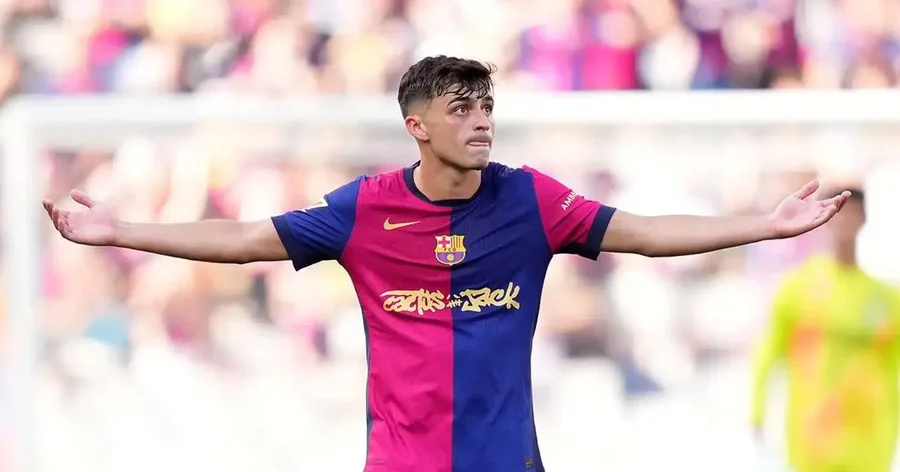
Every year, the Ballon d'Or causes outrage. Fans and commentators alike complain that the award has lost its credibility, yet the debate remains as heated as ever. No matter what the final list looks like, there will always be disagreements. The lack of clear criteria makes objectivity impossible, but even that doesn't fully explain some of this year's choices. And it's not just Ousmane Dembele topping the list, which is quite controversial in itself, but also a few other rankings that left many people surprised.
Pedri, 11th place
Few things were as frustrating as Pedri's ranking. For a long time, the Spaniard was seen as a creator and little more. But last season he evolved into a much more complete player. In defence, he was Barcelona's most outstanding player: leading the team in both attempted and won tackles, and also topping the list for blocked passes and shots. Furthermore, Pedri significantly improved his dribbling, posting the best success rate at the club, 66.3% (57 out of 86 attempts) among players who dribbled at least ten times. And, of course, his vision and sharp passing never disappeared, constantly creating danger even when they didn't result in direct assists. Pedri has become very close to the "perfect" all-round midfielder, except for aerial duels, and while no one expected him to actually win the Ballon d'Or, finishing 11th seems criminally harsh.
Raphinha, fifth place
For Raphinha, there were really only two logical outcomes: first or second place. One could argue for Vitinho coming out on top, given that the Portuguese midfielder was the creative heart of PSG. But when comparing attacking players, it's hard to see why the Brazilian didn't finish higher.
In the Champions League, Raphinha was sensational, leaving behind not only Dembélé and Lamine Yamal, but everyone else. He finished as the tournament's top scorer and top assister, amassing an incredible 13 goals and 8 assists. Even in La Liga, his combined goal + assist total was higher than Yamal's.
Mohamed Salah has put up better numbers in the Premier League, but voters have always treated the Champions League as the final stage. And at that stage, Raphinha was simply unstoppable.
Cole Palmer, eighth place
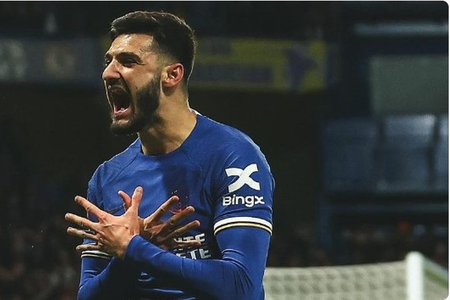
It seems as if the voters are trying to convince us that the Club World Cup is an important benchmark. Otherwise, Palmer's high ranking is hard to justify. Chelsea also won the Conference League, but that is Europe's third-tier competition, and they have hardly faced any truly comparable opponents, perhaps only Real Betis, who are themselves far behind the London club in quality. The irony is that Palmer actually had a weaker season than last year. His first season after joining Chelsea was impressively consistent, but last year saw a noticeable decline, especially in the second half. Over the course of his last 16 league games, he managed just one goal and two assists, often looking unconvincing. So it seems that someone can have an average season, score goals in the Club World Cup final and suddenly be considered among the ten best players in the world. Meanwhile, Désiré Doué, who scored twice in the Champions League final, finished only 14th. This raises the question: should Palmer have been in the top 30 at all, considering he spent most of the season as a rotation option?
Vinícius Jr., 16th place
This is a classic case of reputation working overtime. We all know how brilliant Vinícius can be, not only dazzling with talent but also producing decisive moments. For years, opponents focused their entire game plan on stopping him, and yet he managed to tear defenses apart. But last season was a different story. With the arrival of Kylian Mbappe at Real Madrid, Vinícius lost his focus. His La Liga return, 11 goals and 8 assists, was disappointing, ranking not only behind Raphinha, Robert Lewandowski and Mbappé, but also behind the likes of Alexander Sørloth, Ayoze Pérez and Ante Budimir. And beyond the individual statistics, Madrid itself suffered a disadvantage, failing in the league, the Copa del Rey and the Champions League. Which begs the question: what exactly earned Vinícius a spot as low as 16th on this list?
Prejudice
The closer you play to the goal, the better your chances of gaining recognition. It's by no means a new trend, but it remains frustrating. Players like Lamine Yamal and Kylian Mbappe were ranked higher than expected, while others like Vinicius and Palmer also benefited from the same logic. After Rodri won the previous Ballon d'Or, many hoped that this signaled a shift towards valuing players in all positions. But the imbalance has clearly not disappeared. At least Vitinha's inclusion in the top five offered a small glimmer of hope.
This reflects the modern reality of football’s media landscape. Social media has amplified the obsession with the headlines, where goal clips and flashy moments overshadow the more subtle contributions of midfielders and defenders. Off-field stories only add to the spectacle. A viral controversy can cause a wave of negative reactions, only for the feelings to return later, but they feed the cult of the star nonetheless. In today’s game, it is almost impossible to separate the performance on the pitch from the noise around it.


Lini një Përgjigje