


 Shkruar nga Pamfleti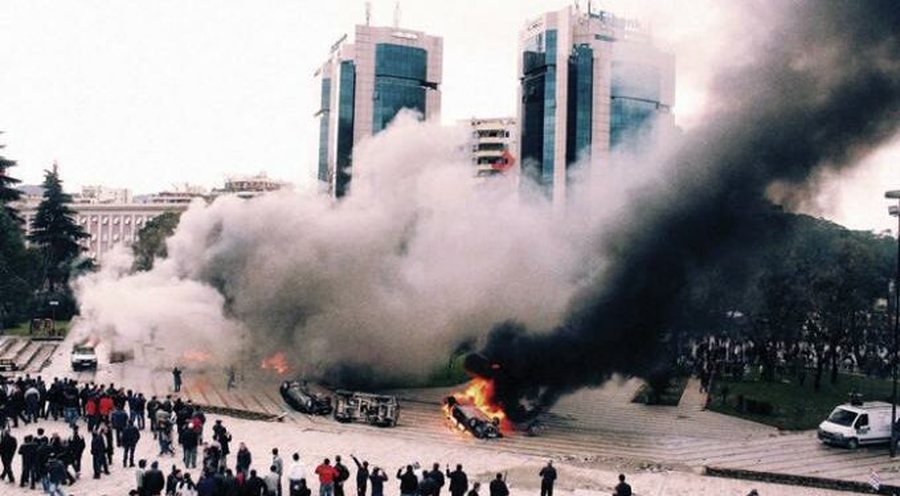
The European Court of Human Rights said on Tuesday that in the investigation of the events of January 21, 2011, where four protesters were killed during a violent demonstration of the opposition, numerous shortcomings were observed which raised suspicions that the authorities had tried to divert it. or interfere unjustly.
With a unanimous decision, a Chamber composed of 7 judges assessed that it observed two violations of Article 2 (right to life and to investigation) of the European Convention on Human Rights, in the case of Aleks Nika, one of the killed protesters . Unlike the other three victims shot with firearms near the Prime Minister's building, Alex Nika was on the other side of the boulevard, when a bullet fatally shot him in the head.
The jury decided that according to Article 46 (binding force and execution of decisions) the authorities should continue efforts to clarify Nika's death and identify and punish those responsible.
inquiry
The Chamber found that the issue of possible chain of command responsibility had not been addressed by the relevant inquiry, which had focused on the individual responsibility of Garda officers rather than the sequence or nature of orders that may have been given by the Garda chain of command.
In the decision, the first statements of senior officials of the time are noted that "the victims were shot at close range and with different types of weapons than those used by the Guard and the police". While the attacks on the General Prosecutor Ina Rama, who "was subjected to harsh criticism by the Prime Minister at the time (Sali Berisha) and by a parliamentary investigative commission which had started work in parallel with the criminal investigation, had a negative impact on the effectiveness of the investigation. , in particular because of the potential to discourage witnesses from cooperating with the investigation”.
The European Court also notes that the orders for the detention of suspected officers of the Republic Guard were not implemented by the police. "The officers surrendered 18 days later, which resulted in a loss of time at a critical stage, as well as the opportunity to minimize cooperation or distortion of the truth."
Another shortcoming in the investigation is the deletion of video recordings of the incident, stored in the server room of the Prime Minister's Office. The court also says that "it found that the authorities had not performed the expertise on the victim's body in time and that Nika's family members were denied access during the investigation, a claim that the Government could not disprove with evidence".
Taking into account the totality of the circumstances, the Court came to the conclusion that "the investigation of the case had not been effective as it had failed to establish the truth or lead to the identification and punishment of the persons responsible, which constitutes a violation of Article 2" of the Convention.
killing
The court found that there were three main sets of deficiencies in the use of force that led to the death of Aleks Nika.
"First, at that time there were deficiencies in the legal framework that regulated the use of firearms in the context of mass gatherings", the Court writes in its decision, while adding that it has identified "serious defects in the planning and control of the protest, despite that the authorities had had time to prepare as they had been notified a few days before".
Also, the Court pointed out in particular that "there had been no clear instructions for the use of lethal force or for crowd control, and there had been a lack of proper coordination between the Guard of the Republic and the police, as well as a clear chain of command".
In conclusion, the Court considered that "the authorities did not prove that the use of lethal force that resulted in the death of the applicant's relative was absolutely necessary under the circumstances of the case. The court cannot accept the argument that the defense of a building in itself constituted a legitimate basis for the use of deadly force. Even if one were to accept the argument that the officers had fired into the air as a form of warning, it is difficult to imagine that firing at a careful angle would have hit Alex Nika in the head, even as a result of a bullet ricocheting as he was standing near the sidewalk in front of the Prime Minister's Office".
reaction
In the evening, during an interview on Report TV, Prime Minister Edi Rama described the decision of the European Court of Human Rights as "something extraordinary". "Today the Strasbourg Court has given the right to the Nikaj family and effectively overturned the process that was carried out in Albania for January 21. Which means it paved the way for that missing chain of command investigation. Today, a European supreme court has said that unjustified lethal force was used. And he specified that the process done by leaving this work to individuals is a process that is not considered fair. It clearly speaks to the chain of command. The government killed on January 21", declared Mr. Rama.
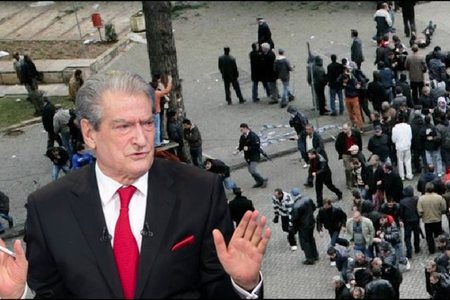
Earlier, former Prime Minister Sali Berisha, who was left out of the investigation, and was not interrogated either as a witness or a person with knowledge of the event, stated that he had not read the decision of the European Court, adding that "he did not there has been and can never be an obstacle to the investigation by Sali Berisha. This is the comment I make on everything. I have no objection to how the investigation was done, the files are there, the assessment made by the court"./VOA





Lini një Përgjigje