


 Shkruar nga Pamfleti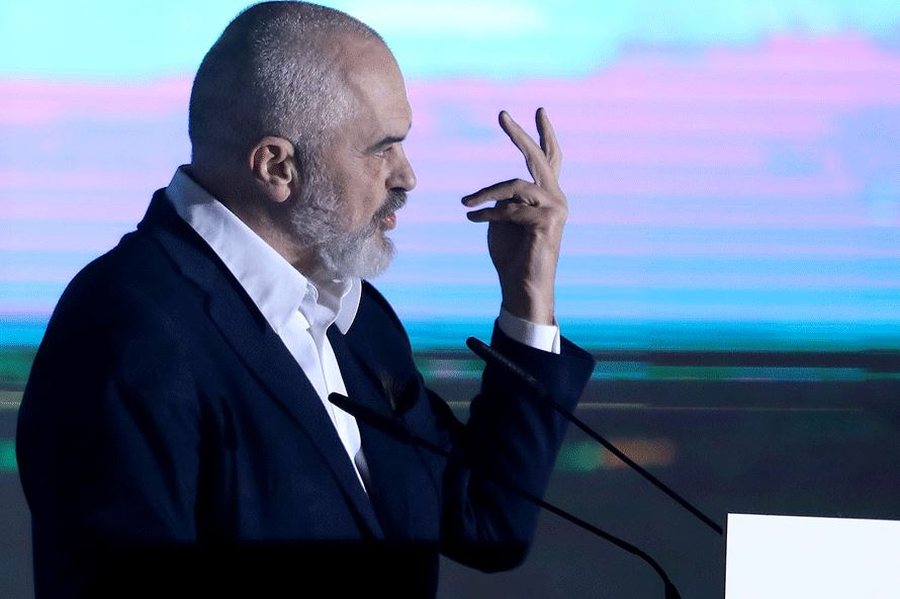
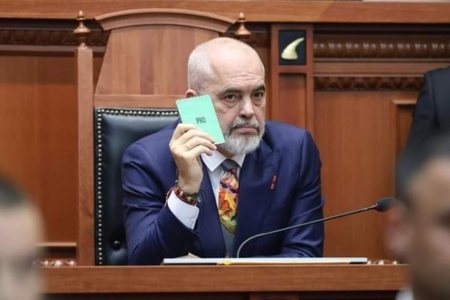
Rama's authoritarian tendencies have led many critics to accuse him of controlling the media, influencing the judiciary and consolidating power within his party and government.
In the heart of Albania, a disturbing pattern has emerged in the corridors of justice, casting a shadow over the Special Anti-Corruption Structure (SPAK). Heralded as a beacon of hope in a country long plagued by corruption, SPAK appears to operate under a veil of selective justice, tying its prosecutorial force more to the political interests of Prime Minister Edi Rama than to the equal principles of law and order. in order.
Although SPAK presents a number of politicians as evidence of its effectiveness, the apparent absence of people close to Edi Rama – be they politicians, family members or powerful economic players – in his files speaks volumes. This selective enforcement is not only the failure of a key judicial institution; it is a symptom of a deeper problem in Albanian politics that threatens to derail the nation from its path towards democratic integrity and justice.
Faced with endemic corruption, Albania launched an innovative approach to combat this problem by forming SPAK. Created through justice reforms and backed by parliament in 2016, SPAK consists of a special prosecutor's office, a national investigative office and courts focused on corruption and organized crime. This initiative, crucial to the start of EU accession talks, aims to fight corruption at the highest levels of government and society. However, even though it was created with the right intention to fight corruption, now SPAK is at the crossroads of political influence and the independence of the judiciary, with Prime Minister Edi Rama at the center of these accusations.
Since taking office in 2013, Prime Minister Rama has actively pursued policies to align Albania with European Union standards, emphasizing reforms in justice, public administration and anti-corruption measures. His administration made visible efforts to fight corruption, through the creation of SPAK. However, in recent times, the effectiveness and impartiality of these anti-corruption efforts have become the subject of debate.
Rama's authoritarian tendencies have led many critics to accuse him of controlling the media, influencing the judiciary and consolidating power within his party and government. However, all these accusations pale in comparison to those that claim that SPAK has become a political tool for Rama, used to eliminate political opponents. The selection of the case and the timing of SPAK's actions raise questions about its ability to function as an impartial judicial body. Critics suggest his actions may serve a political agenda rather than upholding his core principles of fairness and impartiality.
In recent months there have been several investigations into high-profile public figures: members of the Socialist Party (Rama's Party) who served as ministers in his government have been investigated and in some cases sent to prison. In addition, certain oligarchic figures were also investigated. Many in Albania see them as scapegoats for Rama and serve as an alibi when accusations against his political motives emerge. Nowadays, this happens quite often.
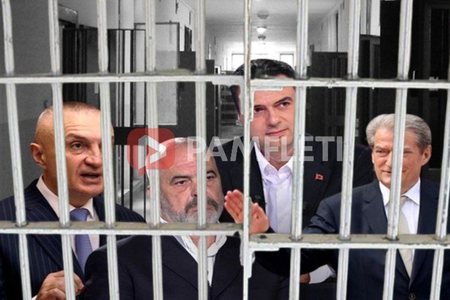
However, the investigation against former president Ilir Meta and former prime minister Sali Berisha – both leaders of political parties and known opponents of Rama – was perhaps too much for the hopes of the Albanian people. The house arrest of former Prime Minister Berisha was an alarm for many Albanians who once had high hopes for SPAK.
Whenever a government official was arrested or charged, Prime Minister Rama insisted that their responsibility was personal. In fact, it gave him an opportunity to sack the minister, present himself as a brave anti-corruption fighter and give the public a sense of change. But a closer look at the list of dismissed ministers raises speculation that Rama is unaffected by these dismissals. The bottom line is that none of those in his inner circle were investigated, which calls into question SPAK's many standards.
The actions of Prime Minister Rama and SPAK also have an international dimension. Given Albania's aspirations to join the European Union, there is considerable external pressure to demonstrate judicial effectiveness. Critics argue that this can be manipulated by the government to direct SPAK's attention to cases that are politically expedient and that match these external expectations, but which may not be the most pressing domestic issues.
This skepticism extends to the wider fight against corruption, with Albania still ranking poorly on Transparency International's Corruption Perceptions Index. Despite SPAK's efforts, the country's fight against corruption, especially in high positions, remains an important challenge./ Adapted "Pamphlet" from " Flux24 "



Lini një Përgjigje