


 Shkruar nga Pamfleti
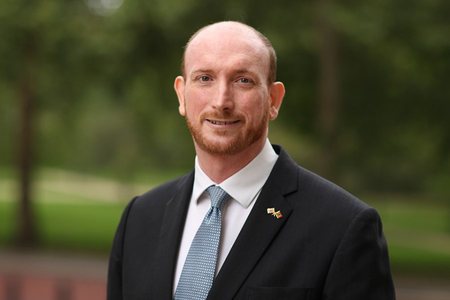
Dorian Matlija, the legal representative of the chronicler, Elton Qyno, considered the court's decision to seize the journalist's computer equipment to be illegal and a serious violation of media freedom standards.
He also warned that the decision will be appealed in the Appeal, where the destruction of the duplicated data will also be requested.
"The journalist's sources should not be revealed, because not only the specific journalist is harmed, but all journalism because possible future sources are discouraged," Matlija told BIRN.
"The court obviously did not argue this extreme measure and everything happened in a few minutes, while the journalist was kept locked inside the premises of SPAK," he added.
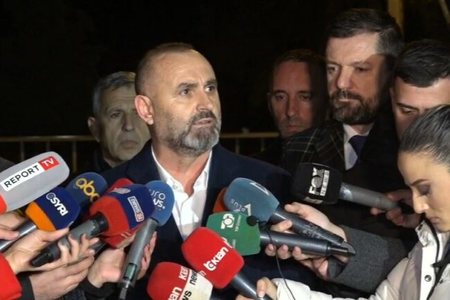
Journalist Elton Qyno was questioned for almost 7 hours on Wednesday at the Special Prosecutor's Office as officers from the National Bureau of Investigation searched his home and office and seized his computer equipment and mobile phones as part of an investigation into release of the investigative secret.
Through a press release on Thursday, the Special Prosecutor's Office stated that these actions were carried out after Qyno had published communications of the associate of justice, Nuredin Dumani on the encrypted platform SkyECC, which are, according to SPAK, the subject of preliminary investigations and have not yet been documented as procedural acts from the Special Prosecutor's Office.
SPAK also stated that it had previously ordered a ban on the publication of documents for this criminal proceeding and that during questioning, it had asked Qynos to explain how he obtained the secret documents.
"Citizen Elton Qyno has replied that the source was confidential and he cannot declare it due to the secrecy related to the profession," the announcement states, while adding that on the same day, two court decisions were obtained to allow a personal inspection of the apartment as well as the journalist's office and the seizure of his computer data.
SPAK also stated that it had also seized Qynos' two mobile phones, after having identified their location with special tracking devices in a coffee bar near the Prosecutor's Office building.
"The Special Prosecutor's Office has carried out procedural actions in full compliance with the requirements of the Code of Criminal Procedure as well as in implementation of decisions no. 501 and 502 of the Special Court...," stated SPAK.
But lawyer Matlija told BIRN that these decisions contradict a unified decision of the Supreme Court of December 2021, which sets 6 conditions to be met in order to carry out such an action.
Bringing attention to the previous case of Lapsi.al, where the European Court of Human Rights ordered Albania not to implement the decision to seize the computers and other electronic equipment of journalists, Matlija claims that the judge in the Qynos case committed a serious offence.
"I emphasize that the prosecution has other investigation options to find out where the data came from, starting with the officials who had the duty to preserve them," concluded Matlija. /BIRN





Lini një Përgjigje