


 Shkruar nga Pamfleti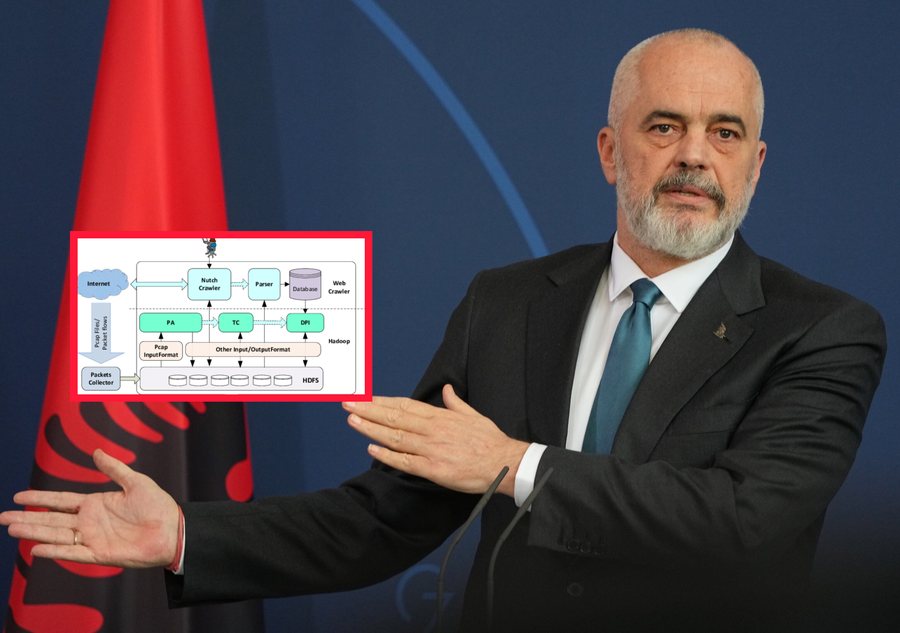
By placing this device on internet companies, the government can eavesdrop in detail, from searches on various search engines to daily use of social networks, having access to texts, messages, videos and more.
Goodbye privacy and hello censorship. We can say with all our might that soon surfing the internet in our country may no longer be safe, and this is not because of hackers, but because of the government. As is being said these days, the Albanian government is planning to use a device called Deep Packet Inspection (DPI), which intercepts everything on the internet.
By placing this device on internet companies, the government can eavesdrop in detail, from searches on various search engines to daily use of social networks, having access to texts, messages, videos and more.
The Democratic Party issued a statement today announcing the "Rama" government's plans to use the DPI, which in countries with problems with democracy is used for censorship.
" A prime minister who buys and uses Deep Packet Inspection (DPI) is not simply paranoid – he is a man who fears his own people. This technology is a direct attack on privacy, freedom of expression and democracy ," a DP statement said.
Using the pretext of blocking access to the “Tik-Tok” application, the government could use the DPI device for much more dangerous and illegal things that violate the privacy of each of us. To further understand the danger of this device, we are presenting below what it is capable of doing.
What is DPI?
DPI (Deep Packet Inspection) is a technology that allows Internet service providers (ISPs) or authorities to inspect in detail the content of data packets passing through Internet networks. Unlike simply inspecting the “header” of a packet, DPI also looks at the actual content, which means: It can distinguish the type of traffic (video, text, a specific application such as TikTok, VPN, etc.). It can block, redirect or modify traffic in real time. It can monitor the behavior of Internet users at a very detailed level.
Why is DPI used?
DPI can be used for benign purposes as a network security tool to detect and intercept viruses, spyware, and other forms of malicious traffic and intrusion attempts. But it can also be used for more nefarious activities, such as state-sponsored eavesdropping and censorship, and mass surveillance, which is concerning from a human rights perspective.
Risks to citizens' privacy?
Mass surveillance: DPI can analyze everything we do online in real time.
Violation of the right to privacy; Even if it doesn't block anything, the very fact that it monitors creates a frightening environment.
Data misuse; If the government or ISPs are not transparent, data can be used for political purposes, punishment, or manipulation.
Lack of transparency and public scrutiny; If IPR is imposed without a clear legal framework, there is neither a complaint mechanism nor guarantees for fundamental rights.
All this being said, if the government decides to install such a device on internet service providers (if it hasn't already done so), we risk returning to a dictatorship, where the state controls everything, even people's thoughts./ Pamphlet






Lini një Përgjigje