


 Shkruar nga Pamfleti
Another 42 thyroid cancer patients are being treated at QSUNT, who have not received their treatment with radioactive iodine since January.
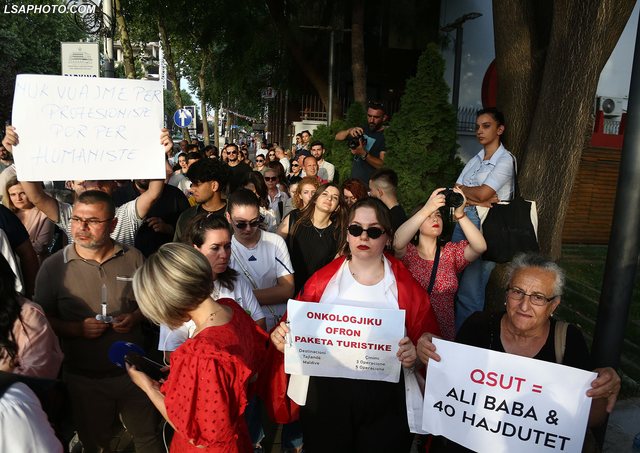
During the year 2024, hundreds of patients were denied health treatment according to the protocol at the Oncology Hospital of the 'Mother Teresa' University Hospital Center due to the lack of radioactive materials and chemotherapy drugs.
In the last 8 months, Alma does not remember how many times she knocked on the doors of the Oncology Hospital, but the answer she received from the staff about radioactive iodine was always the same.
" No, we will get you on the phone when it comes ," recalls the 50-year-old woman, who suffers from thyroid cancer. During the last visit in early August, her appointment lasted no more than 15 minutes, as she walked out of the ward again with her head down.
" They are killing me! They have been lying to me since January," she said, with sadness evident on her face, as she added that they told her that the iodine will arrive in September. " My cancer is waiting for September and iodine when they bring it? she asks.
Alma is not the only patient looking for answers. Another 42 thyroid cancer patients are being treated at QSUNT, who have not received their treatment with radioactive iodine since January.
" If the patient does not receive the dose of radioactive iodine, it is the same as if the patient does not receive chemotherapy for a cancer x in his body," said an endocrinologist, who spoke on condition of anonymity for fear of reprisals. possible from the Ministry of Health.
"The longer you delay, the more the chances of metastases increase," she added.
Radioactive iodine is not the only radioactive substance missing from the University Hospital Center. The data collected by BIRN show that there is also a shortage of 'technetium-99', which is used for scintigraphy examinations, but also in drugs used for chemotherapy such as 'gemcitabine', which has been missing since May.
In a written response, QSUNT admitted that the radioactive iodine was missing since February, while the scintigraphy was last examined eight months ago, in January 2024.
The main university hospital in the country blamed the shortage on the Vienna-based International Atomic Energy Agency (IAEA), with which the Ministry of Health has an agreement for the provision of radioactive materials, while adding that it has opened a tender for the provision of radioactive iodine.
" We have been informed by the IAEA that it can no longer make an agreement with the Albanian state, regarding the supply of QSUNT with radioactive materials ," said the University Hospital Center.
" Currently, patients are treated with inhibitory hormone therapy until the supply of radioactive substances, which keeps the hormonal level under control for a period of three months after the surgical intervention, a period which is carried out before being treated with radioactive iodine 131 ," added QSUNT.
The University Hospital told BIRN that 150 more patients who need gemcitabine are currently being treated at the Oncology Department, but even though there is a signed contract, there are currently no supplies from the importer.
In a written response, the IAEA told BIRN that it does not make the agreements or contracts public, but underlined that it is not involved in the regular supply of materials such as Iodine-131.
The last published technical agreement between Albania and the IAEA started in 2018 and ended in 2023. One of the main areas of this agreement was nuclear medicine, radiotherapy, medical imaging and food.
The private has, the public does not
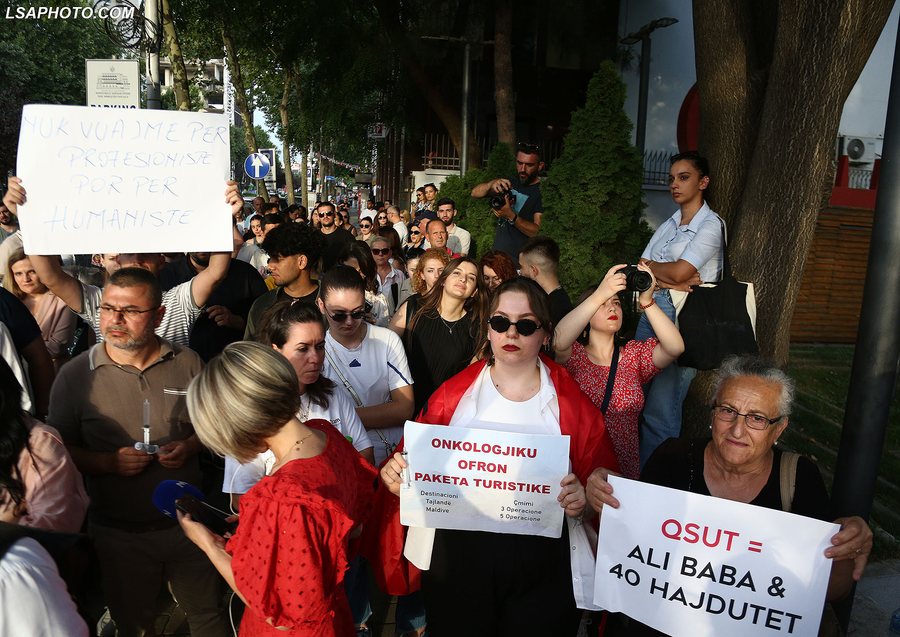
Every year, about 20,000 cancer patients are treated at the Oncology Hospital, part of the 'Mother Teresa' University Hospital Center in Tirana. According to a performance audit undertaken by the Supreme State Control, during the years 2020-2022, 58,295 cancer patients were treated, for an annual budget ranging from 398 million to 513 million ALL, with an average annual cost per patient of 23,817 lek.
According to KLSH, over 90% of the budget of the Oncology Hospital is spent on the purchase of drugs and medical equipment. However, data collected by BIRN from interviews with patients, their families and doctors show that shortages of drugs and preparations for anti-cancer therapies are chronic in QSUNT.
" It was terrible to see my mother without medication, " the son of a 65-year-old patient operated on for thyroid cancer told BIRN, who after many months of waiting, decided to transfer his mother to a private hospital, because according to what they had the doctors said, the disease could not wait any longer.
"Almost every month I asked about the radioactive iodine, but nothing, " he recalls, while adding that " we were escorted home ."
Unlike the public hospital, this preparation exists at a very high cost in private. The relative said that he paid about 1200 euros for the treatment of the mother with radioactive iodine in a private hospital.
" We made the money with family members, sisters and brothers" , he explained, while posing the questions: " How is it possible for the private sector to exist and not for public health?" "
The endocrinologist of the Oncology Hospital who spoke to BIRN emphasized that radioactive iodine is a very important therapy for thyroid cancer patients. Like chemotherapy, radioactive iodine, if not given according to protocol, causes disease progression.
“Ne, bluzat e bardha, përpiqemi dhe lutemi që kur del kjo diagnozë të mos ketë ind mbetës në tiroide, sepse në këto raste është më e kollajshme pjesa e ndjekjes,” tha mjekja me një eksperiencë 10-vjeçare në Onkologjik.
“Në ato raste që ka ind mbetës… duke qene se nuk bëhen fare në QSUNT si analiza, u afrojmë si alternativë që ekzaminimet dhe trajtimet t'i kryejnë në privat,” tha ajo, ndërsa shtoi, “s'kemi rrugë tjetër”.
Ashtu si jodi radioaktiv, edhe mungesa e technetium-99 është kthyer në shqetësim për mjekët e repartit të Radiologjisë në QSUNT, duke u pamundësuar atyre të bëjnë ekzaminimin e shintigrafisë.
“Në shërbimin tonë nuk kryhet asnjë lloj ekzaminimi që ka lidhje me shintigrafinë,” tha një mjek radiolog, i cili zgjodhi të mbetej anonim. “Lënda e technecium ka vlerë diagnostikuese kur përdoret për të bërë shintigrafinë e tiroides, pra shërben për të vënë vënë diagnozën për hipertirozën, nodusin e ftohtë apo nodusin e ngrohtë,” shpjegoi ai.
Mjeku radiolog, i cili ka disa vite në këtë shërbim, thotë se ndjehet shumë keq në këtë situatë, pasi “roli i mjekut është të ndihmojë pacientin për të zgjidhur problemin dhe për të siguruar fitoren, që në fund të fundit është jeta e të sëmurit”.
“Në këto raste ndihem si një njeri që nuk i ka mjetet në dorë për të bërë një luftë të barabartë”, shtoi ai.
QSUNT tha nëpërmjet një përgjigje zyrtare se që prej muajit janar e deri në muajin maj, janë 554 pacientë të cilët nuk janë ekzaminuar sipas protokollit që kanë kërkuar mjekët, përfshirë sëmundjet kockore, tiroidet dhe ato renale.
‘Po më vrasin nënën'
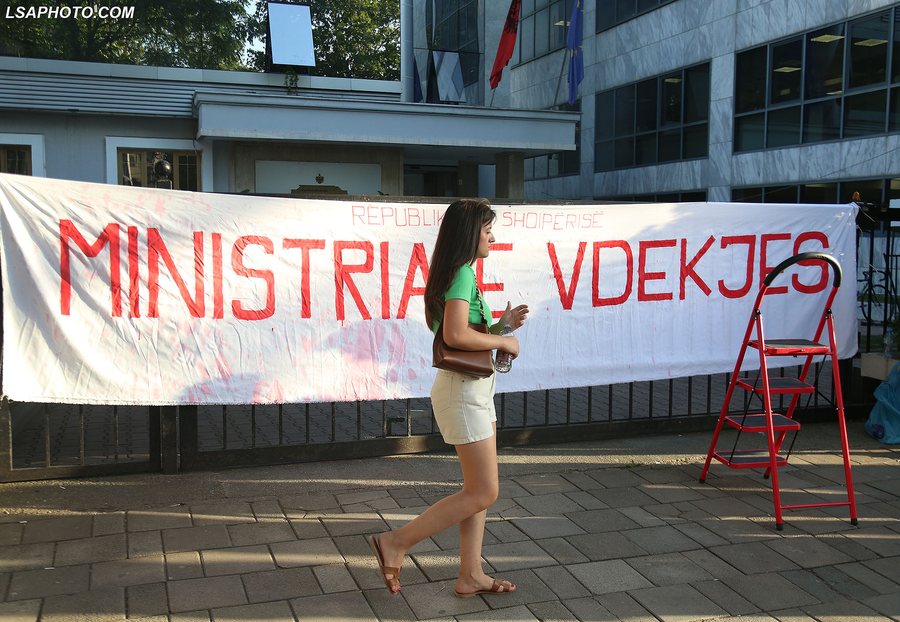
Nuk janë vetëm elementët radioaktivë që mungojnë prej janarit në QSUNT. Spitali Onkologjik, është kthyer gjithashtu në një makth për pacientët të cilët vuajnë nga sëmundjet kancerogjene, për shkak të mungesës së vazhdueshme të medikamenteve për kimioterapi.
Kjo dramë e tyre tregohet nëpërmjet dëshmive të pacientëve, të cilët aktualisht janë të sëmurë më kancer.
Gjatë këtij viti, në periudha në ndryshme kohore, BIRN ka mësuar se kanë munguar katër medikamente të rëndësishme në luftën kundër kancerit – gembcitabinë, irinotekani, erlotinib, paxlitacel, të cilat sigurohen vetëm nga Ministria e Shëndetësisë, pasi janë medikamente spitalore dhe nuk mund të gjenden në farmaci.
Mungesa e këtyre e barnave ka sjellë pasoja negative në shëndetin e pacientëve dhe ka alarmuar familjarët e tyre.
Havaja, 65-vjeçe, është diagnostikuar me kancer gjiri dhe po kurohet në Spitalin Onkologjik. Në muajin maj e kanë lajmëruar se medikamenti për kimioterapi “gemcitabinë” mungon dhe se terapia duhet të ndërpritej dhe ka rifilluar në muajin gusht.
“Po më vrasin nënën”, tha i biri, ndërsa shtoi se ndjehej ‘i shkatërruar.'
The 40-year-old man recalled that the mother's tests before the lack of gemcitabine were fine and without problems, but with the lack of this drug, the mother had metastases.
"The cancer in my mother's body spread, " he said, as he lowered his head and wept. " My mother raised me with a lot of trouble and today I can't provide her with the medicine to fight cancer, " he added through tears.
The 40-year-old confessed that he tried to smuggle the medicine, but he could not find it in the pharmacy.
" I was ready to sell everything, but I couldn't find it, " he said, while adding that the lack of this drug constituted a crime.
" SPAKU should investigate properly and you will see how they kill people by not providing them with the necessary medicines," he said, while emphasizing that no one is responsible for the advancement of his mother's illness.
An oncologist, who has been working in this service for years, told BIRN on the condition of anonymity that the situation was serious as many cancer patients were left without treatment.
"In pancreatic cancer, bladder cancer, lung cancer, and breast cancer, gemcitabine is used as a first-line treatment," she explained.
" So, if a patient is diagnosed with these diseases and you don't have this medication, you have denied the patient treatment from the beginning ," added the doctor.
The oncologist explained that there is no substitute for this drug and therefore patients cannot take any other drug if it is in short supply.
" As a result of the lack of gemcitabine, we have had patients who have deteriorated or metastasized ," she said.
The fact that gemcitabine does not have another substitute medicine is also accepted by QSUNT, in the official response. But according to the University Hospital, " the patients were not left without treatment, as other treatment schemes were used according to the case, based on the medical protocols and the relevant staff ".
Hava's son, who said that he could not speak by name because he was afraid that the Hospital would take revenge by denying chemotherapy to his mother, said that he would not wish the encounter as a patient at QSUNT even on his enemy.
" This is to burn the soul forever, " he emphasized. " Watching your man die because there is no medicine. "/ BIRN


Lini një Përgjigje