


 Shkruar nga Edward Lucas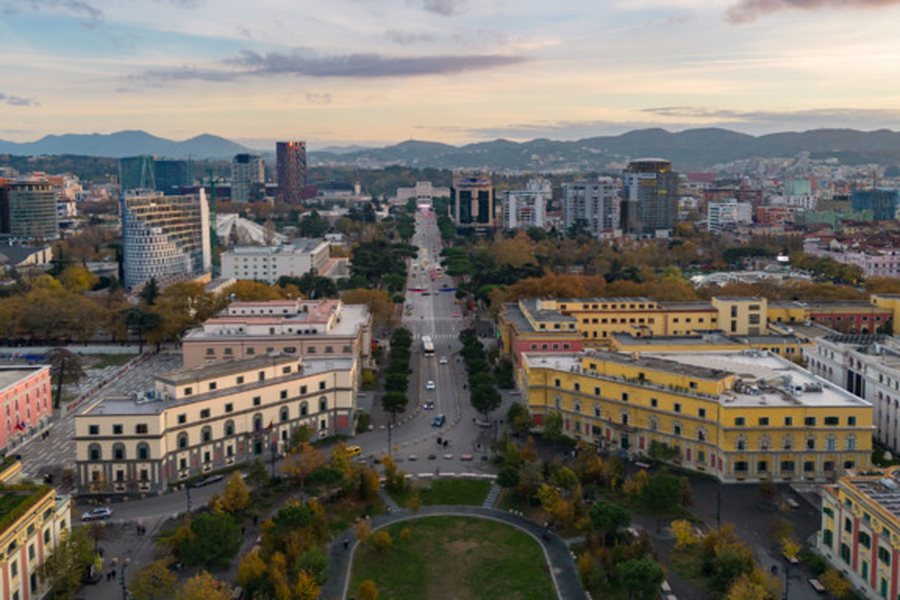
It will be many years before Albanians close the nearly fourfold gap in living standards with their Italian neighbors, an hour's boat ride across the Adriatic.
Exotic, comical and menacing, Albania lurks in the recesses of the British worldview. Pioneering anthropologist Edith Durham, (still revered for her 1909 book, High Albania), depicted the relentless savagery of life among the mountain tribes fighting against the Ottoman Empire. Other Albanophiles included Lord Byron and Edward Lear.
That path ended under the ravages of communism, when Albania ranked alongside North Korea as an unreachable destination. Paranoid dictator Enver Hoxha called tourism “not an industry, but more a means of corruption and vagrancy.” Israelis, Americans, and noisy Western journalists were banned altogether. For female visitors, “bright colors and provocative clothing” were prohibited, while men were forbidden from wearing long hair and beards, as they were considered a violation of “socialist aesthetics.” Leaving the country was even more difficult.
Modern concerns could hardly be more different. A tourism boom is underway with all the associated problems of environmental stress and overdevelopment. Ivanka Trump and her husband Jared Kushner are among the high-profile foreign investors planning a £1 billion luxury resort that threatens precious wetlands.
The flow of people, on the other hand, is drawing even greater scrutiny. Albanian friends worry that their teenage children will be lured by smugglers to try their luck at an often dangerous illegal crossing to Britain, where they could end up enslaved by criminal gangs. Our government pays for advertising campaigns aimed at dissuading Albanians from the miseries of life in Britain.
This week, an immigration court ruled that an Albanian lesbian couple can seek asylum in Britain because they cannot safely return to a “patriarchal, conservative society” where they would face “potential discrimination from state and non-state actors.” The women say they were victims of trafficking, which their lawyers claim will add to their stigma if they return.
Here the law may or may not be a donkey. Some of the intricacies of the case undoubtedly escape a casual glance from the outside, although a similar asylum claim by another Albanian lesbian was decisively rejected in a "hopeless" appeal to the Supreme Court last year. Surely victims of trafficking and other forms of modern slavery deserve sympathy, not censure.
What I find disturbing is the soft orientalism in the judge's remarks justifying her decision. Rebecca Chapman cited a British government document called "Country Policy and Information Recording: Sexual Orientation and Gender Identity and Expression" from 2022 that considers Albania a "patriarchal, conservative society in which homophobic attitudes still exist, particularly in rural areas."
True, same-sex marriage is not yet legal in Albania (although a quick look online shows that such unions are celebrated publicly and joyfully). But gays and lesbians were only able to marry in Britain in 2013. Albania’s real crime is that it is 12 years behind us.
Given what the country has been through, this is particularly aggravating. The dictatorship was the harshest in Europe, pursuing a strange autarkic form of communism that featured epic feuds with “revisionists” in Belgrade, Moscow and Beijing. After the regime’s fall in 1990, Albania was devastated, until in 1997 it was rocked by anarchy and looting, followed by poverty. The fact that less than a quarter of a century later Albania is negotiating membership in the European Union is almost a miracle.
The hustle and bustle of its cities makes Britain seem lethargic. Progress on human rights is also striking: linguistic and ethnic minorities, for example, enjoy rights that their counterparts in neighboring Greece can only dream of. Albania could also teach most of Europe a thing or two when it comes to religious tolerance.
And poverty is relative. While Albanians work on construction sites in Western Europe, the country's construction boom is fueled by migrant workers from countries such as Senegal and India who work for a quarter of that.
But none of this can hide the hardships, corruption, weak institutions and widespread alienation from the political system among them. It will be many years before Albanians close the nearly fourfold gap in living standards with their Italian neighbors, an hour's boat ride across the Adriatic.
But these differences are not set in stone. Our ancestors lived in caves covered in war paint while the Albanians' ancestors, the Illyrians, lived in sophisticated cities. Our arrogance makes us all too quick to dismiss little-known places as basket cases. Many may be surprised to learn that, on current trends, Poland will have overtaken Britain in per capita income, measured by spending power, by the 2030s.
The clamor of Albanians may set them on the same path. Their efforts deserve respect, not the finely calibrated contempt of the privileged./ Adapted from “Pamphlet” by “TheTimes”




Lini një Përgjigje