


 Shkruar nga Pamfleti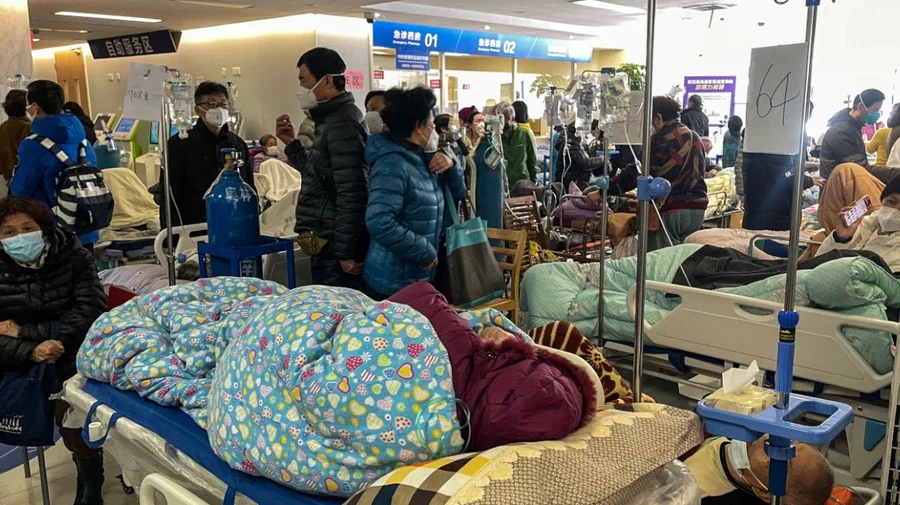
The virus belongs to the same family as respiratory syncytial virus (RSV) and was first identified in 2001 in the Netherlands. Its epidemics are more intense during winter.
Reports of an increase in hospitalizations in China due to HMPV, a virus that is not particularly well-known to the public but about which the scientific community knows a lot, have caused worldwide concern.
In the past 24 hours, videos and photos have been widely shared of hospitals in China being flooded with people going to Emergency Departments due to their deteriorating health.
Local media attributed the situation to the outbreak of a lesser-known virus, human metapneumovirus (HMPV), which usually causes mild symptoms similar to those of the common cold.
What do we need to know?
As reported by the British newspaper The Guardian, human metapneumonia virus (HMPV) is a respiratory virus that causes symptoms similar to those of a cold or flu. Although it is often limited to mild infections, it can lead to more serious complications, such as bronchitis or pneumonia, especially in the elderly, young children and those with weak immunity.
The virus belongs to the same family as respiratory syncytial virus (RSV) and was first identified in 2001 in the Netherlands. Its epidemics are more intense during winter.
Why is there so much panic?
In northern China, there is an increase in HMPV cases, especially in children, according to local authorities. The country's Centers for Disease Control and Prevention (CDC) has warned citizens to take hygienic and preventive measures, downplaying claims of hospital overcrowding and fears of a Covid-19-like pandemic.
Chinese Foreign Ministry spokeswoman Mao Ning said that “respiratory infections usually peak during the winter season. This year's diseases seem to be less severe and spread to a lesser extent than last year."
The increase in cases is partly attributed to the use of new technologies that make it easier to detect the virus, as well as greater public awareness due to the pandemic.
How serious is HMPV?
It is one of several viruses that are often classified under the term "common cold." It is not classified as Covid-19 or the flu.
Most infections resolve on their own within a few days with staying at home and taking care. However, the virus can cause more serious consequences, such as bronchitis or pneumonia, in the most vulnerable groups of the population.
High-risk groups include:
The elderly
Small children "HMPV
People with compromised immunity
In these categories it can cause serious illness, so it's important that people are aware of this," said Professor Paul Griffin, director of infectious diseases at Mater Health Services in Brisbane.
Should we be worried?
HMPV is not a new virus, it has been around for decades and a form of immunity has built up in the population from previous infections. Unlike Covid-19, HMPV is not a pandemic virus.
"There is no reason to worry about a new pandemic, but the increase in cases is worrying," Professor Griffin said.
How to protect ourselves?
With no vaccine or antiviral drugs, preventive measures are the main weapon to reduce transmission:
Stay home when you are sick.
Follow good hygiene practices, such as hand washing.
Cover your mouth and nose when you cough or sneeze.
Wear a mask if you are sick and must go out in public. / Adapt Pamphlet/







Lini një Përgjigje