


 Shkruar nga Pamfleti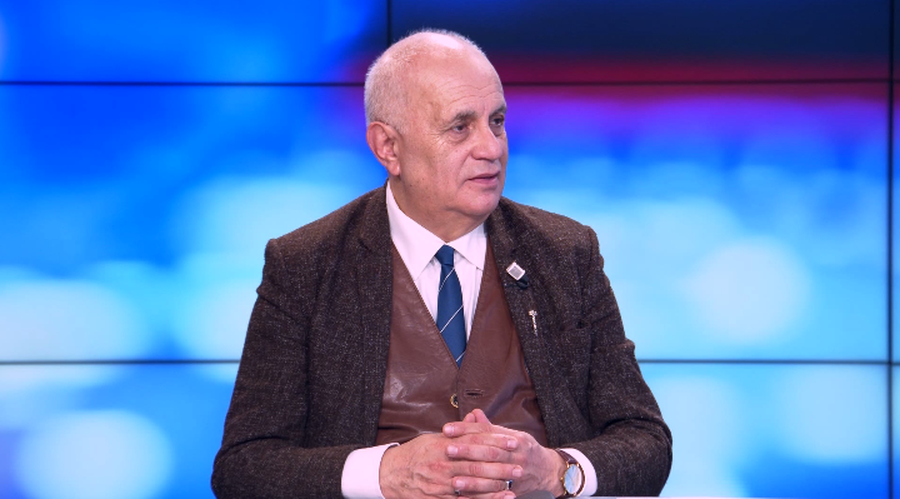
Professor and academic Artan Fuga has put Albanian politics under the scanner, highlighting the innovations of this election year, the problems of the electorate, the role of new parties, and the process of Albania's integration into the European Union.
He described the inclusion of the diaspora in the electoral game as an innovation, considering this as an expanded right for Albanians living abroad.
"This was a right for all Albanians who are in emigration and I consider it an expanded right for them to contribute to their country through voting. This year will be remembered because the concept of the right to vote has been greatly expanded. This is very important, " he said in the studio of the "Topic of the Day" show on RTSH.
Analyzing the behavior of the electorate, Fuga noted a kind of disengagement and lack of interest in politics.
" This comes from the fact that people are immersed in their daily problems. Some have reduced their interest in politics because they have help from abroad. But we must not forget that part of the territory is demographically empty and those who remain there do not constitute a critical mass to exert pressure on local government. Meanwhile, in large centers, the phenomenon of anomie occurs, where people do not know each other, have no ties of interest, there are no social groups and solidarity is very weak. This creates its own electoral dynamics, where each individual fights for himself and does not know why he is voting ," said Fuga.
He added that a large portion of candidates are placed by parties on closed lists, which reduces the interest of the electorate. “When candidates are placed on closed lists, the interest of voters decreases because they do not feel directly represented,” he argued.
Criticizing the Albanian political class, Fuga described it as outdated both in ideas and in age.
" There is a kind of obsolescence because if we look at the political formations in EU countries, they are formed and dissolved within them, new parties are born. While in Albania the two main parties are monolithic, they have no segments or internal currents. The MPs who have political weight have been on the scene for 20 or 30 years. While the European or American political class is renewed very quickly ," he said.
The academic emphasized that new parties are welcome, but the electorate does not yet have widespread trust in them.
" New parties need continuous work because nothing is certain in the upcoming elections. They are focused on television studios. I understand that appearing on television gives results, reduces costs, but the problem is that trust to the point of casting a vote does not come only from media communication. It requires very strong communication with the leaders of the electorate, those who have influence on the voters. The electorate is clear when it says: 'What will you do for me?' " said Fuga.
Commenting on Albania's journey towards the EU, Fuga stated that integration is a long-standing inspiration for Albanians, but remains uncertain in relation to the established deadlines.
"Albania has had the inspiration for EU integration for more than 30 years. Albania and Albanians are a European nation and in their traditions are integrated into European culture despite the zigzags of history. But I am not very optimistic when dates like 2027 or 2030 are set. It is too soon to say Yes or No because there are risks that do not depend either on the political class in Albania or on the leaders of the EU. The efforts are very good to make, but too soon for fireworks and celebrations ," the professor concluded.



Ne BE.do futemi kure te hikim ne te moshes 40 nga kjo bote .e do zevensohemi nga femijet tane.neve kemi humbe besimin ndaj njeri tjeterit.do na besoj bota ne eshesim njeri tjeterin tek amerika.jemi ber spijunet e vetevetes Punet tona duhet ti zgjedhim vete brenda per brenda na morin vete ne be.skemi pse tju lutemi neve mendimi ime flm