


 Shkruar nga Pamfleti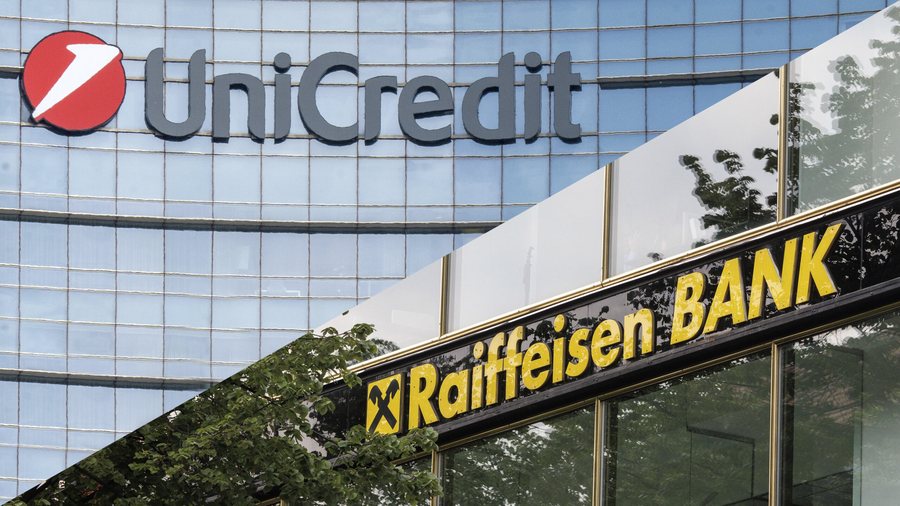
With the current decision, the EU Bank seems to have cut off the hopes of "Raiffeisen Bank". The latter is also the same situation with UniCredit...
The Court of Justice of the EU has given a strong blow to European banks that continue to operate in Russia. UniCredit and Raiffeisen Bank International continue their activity in Russia, enabling locals to make transfers with other countries, although they are under sanctions.
The European Central Bank has imposed the same restrictions on both. The ECB has asked them to leave Russia and increase capital reserves.
But the first to oppose it was UniCredit, which filed a complaint with the European Bank. The bank filed a claim against the ECB four months ago, on June 29, 2024. In it, UniCredit was trying to challenge the European regulator's right to limit its activities in Russia. The company argued that the ECB's actions violate property rights, freedom of doing business and exceed the scope of the regulator's powers. In particular, the bank sought the annulment of the European Central Bank's resolution of April 22, 2024, which prohibits the bank from issuing or granting loans in the Russian Federation as well as withdrawing deposits from Russian customers. According to this order, from September 1, the bank had to stop the service of transfers from Russian customers in euros, dollars, pounds sterling, yuan and some other currencies.
UniCredit asked the court to suspend the execution of this order and lift restrictions on activity in the Russian Federation until a decision on the merits is made.
But the Russian portal "Frank media" writes that according to the published decision, the EU court rejected the bank's request to suspend the order for several reasons. Among them, in particular:
Unreasonableness of the damage: The Bank has not proved that its damage will be serious and irreparable if measures are not taken;
Inability to rely on Russian legislation: Unicredit, according to the court, cannot rely on Russian laws to avoid obligations under EU law;
Lack of alternative measures: the bank did not propose softer measures that the ECB could implement.
In early May 2024, Bloomberg reported that Italian banking group UniCredit was among the banks that received a letter from the European Central Bank (ECB) asking it to reduce operations in Russia. In April, Raiffeisen Bank International (RBI) received such a letter. "Every bank in Europe that is in any way connected to Russia has most likely received a letter from the ECB," Andrea Orcel told the agency at the time.
With the current decision, the EU Bank seems to have cut off the hopes of "Raiffeisen Bank". Even the latter is the same situation with UniCredit and cannot escape the measures if it does not end its activity in Russia. / Pamphlet








Lini një Përgjigje