


 Shkruar nga Pamfleti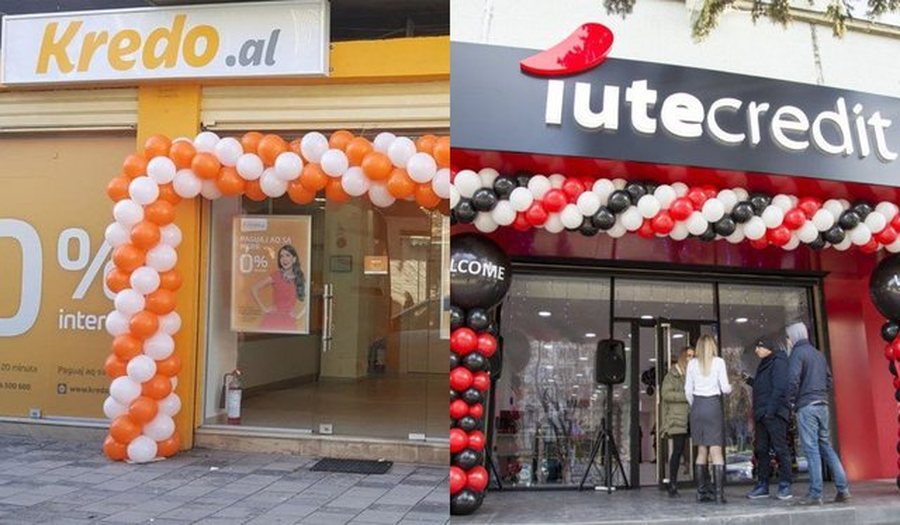
According to the data of the Bank of Albania, in our country there are 37 non-bank companies that provide loans. Although a regulation limiting high interest rates was adopted, until now the measures of the Bank of Albania and other authors have been non-existent.
Albania is drowned by financial pyramids. Many of us see ads on TV that you can get a loan with just one ID card, but then the challenges begin. These companies have turned into "leeches" that drink the blood of Albanians through pressure and enforcement.
The Chamber of Private Executors has denounced on dozens of occasions how these companies are ripping off Albanians through loans and certain executors. The most egregious case is that of a citizen who was left without 500 Lek at one of these companies and ended up in court and received 150,000 Lek.
There are endless cases like this and many individuals risk property or businesses. According to the data of the Bank of Albania, in our country there are 37 non-bank companies that provide loans. Although a regulation limiting high interest rates was adopted, until now the measures of the Bank of Albania and other authors have been non-existent.
In Kosovo and some other countries, many such companies have been closed, but here they are only increasing. Meanwhile, if we look at the BSH data, from a monitoring that was done to these institutions, many problems were found. According to BSH, there are: inconsistencies of the internal regulatory framework with legal/regulatory requirements; lack of processes to prevent money laundering and terrorist financing; lack of supporting documentation on the source of funds, for some cases of transactions in physical money; incomplete legal information kept on file for the client. Failure to update legal information. Failure to update the client's identification documents; lack of legal and financial documentation for some companies of the shareholder chain; lack of exercise of "Proper Vigilance" and "Extended Vigilance" for the client regarding the verification of the source of funds; lack of evidence for suspected cases of similarity of names with the announced lists and the list of sanctions of the KSKB or evidence that verified the lists; failure to perform an automatic filtering of existing customers whenever the announced lists are updated in the system; deficiencies in training programs on specific topics for measures against the financing of terrorism and the implementation of international sanctions of the KSKB.
interest
Meanwhile, the data on interest and commissions that these institutions apply clearly show that their high level for small loans is not justifiable at all. Specifically, the interest rate in second level banks starts from 0% to almost 20%, while in non-bank institutions the interest rate starts from 3% to 38%.
In addition to high commissions, non-banks also seek to benefit through the maneuvers they do in the late interest scheme. From the collected data, it is noticeable that from non-banks the percentage added to the monthly installment for delays is much higher than the level applied by banks. But it does not end there, in addition to late interest, the customer must also pay for messages or letters sent by the company to remind him of the deadline. According to the data, just one message sent by the non-bank to the client, 200 ALL are automatically added to him as late interest costs, while 750 ALL are added as costs for letters sent. So with more than 2 messages and 4 letters per month, in two months of delay the customer must pay 4000 thousand ALL just for the warnings sent to him. "The penalty for the first late installment is calculated at 0.85%* 13725.67 ALL = 116.6 ALL *70 days = 8166.77 ALL. The penalty for the second late installment is calculated as 0.85% *13725.67 ALL = 116.6 * 30 days = 4666.82 ALL. In this case, 7 notification SMS are sent to the customer in a delay of 70 days at a cost of 200 ALL = 1400 ALL; 4 notification letters are sent at a cost of 750 Lek each = 3000 Lek. The cost of notifications, according to this case, is ALL 4400", the data states.
pressures
But this is only on paper, since the longer the loan is postponed, the more the interest goes, and in the end you have to pay twice. But that's not all. If you delay payments, then "Iute Credit", "Credo.al", etc., contact some enforcement companies (which are actually illegal) which put pressure on citizens with messages and letters, threatening to block your apartments, sue etc. The above case clearly shows how they sent a citizen to court for 500 ALL. / Pamphlet






Lini një Përgjigje