


 Shkruar nga Tim Lister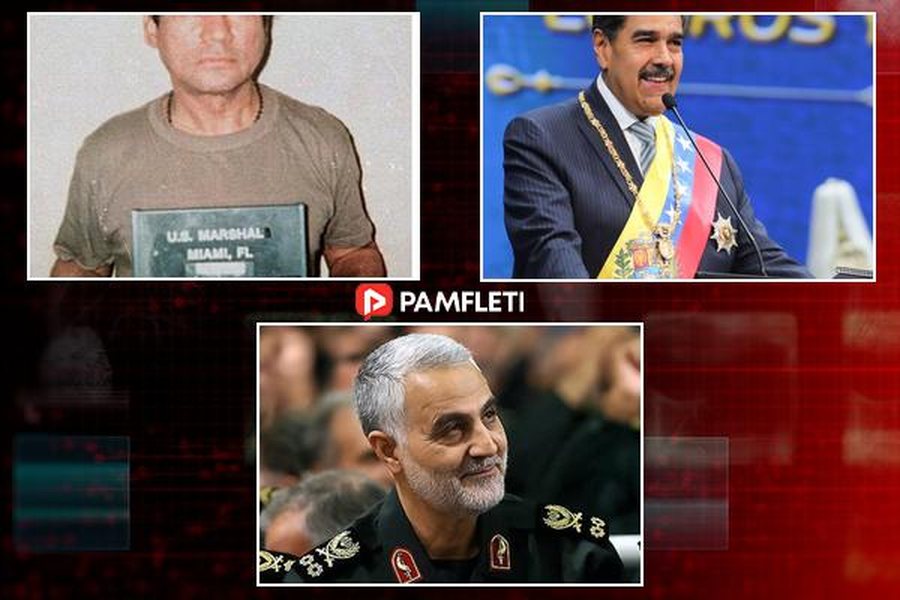
Noriega and Maduro are not the only figures targeted by the US on this calendar day.
January 3rd has been an unlucky day for some of the United States' opponents.
36 years ago, Panamanian military leader Manuel Noriega fled the Vatican embassy in Panama City, where he had taken refuge, and surrendered to US forces. He was flown to the US to face drug trafficking charges.
Noriega's capture and extradition to the US, in what was called Operation Just Cause, was the last time a de facto ruler of a state was arrested by US forces in his own country. (Noriega was head of the Panamanian Defense Forces and not president, but he ruled the country in all but title.)
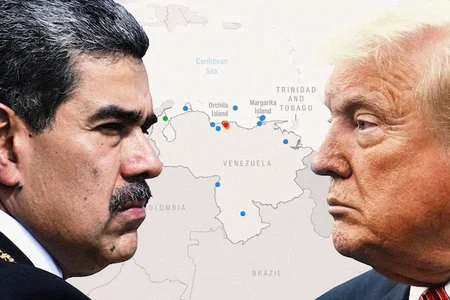
Like Nicolás Maduro, he was accused of collaborating with Colombian drug cartels and acting as a middleman for the smuggling of cocaine into the U.S. A U.S. federal grand jury in Florida indicted Noriega on drug trafficking charges in 1988.
Then-President George W Bush, citing the protection of American citizens and the war on drugs, ordered US troops to enter Panama on December 20, 1989.
After receiving a reduced sentence, Noriega served 17 years in prison and then spent time in French and Panamanian prisons before his death.
Noriega and Maduro are not the only figures targeted by the US on this calendar day.
Six years ago, the first Trump administration carried out a precision strike in Baghdad that killed one of the most powerful figures in the Iranian regime: Qasem Soleimani.
Soleimani was the head of the Islamic Revolutionary Guard Corps' Quds Force and the architect of Tehran-brokered conflicts in the Middle East. Abu Mahdi al-Muhandis, the deputy head of the Iranian-backed Iraqi Popular Mobilization Forces (PMF), was also killed in that attack.
The Pentagon blamed Soleimani for attacks on coalition bases in Iraq, including one that killed an American contractor, as well as an attack on the US embassy in Baghdad. / Taken from "CNN", adapted from "Pamphlet"



Lini një Përgjigje