


 Shkruar nga Pamfleti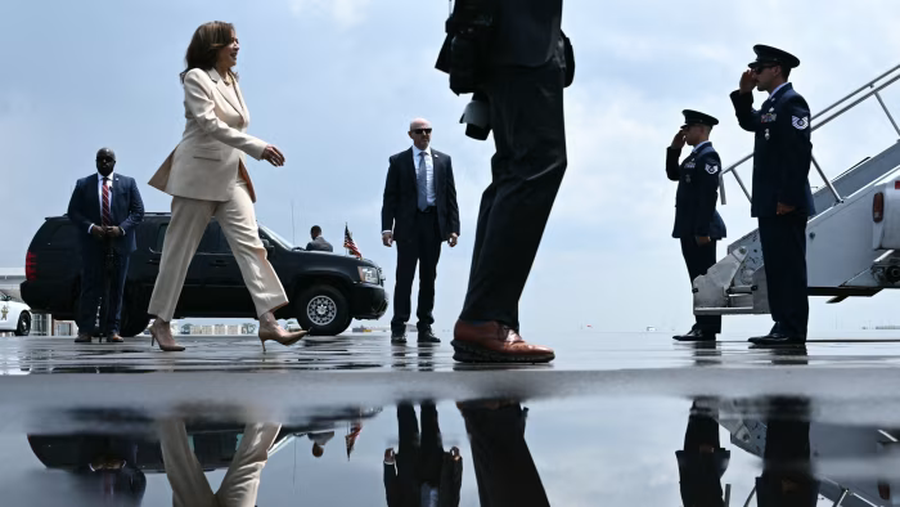
Clinton could reasonably argue that she was more experienced than Obama, but she also knew, as any woman running for an office involving national security or domestic affairs knows, that she had to balance being tough. with being human.
All US presidential candidates must strive to prove that they are tough enough to take control of the world's largest military arsenal, serve as commander-in-chief of the world's most deployed forces, and protect the people. American wherever they are.
We remember Hillary Clinton's ad in 2008, when she was running against Barack Obama. She showed a photo of the children asleep with the voice saying: "It's 3 in the morning. . . a phone is ringing in the White House. . . Your vote will decide who answers that call; if it's someone who already knows the leaders of the world, who knows the military, someone tested and ready to lead in a dangerous world.”
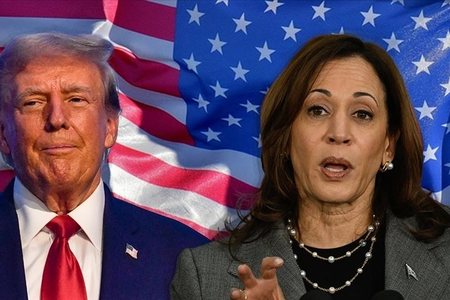
Vice President Kamala Harris, the Democratic presidential nominee, faces the task with additional challenges. Clinton could reasonably argue that she was more experienced than Obama, but she also knew, as any woman running for an office involving national security or domestic affairs knows, that she had to balance being tough. with being human, warm enough to meet expectations. Even former German Chancellor Angela Merkel, a sober and no-nonsense presence, found favor with her voters as "Mutti Merkel", or Mummy Merkel.
Harris is already facing challenges for her laugh, of all things, as part of a Republican attack that will try to portray her as fundamentally unserious and that currently appears to be failing.
Beyond all this nonsense, however, remains the very real question of what would a Harris foreign policy actually look like?
Efforts to find space between Harris and President Joe Biden, particularly on Israel/Gaza, differ in tone rather than substance.
The life experience of Harris and her top foreign policy staff provide a better guide. First, it is very tough. She was a prosecutor, bringing cases against criminals in order to send them to prison. Her steely demeanor has been on display both in questioning at Senate hearings and in repeated appearances at the Munich Security Conference. In 2023 she used her speech to accuse Russia, in graphic detail, of crimes against humanity; this year she detailed the ways in which "Putin's war has already been a complete failure for Russia."
Interestingly, perhaps because of the need for prosecutors to focus on victims as well as perpetrators, Harris speaks of human suffering as well as state interests. After meeting Israeli Prime Minister Benjamin Netanyahu, she made a statement about the "dead children and desperate, hungry people fleeing for safety" in Gaza and declared: "I will not be silent." However, her sensibility is not ideological; she also said she "stands with" the families of the Israeli hostages.
Machiavelli told his prince to harden his heart in foreign affairs, distinguishing between the morality of action necessary to secure an entire nation and individual morality. Harris, like Biden, seems determined not to harden her heart.
Harris is a staunch internationalist, stressing that "US global leadership is for the direct benefit of the American people." However, her primary focus on domestic affairs throughout her career, as well as her experience of the impact of climate change in California and engagement with the immigrant crisis during her vice presidency, should push her toward an integrated view of threats. global.
Rebecca Lissner, Harris' deputy national security adviser, oversaw the Biden administration's National Security Strategy for 2022, the first to acknowledge the gravity and equal threat of transnational and geopolitical threats to the US.
Lissner's boss, Philip Gordon, links this emphasis to Harris' willingness to look ahead, noting, "The vice president often asks how the things we do today will affect the United States and the world five, 10 or 20 years from now. the future. That's why you've seen it focus so much on issues like artificial intelligence, space, climate, and women and girl empowerment. and in dynamic and growing parts of the world such as Southeast Asia and Africa.”
Finally, both Biden and Harris take justifiable pride in how the US has built its position abroad by strengthening its infrastructure and technological capabilities at home.
From firsthand experience, however, Harris is more likely to be aware of the ways in which racial, ethnic, and political divisions weaken the country. Her mantra is less likely to be "foreign policy for the middle class" than a version of "peace through strength," where strength is derived from many sources, including fair and equal treatment for all Americans. Call it a new mix of power and right./ Adapted "Pamphlet" from "Financial Times"



Lini një Përgjigje