


 Shkruar nga Matthew Kaminski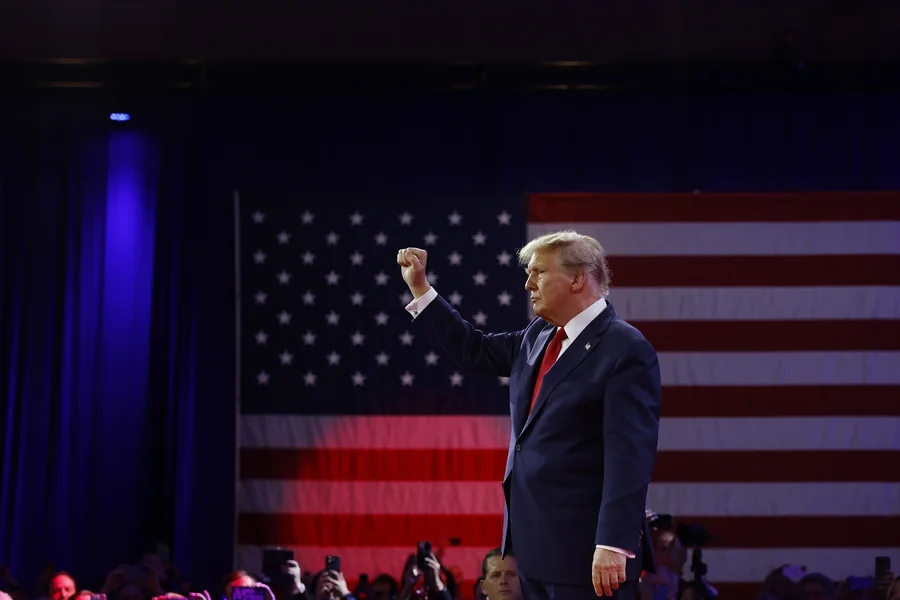
A clear victory gives the president-elect a strength and credibility on the world stage that he lacked eight years ago.
Eight years ago, at a post-election breakfast we hosted at POLITICO's offices in Brussels, I watched Donald Trump claim victory in the presidential election for the first time to stunned European lawmakers and policymakers.
The reaction in world capitals this Wednesday morning was very different. Anxiety in many, joy in some. But not friend. The world has experience with Trump in office. These same people from the Brussels party in 2016 have spent months preparing for a possible restoration.
There is something else that is different and more unexpected. One of America's perceived weaknesses is our "polarized" and "dysfunctional" politics. I haven't heard those words since the election was called early for Trump. The manner of his victory neutralizes the charge that for all of America's great advantages over every other rival, what condemns us to be a fading giant is our messy domestic politics.
These elections are clarifying. Trump will lead a unified party, unlike after 2016, and most likely a unified government. You could call it so many things, but that's not a recipe for dysfunction or a sign of weakening polarization at the moment. Trump has a mandate. He will not contest his victory as he had to with the Russia investigation. He has a lot of other baggage, including some legal troubles and 78 years of habits. But Trump is a much stronger figure than the '16 version, when he was distrusted by Republican mandarins and scorned by Democrats for taking the White House after losing by three million votes. Stronger at home and as a result abroad.
This political comeback gives Trump credibility and freedom on the world stage that he didn't have in 2017. That doesn't mean he'll be "presidential" anymore, not by conventional standards. "Unpredictable", Donald Tusk, the Prime Minister of Poland, called it this week. I am not suggesting that this means that the US is bound to be stronger. Trump's isolationism, his thing for Vladimir Putin and trade protectionism are red flags from an already long public life.
I'm saying Trump has the ability to shape the world like he hasn't before. This is terrifying or exhilarating, depending on whether Trump chooses to engage with the world or wallow. "Gloom and doom" is the mood in much of Europe, according to former Swedish prime minister and face of the European establishment Carl Bildt. In the Free Press, British economic historian and columnist Niall Ferguson sees the potential for Trump to be a powerful presence on the global stage, seeing a "line of continuity" from Reagan to Trump that could lead liberals to victory in "Cold War II."
The world is more complicated and dangerous than the one Trump left behind as president in 2021. In this Cold War, the US faces an empowered axis of authoritarians led by China, joined by a Russia at war in Europe, Iran at war between East and North Korea. This group met last month in Kazan, Russia with others such as South Africa and NATO member Turkey in a kind of non-American parallel world summit.
American allies in Asia and Europe are looking to Washington for leadership. Will Trump surprise them? That depends on whether "Make America Great Again" is more about, to use some other Trumpist-loving slogan, "America First" (in the sense of 1930s isolationist Father Coughlin) or "Peace Through Strength ".
Three early tests will tell. Who does Trump put in which countries? What does he do for Ukraine? And how far he goes to restrict world trade.
Trump's options for his team run the gamut. Seasoned professionals former NSC adviser Robert O'Brien and Florida senator Marco Rubio want America to engage the world. Brian Hook, appointed to lead the transition at the State Department, comes from that class.
Ric Grenell, the former ambassador to Germany appointed to the top post, is a fraud who takes his orders from Trump. Newly elected Vice President JD Vance is the insulating arm.
Ukraine will be the litmus test of American military and diplomatic power. Of course for Europe. But to my mild surprise, Ukraine was top of mind in Asia when I spent a few weeks there earlier this fall. When they look at what America is doing in Ukraine, they see it through the prism of what it can do to deter China in East and Southeast Asia.
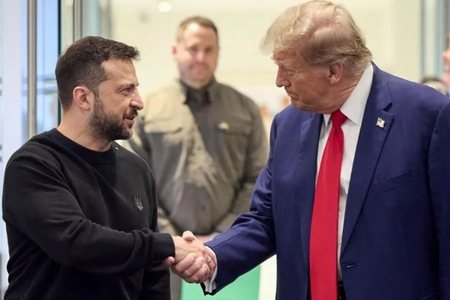
As Europeans watch, they worry about how committed the US will be to NATO and stability on their eastern flank with Russia. Both want clarity. During the campaign, Trump blamed Volodymyr Zelensky for starting the war and refused to say he wanted Ukraine to win. He says he wants to end it on the first day. Let's hope he doesn't. This should be easy for Trump and his advisers: Anything that gives Putin a win gives China a win, weakening Europe and the US. This is not a recipe for greatness or strength.
It was hard to miss Reagan's nod to leaders begging him to choose the Gipper's path. Ukrainian President Zelensky, wisely advised in this case, put "peace through strength" in his congratulatory tweet for Trump. Mike Johnson, the speaker of the House of Representatives who signed the $60 billion aid package for Ukraine this spring, dropped the phrase from the Mar-a-Lago stage Tuesday night. New NATO chief Mark Rutte praised Trump's "strong" leadership for the first time. Not to be outdone in his appeal to manhood, Vladimir Putin on Thursday praised Trump for acting "bravely like a man" after an assassin's bullet grazed his ear.
Finally trade, the test of America's global economic leadership. Trump is not the model student. He escalated his promises of "handsome" rates (20! 50! 100 percent!). But he's a real estate guy: He'll try to sell you a $1 million condo by offering it for $10 million. Will he risk plunging the global economy into recession and fuel inflation by implementing those tariffs?
An alternative comes from his first term. He was embarrassed then, but renegotiated the free trade agreement with Canada, Mexico and the US. There was no chance that either Trump or Harris would support new regional trade deals. There is a version of Trump that protects the US and global economy even as Washington tightens the screws on China economically through trade restrictions.
In the coming months, Trump will address the world from a position of strength. The scenario that is more difficult to imagine is that Trump and America withdraw from the world. If we know anything about him, it's that he wants to be in the center of the stage./ Adapted "Pamphlet" from "Politico"


Lini një Përgjigje