


 Shkruar nga Pamfleti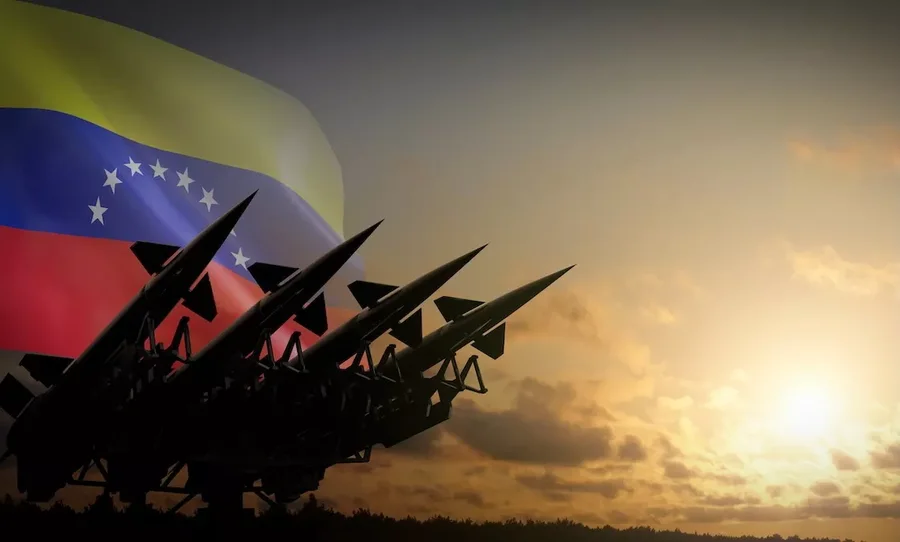
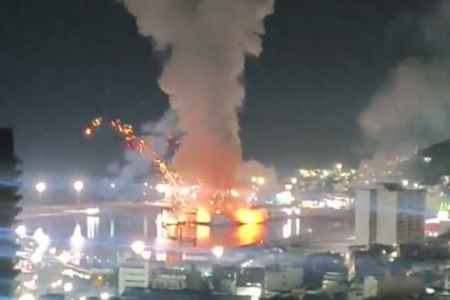
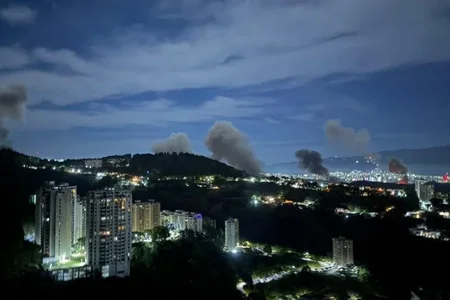
Air raid sirens and painful explosions were heard in Caracas in the early hours of this morning, with residents hearing repeated explosions and seeing columns of smoke rising in different parts of the Venezuelan capital.
The sounds of explosions began around 02:00 local time, with at least seven loud explosions recorded in different neighborhoods. Low-flying aircraft were also spotted, raising alarm and concern among residents. Many areas, especially on the south side of the city near military installations, were left without electricity after the events.
One of the bases reportedly hit is Fort Tiuna, the main military complex that houses the Ministry of Defense and the Military Academy. Videos of the events show smoke rising into the air, raising suspicions of targeted attacks on military structures.
The Venezuelan government under Nicolas Maduro has declared a state of emergency and accused the US of attacks on civilian and military installations, while US authorities have yet to officially respond to their exact role. The FAA (Federal Aviation Administration) issued a ban on flights by US civilian aircraft in Venezuelan airspace, suggesting there are ongoing military activities.
The essential question is whether Venezuela “has the army and weapons” needed to support its threats. The answer is yes at the portfolio level, with a significant “but” in readiness. The armed forces (FANB) number over one hundred thousand active personnel, while Maduro presents the National Militia as a multi-million “shield” but mainly a tool of internal control and political legitimization. Independent assessments place the current availability lower, with the overall capacity affected by years of economic crisis and maintenance.
On the ground, the Army maintains a mix of Soviet, Russian, Western, and Chinese origins. It has older T-72B1V and AMX-30V tanks, VN-1 TOMA/TOMP, and wheeled vehicles, as well as powerful tube and rocket artillery with 2S19 Msta-S, 2S23 Nona, BM-21, and a limited number of BM-30 Smerch. The Army’s and regional air defenses have been strengthened in the last decade with modernized Russian Buk-M2E and S-125 Pechora-2M systems. The appearance on paper is serious, but support for spare parts and ammunition supplies is a permanent Achilles heel.
The "heavyweights" of strategic air defense are the S-300VM (Antey-2500), delivered around 2012 and offering long-range capabilities against aircraft and some ballistic or cruise missiles. They constitute an obstacle to any deep-in-country operations, especially if combined with radars, Buk and portable Igla. The issue is the current availability of systems and radars, with recent US assessments pointing to extensive coverage gaps.
The Air Force initially has 24 Russian Su-30MK2 fighter jets with air-to-air and strike capabilities, as well as a small fleet of outdated F-16A/B aircraft from the 1980s, whose operational value is limited by the embargo on spare parts, etc. Mi-35 and Mi-17 helicopters and transport vehicles complete this mix. However, the crux lies in the degree of readiness: information leaks and independent analyses agree that the availability of fighter jets and early warning systems is at low levels, which damages the image of power.
At sea, the Venezuelan Navy relies on four large Guaiquerí patrol ships/corvettes (Navantia Avante 2200 design) and smaller OPVs, with some older Lupo frigates in limited operation. There are two Type 209 diesel-electric submarines, but their current readiness is questionable. The naval presence is more often recorded in low-intensity incidents, such as the incursions into Guyana's EEZ in recent months.
The “potential A2/AD arsenal” is complemented by coastal and maritime strike capabilities. Reports attribute the integration of the Chinese C-802A to several platforms, although the relevant documentation has been questioned from time to time. However, such assets would make it difficult for individual convoys near the coast, but not for a consolidated force of the level of a US army with multilayered air defense and long-range maritime strike power.
Where does the "balance lock"?
The US has vast superiority in sensors, command and control, area air defense, and defensive weapons. It can impose maritime surveillance, intercept flows, and create an ISR network without entering the lethal range of the S-300VM. Venezuela, on the other hand, can increase costs near the coastline, seek “harassment” incidents, and use militias and air defenses as a narrative of deterrence. Structural gaps in maintenance, fuel, and spare parts remain its main disadvantage.
Conclusion. Venezuela “has an army and weapons” with exceptional systems for regional data, especially in the anti-aircraft umbrella and the accumulated artillery. However, the reality of readiness and the wear and tear of a decade of crisis reduce effectiveness. The current US naval display does not warn of an invasion, but requires strategic pressure, coercion and flow control. As long as the lack of high-intensity contact is maintained, the risk of a hot episode remains manageable. If there is a miscalculation, the first front will be the sea and air of the Caribbean, not the borders on land.





Lini një Përgjigje