


 Shkruar nga Lothar Gorris & Tobias Rapp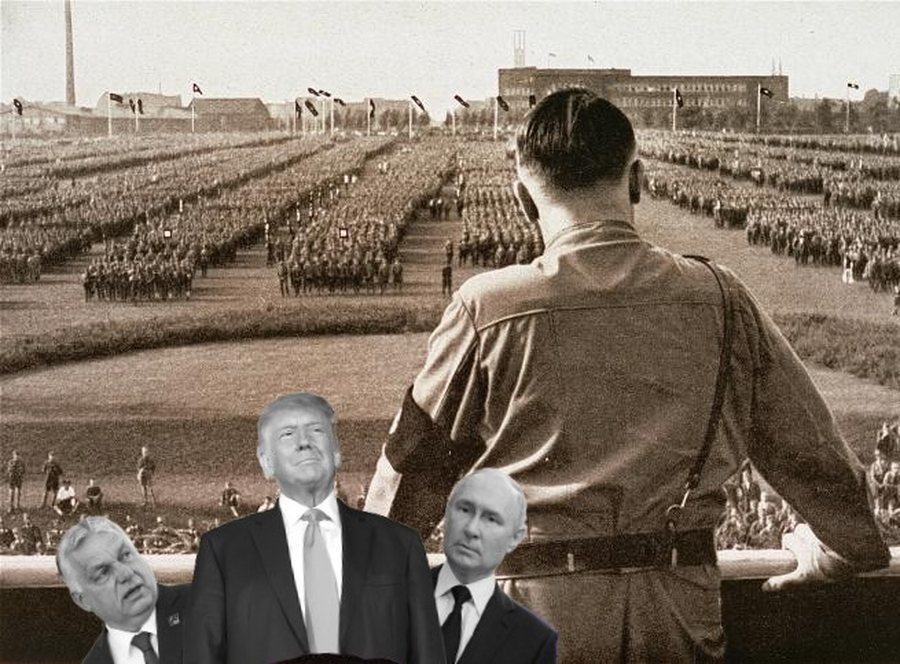
Will history repeat itself? And is it possible that democracy itself is helping to create the monster it so fears?
An acquaintance of ours, whose name is irrelevant to this story, once told us about this board game. He is a German who works for an Israeli company, and his colleagues proposed one evening to play the game "Secret Hitler", the goal of which is to identify Adolf Hitler and kill him before he becomes Chancellor of Germany.
It's a lot funnier than it looks, colleagues told him. But he refused. A German to play the game "Secret Hitler"? It seemed like a bad idea. Hardly anyone knows this game in Germany, and that shouldn't be surprising. Because it sounds very toxic, like bad karma.
The game takes place in 1932, in the Reichstag (parliament) of Berlin. Players are divided into two groups: fascists versus democrats. The Democrats are in the majority, but the fascists have a decisive advantage: they know who the other fascists are, which also reflects historical reality.
So the Democrats don't know that any of the other players can be a friend or a foe. The fascists win the game if they are able to pass 6 laws in the Reichstag, or if Hitler is elected chancellor. For the Democrats to win, they must pass 5 laws or find out who Hitler is and "kill" him.
This game was officially released in 2016, shortly before Donald Trump was elected president of the United States. The game's authors, some young Democrats, received $1.5 million in funding from the Kickstarter platform. Their aim was to encourage distrust in the political process, analyzing the spirit of the times: the euro crisis, the annexation of Crimea by Russia, Brexit or the refugee crisis.
Public debate at the time focused on the crisis of democracy, the threat from far-right trends and authoritarianism. A return to fascism is a deep-rooted fear in modern democratic societies. But while for a long time it seemed impossible and unimaginable, it is now starting to look like a serious threat.
Vladimir Putin's Imperial Ambitions in Russia. Narendra Modi's Hindu Nationalism in India. Giorgia Meloni's victory in Italy. Marine Le Pen's strategy for normalizing right-wing extremism in France. Javier Mile's victory in Argentina. Hungary's autocratic rule by Viktor Orbán.
The return to power of the far-right party in Austria, Geert Wilders in the Netherlands and the rise of the AfD in Germany. Then there is the possibility of a second Trump administration, with fears that he could go even further than during the first. And then there are the attacks on migrant centers in Britain. Neo-Nazi protests in Bautzen. The pandemic. The war in Ukraine. Inflation.
Will history repeat itself? Are historical analogies useful? What went wrong? And is it possible that democracy itself is helping to create the monster it so fears? In May 2016, Donald Trump won the primary election within the Republican Party, and the world was worried when historian Robert Kagan published an article in the "Washington Post" with the title "This is how fascism is coming to America."
He was among the first in the US to call Trump a fascist, and it attracted a lot of attention around the world. Now he has just published his ninth book, The Rebellion: How Anti-Liberalism Is Tearing America Apart Again, in which he describes Christian and white nationalism in America as a challenge to liberal democracy.
And according to him, this time the situation could be even worse. "If Trump wins the election, the old system will be destroyed. He will use the Justice Department to exact revenge on his enemies and imprison hundreds of thousands of illegal immigrants. Opponents describe Kagan as "the most dangerous intellectual in America".
But if he is a conservative, then Jason Stanley, professor of philosophy at Yale University, is a liberal leftist. However, his views are similar to those of Kagan. Six years ago, Stanley published the book How Fascism Works: The Politics of Us Against Them. Modern-day fascism, he writes, is a cult of the leader, in which he promises the rebirth of a humiliated country.
Fascist regimes, Stanley further argues, begin as social and political movements and parties, and they tend to be elected to overthrow existing governments. He talks about his 10 main features. First, every country has its own myths, its own narrative of a glorious past. But the fascist version of a national myth requires grandeur and military power.
Second, fascist propaganda portrays political opponents as a threat to the country's existence and traditions. Third, the leader determines what is true and what is false. Science and reality are seen as challenges to the leader's authority, and alternative views as threats.
Fourth, fascism lies. Fifth, he is addicted to hierarchies, which reveal his biggest lie, racism. Sixth, those who believe in hierarchy and their own superiority become nervous and afraid of losing their position in it. Fascism proclaims its followers as victims of equality. German Christians are victims of Jews, white Americans victims of equal rights for blacks, etc.
Së shtati, fashizmi siguron ligjin dhe rendin dhe atë e përcakton udhëheqësi. Po ashtu, ai përcakton se kush e shkel ligjin dhe rendin, kush ka të drejta dhe nga kujt mund t’i hiqen ato. Së teti, fashizmi ka frikë nga diversiteti gjinor. Së nënti, fashizmi priret t’i urrejë qytetet, pasi i sheh ato si vende të dekadencës dhe shtëpi e elitës, emigrantëve dhe kriminalitetit.
Dhe së fundmi, fashizmi beson se puna do t’iu bëjë të lirë. Sipas kësaj teze, pakicat dhe të majtët janë në thelb dembelë. Nëse përmbushet këto 10 kritere të Stanley, atëherë situata është shumë e rrezikshme. Fashizmi në SHBA, ka një traditë të vjetër. Ku Klux Klan, ishte lëvizja e parë fashiste në histori, dhe sipas studiuesit kjo traditë nuk është zhdukur, përkundrazi ekziston ende në shtetet jugore të SHBA-së.
Timothy Snyder, profesor i historisë së Evropës Lindore, është një nga intelektualët më të rëndësishëm në SHBA. Ai ka shkruar disa libra mbi Hitlerin dhe Stalinin. Snyder beson se presidenti rus po kryen në Ukrainë një luftë që është qartësisht e motivuar nga motive fashiste. Sipas tij kjo shihet edhe tek simboli Z, tubimet, propaganda, varrezat masive.
Putin e sulmoi Ukrainën ashtu siç Hitleri sulmoi Bashkimin Sovjetik, si një fuqi perandorake. Por versioni i fashizmit i Putinit, argumenton historiani, ka edhe tipare post-moderne. Post-modernizmi supozon se në këtë botë nuk ka të vërteta absolute. Vendimi se çfarë është e vërtetë dhe kush e përcakton atë merret në fushën e betejës.
Ndaj sipas Snyder, fitorja e Putinit do të sillte shumë me tepër sesa vetëm fundin e Ukrainës demokratike. “Nëse Ukraina nuk fiton, mund të na presin dekada errësirë”- paralajmëron ai. Ndërkohë nëse Trump fiton zgjedhjet në nëntor, Snyder beson se do të ketë një rezistencë të organizuar kundër mandati të tij të dytë. A do të përdorte Trump FBI-në apo edhe ushtrinë për të shuar trazira të tilla? Ç’mund të ndodhë me institucionet shtetërore? Snyder beson se ekonomia amerikane do të shembet, dhe institucionet si FBI dhe ushtria mund të copëtohen nga konfliktet.
Por si u bë e mundur ngritja e Trumpit? Si ka mundësi që një demokraci të zhytet kaq thellë në absurditet?
Së pari, thotë Snyder, karriera e Trump bazohet mbi një bllof. Ai nuk ka qenë asnjëherë ndonjë biznesmen i suksesshëm, dhe e gjeti suksesin vetëm si një figurë televizive. Ai e di se çfarë duhet për t’u pëlqyer njerëzve, dhe ky është një parakusht i rëndësishëm për një udhëheqës karizmatik në zhvillim.
Së dyti, mediat sociale ndikojnë tek aftësitë tona perceptuese. Në fakt tek to ka diçka fashiste, pasi na heqin aftësinë për të shkëmbyer argumente në mënyrë kuptimplote. Na bëjnë më të padurueshëm, dhe kështu gjithçka bëhet e zezë ose e bardhë. Ato prodhojnë një cikël zemërimi. Zemërimi konfirmon zemërimin. Dhe zemërimi prodhon zemërim të mëtejshëm.
Third, the Marxists of the 1920s and 1930s, says Snyder, believed that fascism was simply a variant of capitalism, that it was the oligarchs who enabled Hitler to rise to the top. But that's not true, argues Snyder. Big business initially supported Hitler because they wanted him to free them from the unions. But most of the oligarchs did not support his ideas.
Today one of these new oligarchs, Snyder points out, is Elon Musk. No one has done more than him in a year and a half to advance fascism. Since he bought Twitter, today X, the platform has become even more emotional, more open to all kinds of filth, especially to Russian propaganda.
Musk uses it to spread the most disgusting conspiracy theories. Like Robert Kagan, Snyder also believes that democracies have underestimated the danger posed by fascism because they have long believed that there is no alternative to democracy. /Adapted "Pamphlet" from "Der Spiegel"






Lini një Përgjigje