


 Shkruar nga Pamfleti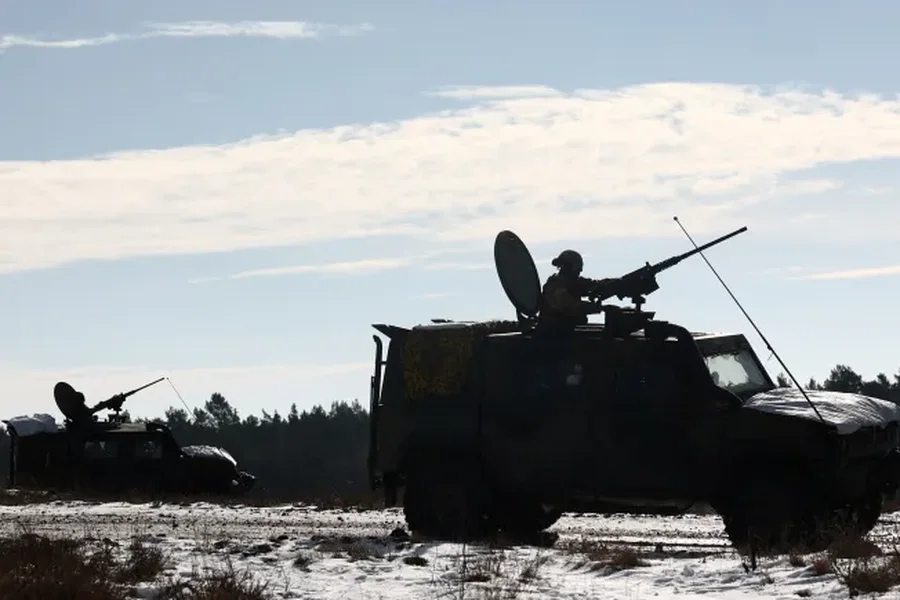
The security of the old continent remains in the hands of 4 states, which must fill the void if the US withdraws...
Threatened by an aggressive Russia and no longer able to rely on the United States for its security, the European Union is trying to chart a new path forward. For decades, Europe assumed its American ally would protect it in the event of a direct attack from the east. But US President Donald Trump’s hostile attitude toward Europe, demonstrated through insults and threats during the war with Iran, has cast serious doubts on that arrangement. The question now is how to ensure that Europe can defend itself.
The EU has responded to this crisis by developing new institutions and programs to channel hundreds of billions of euros into more coordinated and effective defense. But time is not on its side. In June 2025, NATO Secretary-General Mark Rutte warned that “Russia could be ready to use military force against NATO within five years.” Since then, Russian fighter jets have flown over Estonia, Russian hackers have attacked power plants in Poland, and Russian drones have penetrated Polish territory. European Commission President Ursula von der Leyen has called this “a deliberate and targeted campaign in the gray zone against Europe.” Meanwhile, according to Reuters, US officials have told European partners that they must take primary responsibility for the continent’s defense by 2027.
Because of these time pressures and different perceptions of threat among European countries, the continent’s security will not be determined by Brussels. The coordination process at EU level is too slow to cope with a possible American withdrawal or Russian escalation. As a result, in the near future, European security will depend on the decisions of four important states, motivated by their interests and fears: Germany, Poland, France and the United Kingdom. The greatest effort and the main influence will come from a mobilized Germany. Poland will have to provide the first line of defense against an initial Russian attack, while France and Britain, the only nuclear powers in Europe with force projection capabilities, will play crucial supporting roles.
Return to defense
The first step towards the European project was taken in 1951, when France and Germany pooled their coal and steel industries for collective security. The following year, several European countries agreed to create the European Defence Community, which would have provided for a common army. But the French parliament rejected the agreement and the focus shifted to economic integration, leaving defence in the hands of nation states.
The EU has occasionally returned to defence issues. At the beginning of the 21st century, structures such as the European Defence Agency were created to foster cooperation. After the Russian invasion of Ukraine in 2022, the EU introduced new strategies and funds for the joint development of military capabilities. However, joint spending remains limited compared to national budgets.
Efforts at intergovernmental cooperation often run into difficulties. The Future Combat Aircraft (FCAS) project between France, Germany and Spain has been blocked by strategic and industrial disagreements. France wants a flexible aircraft with nuclear capability, while Germany prefers a heavy platform with long range.
Meanwhile, many European governments are seeing rearmament as an opportunity for economic growth and industrial development. National defense companies have benefited significantly, while military budgets have increased significantly since 2022. However, these increases remain uneven across countries.
The four crucial states
Ultimately, Europe's defense will depend on a few key states. Germany and Poland will bear the main burden of ground and air defense. France and the United Kingdom will provide strategic support through expeditionary forces and nuclear deterrence.
Poland is investing heavily in armaments and air defense, spending about 4.5% of GDP on defense. It is buying weapons from suppliers that can deliver quickly and who are willing to support domestic production.
Germany, on the other hand, has overcome its historical reluctance to military spending and now has one of the largest defense budgets in the world. Its plans for massive investment will be fundamental to European security and its industry.
France brings unique capabilities, including nuclear weapons, an intervention-ready army, and an advanced navy. However, budgetary constraints and political challenges limit further expansion of spending.
The United Kingdom maintains an important role thanks to its nuclear capabilities and deployable forces, although relations with the EU remain complicated in the field of defense.
For at least a decade, Europe’s security will depend on the decisions of these four powers. While these efforts will not necessarily strengthen defense integration at the European level, they could create sufficient capabilities to deter Russian aggression—or make it unthinkable. /Adapted from ForeignAffairs /


Europa nuk duket në ngutje, por ajo duhet të mbrojë veten, me apo pa praninë amerikane. Po kështu Shqipëriace Kosova duhwt të jenë të gatshme për një prëplasje eventuale me kriminelët e Ballkanit.
Titull agresiv! Akoma nuk eshte terhequr, dhe nuk do ta bej!