


 Shkruar nga Pamfleti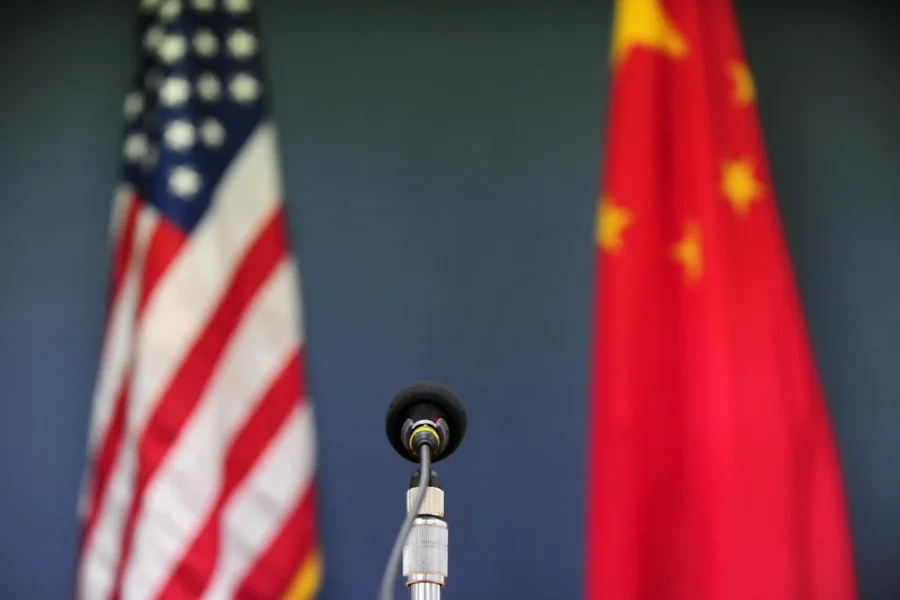
All three of these scenarios are entirely plausible. Neither is inevitable. Which one we end up in will depend on how the explosive nature of artificial intelligence drives changes in existing power structures, whether governments are able and willing to regulate tech companies, and — more critically — how tech leaders decide they want to use their newfound power.
Who runs the world?
This used to be an easy question to answer. If you're over 45, you grew up in a world dominated by two superpowers. The United States and its allies set the rules on one side of the Berlin Wall, while the Soviet Union called the shots on the other. Almost every other country had to align its political, economic and security systems with one side or the other. It was a bipolar world.
Then, in 1991, the Soviet Union collapsed, leaving the United States as the world's sole superpower. The US dictated outcomes both through its dominant role in international organizations and by exercising raw power.
It was a unipolar world.
About 15 years ago, the world changed again - and got more complicated. The United States became less interested in being the world's police officer, the architect of global trade, and even the promoter of global values. Other countries, becoming more powerful, were increasingly able to ignore rules they didn't like and, occasionally, make some of their own. This is a "G-Zero" world: a non-polar world without global leaders.
Three things happened to cause this geopolitical recession, when the global architecture no longer matches the fundamental balance of power.
First, Russia did not enter the Western-led international order. Now a former great power in serious decline, Russia has become extremely angry and sees the West as its main adversary on the global stage. If most of the blame for this falls on the United States and its allies or Russia, the fact is that this is where we are.
Second, China entered US-led institutions—but on the assumption that as the Chinese became more integrated, wealthy, and powerful, they would become more American (ie, a free-market democracy, willing to become a responsible stakeholder in Command and play by US-led rules without wanting to change them). As it turns out, they're still Chinese—and the United States isn't willing to admit it.
And third, the United States and its allies ignored tens of millions of its own citizens who felt left behind by globalization. Their grievances were further fueled by growing income and wage inequality, changing demographics and identity politics, and polarization by new media technologies. After decades of benign neglect, most of these citizens have grown fundamentally distrustful of their governments and of democracy itself, making their leaders less able or willing to lead.
All the geopolitical crises you see in the headlines every day; The war in Ukraine, the confrontation over Taiwan, the nuclear tensions with Iran and North Korea - about 90 percent of them are directly or indirectly due to the geopolitical recession caused by these three issues. In other words, crises are not about individual leaders. They are a structural feature of our geopolitical landscape.
However, for better or worse, geopolitical recessions don't last forever. And the global order that is coming is something very, very different from what we are used to.
We no longer live in a unipolar, bipolar or multipolar world.
Why? Because we no longer have multidimensional superpowers – as in countries that exercise global power in every field. That's right, the United States and China are not superpowers today—at least not in the way we've always used the term. And no superpower means no single global order. Instead, what we have today are multiple world orders, separate but overlapping.
First, we have a unipolar security order. The United States is the only country that can send soldiers, sailors and military equipment to every corner of the world. No one else comes close. America's role in the security order today is more essential—and, indeed, more dominant—than it was a decade ago.
China is rapidly building up its military capabilities in Asia, but nowhere else in a significant way. This is increasingly worrying for America's Indo-Pacific allies, who now rely on the US security umbrella more than before. Russia's invasion of Ukraine has similarly made Europe more dependent on US-led NATO than it has been in decades. Meanwhile, Russia's military has been weakened by the loss of some 200,000 troops and much of its critical materiel in Ukraine, which it will struggle to rebuild in the face of Western sanctions.
Yes, China, Russia and others have nuclear weapons, but actually using them is still tantamount to suicide. The United States is the world's only security superpower—and will remain so for at least the next decade.
But military power does not allow Washington to set the rules for the global economy, because the economic order is multipolar. The US has a powerful and dynamic economy, still the largest in the world, but global power here is widely shared.
Despite all the talk of a new cold war, the United States and China are too economically interdependent to be separated from each other. Bilateral trade between the two continues to reach new highs, and other countries want access to both American muscle and the growing Chinese market (soon to be the largest in the world). You can't have an economic cold war if there's no one willing to fight it.
Meanwhile, the European Union is the world's largest single market and is able to set rules and standards that Americans, Chinese and others must accept as the price of doing business with it. Japan is still a global economic powerhouse, if not. India's economy is growing rapidly, and with it, so is its influence on the global stage.
The relative importance of these and other economies will continue to change over the next decade, but what is certain is that the global economic order is and will remain a multipolar order.
There are tensions between the security order and the economic order. The United States wants to designate more and more areas of the economy as critical to national security, and is pressuring other countries to adjust their policies accordingly, on semiconductors, critical minerals and perhaps soon on TikTok. For its part, China wants to use its commercial and trade leverage to increase its diplomatic influence. Europe, India, Japan and other countries want to ensure that neither security nor economic order dominates the other – and they will likely succeed.
These are the two world orders we already see. But there is a third, rapidly developing order that will soon have more influence than the others: the digital order. There, unlike any other geopolitical order past and present, the dominant actors who set the rules and exercise power are not governments, but technology companies.
You've heard how NATO weapons, intelligence and training have helped Ukrainians defend their land. But if Western tech companies hadn't come to the rescue quickly in the early days of the invasion — fending off Russian cyberattacks and allowing Ukrainian leaders to communicate with their soldiers on the front lines — Russia would have knocked Ukraine out entirely. line within weeks, effectively. Perhaps Ukrainian President Volodymyr Zelensky would not be in power today if it weren't for tech companies and their power in the new digital order.
Tech companies decide whether former US President Donald Trump can speak unfiltered and in real time to hundreds of millions of people as he runs for president again. Without social media and its ability to promote conspiracy theories, there is no January 6 uprising on Capitol Hill, no trucker riots in Ottawa, no January 8 revolt in Brazil.
Technology companies even define our identity. We used to wonder if human behavior was primarily the result of nature or nurture. Not longer. Today, it's nature, nurture and algorithm. The digital order is becoming a critical determinant in how we live, what we believe in, what we want - and what we are willing to do to achieve it.
That's a staggering amount of power that tech companies have amassed — so much so that they've become geopolitical players in their own right. These for-profit actors now control aspects of society, the economy and national security that were long the exclusive property of the state. Their private decisions directly affect the lifestyles, interactions, and even thought patterns of billions of people around the globe. Increasingly, they also shape the global environment in which governments themselves operate.
But how will tech companies use their new power? There are three possible scenarios.
If US and Chinese political leaders continue to assert themselves more and more forcefully in the digital space, and if tech companies align with their home governments, we will end up in a cold technology war between the US and China. The digital world will be split in two, other countries will be forced to choose sides, and globalization will be torn apart as these strategically disconnected technologies become the commanding heights of national security and the global economy.
If tech companies stick to global growth strategies, refusing to align themselves with governments and maintaining the existing divide between the physical and digital domains of competition, then we will see a new globalization: a globalized digital order. Tech companies will remain sovereign in the digital space, competing primarily with each other for profits—and with governments for geopolitical power, in the same way that major state actors currently seek influence in the space where economic and security orders overlap.
But if the digital space itself becomes the most important arena of great power competition, with the power of governments continuing to erode relative to the power of technology companies, then the digital order itself will become the dominant global order. If this happens, we will have a post-Westphalian world – a technopolar order dominated by technology companies as the central players in 21st century geopolitics.
All three of these scenarios are entirely plausible. Neither is inevitable. Which one we end up in will depend on how the explosive nature of artificial intelligence drives changes in existing power structures, whether governments are able and willing to regulate tech companies, and — more critically — how tech leaders decide they want to use their newfound power./ Adapted from Foreign Policy; pamphlet



Lini një Përgjigje