


 Shkruar nga Pamfleti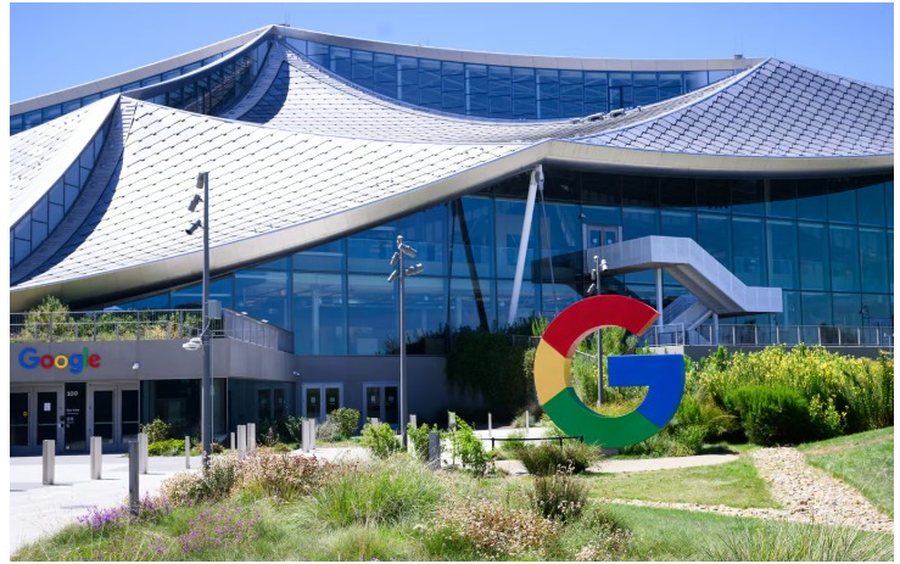
In targeting US services, Brussels could be thinking of banks like JP Morgan or Bank of America, or tech players like Elon Musk's social network X, search giant Google or Amazon, the world's largest online retailer.
It's one thing to hit up Harley-Davidson motorcycles and bourbon whiskey, it's another to go after Silicon Valley or Wall Street.
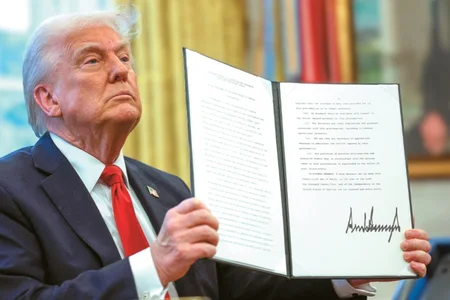
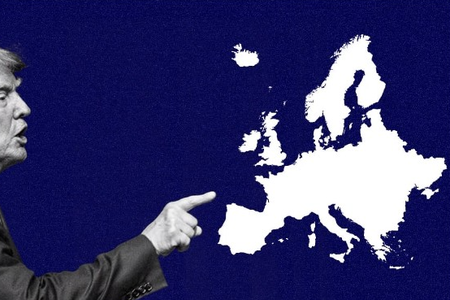
The European Union is considering opening a new battlefront as President Donald Trump prepares to impose so-called reciprocal tariffs on all of America's trading partners on Wednesday.
"Liberation Day," as Trump has called it, would mark the biggest escalation in the trade war he first launched against Canada, Mexico and China after his inauguration on Jan. 20. Universal tariffs quickly followed on steel and aluminum and then cars - putting the onus on the European Commission, the EU's executive, to protect the economic interests of the 27-member bloc.
Brussels has so far played by the traditional trade war rules, matching Trump's broader tariffs on industrial metals with equivalent taxes on iconic American brands like Harley-Davidson. The tit-for-tat response is intended to match or "mirror" the administration's moves - but not escalate.
Now, with Washington threatening to further punish the EU, not only for its existing tariffs but also for what it sees as non-tariff barriers such as its technology regulations, Brussels is preparing to move forward.
"We will approach these negotiations from a position of strength," European Commission President Ursula von der Leyen said in a speech to the European Parliament on Tuesday, on the eve of Trump's big tariff announcement.
"Europe has many cards. From trade to technology, to the size of our market. But this strength is also based on our willingness to take strong countermeasures. All instruments are on the table," she said.
In targeting US services, Brussels could be thinking of banks like JP Morgan or Bank of America, or tech players like Elon Musk's social network X, search giant Google or Amazon, the world's largest online retailer.
“We are certainly not ruling out a bigger response, a better response and an even more creative response through services, through [intellectual property rights],” a senior European Union official told reporters in mid-March.
The EU is a net exporter of automobiles, pharmaceuticals and food to the US, but it is a net importer of services – and that gives it more leverage in a trade dispute. (Taking goods and services together, transatlantic trade is actually broadly in balance. The EU enjoys an overall surplus of just $50 billion, or about 3 percent of the $1.7 trillion in annual transatlantic trade.)
"America's tech giants, financial industry and pharmaceutical companies have deep roots in Europe. Digital taxes in Silicon Valley, regulatory tightening on Wall Street or taxes on US drug exports are options," said Tobias Gehrke, a senior foreign policy fellow at the European Council on Foreign Relations.
"America may wield the biggest stick, but Europe has many sharp stones to throw," he added.
Blow for blow
In the trade war ring with Trump, the EU executive has so far fought in the same weight class: blow for blow.
After Washington imposed new and broader tariffs on steel and aluminum imports in mid-March, the Commission is poised to respond in kind by hitting 26 billion euros in US exports of goods. After tough consultations with EU governments and businesses, Brussels is due to propose tariff lists this week.
“If Trump imposes reciprocal tariffs, we are entering a whole new game,” said an EU diplomat, who, like others quoted in this story, has been granted anonymity to speak frankly.
Depending on Trump's own playbook, there are two broad ways the Commission could go about cracking down on services.
First, using the existing regulations it has built up over the past five years, it could tighten the rules governing Big Tech; tax major US banks; or slow down the issuance of licenses to do business in the EU.
"When you look at the positioning of the big American tech companies in recent months, which are all close to Trump, you get the impression that they are lobbying the White House against Europe. In fact, they are extremely vulnerable to retaliatory measures," said Yves Melin, a founding partner at the law firm Cassidy Levy Kent.
One such example is the bloc's Digital Markets Act, which aims to curb the power of dominant tech players and protect competition. The commission will decide this week whether Apple and Meta are violating these rules.
But it is also an area where Brussels will be wary of fanning the flames.
"The problem with the digital part is that the moment the EU does this, the pressure from the US on the regulatory framework will even increase," said Arnoud Willems, partner for international trade at law firm King & Spalding.
Taxing financial transactions and digital flows, or making US airlines pay more to land at European airports, are other levers at the EU's disposal, he added.
The EU could also restrict US companies' access to public contracts under its new International Procurement Instrument. If Brussels shuts out US energy or consulting firms from EU public contracts, it would hit a major source of revenue.
Bazookas
As a last resort, the EU could deploy its trade “bazooka” — the Anti-Bribery Instrument. As the name suggests, it would enable a broad-spectrum response, including targeted services, if Brussels concludes that the US actions are excessive.
"These things are in principle ... possible, for example, under the Anti-Bribery Instrument," the senior EU official quoted above said when asked whether the EU would crack down on trade in services.
Within 6 months, the Commission could go as far as pulling the plug on Musk's X; restrict the intellectual property rights of US tech giants; or ban them from investing in the EU.
While the EU executive would call the shots when this nuclear option is used, it would need the support of 15 of its 27 member states to decide whether and how to strike.
"Many member states do not want the clash to escalate by triggering a case against coercion," said the EU diplomat quoted above.
European businesses are also concerned about following this path.
"The problem with all these ideas of leverage is that they are not really leverage," said Luisa Santos, deputy director general at the corporate lobby group BusinessEurope.
“Our economies are so intertwined … that even if you put tariffs or any other measure on the services side, you will hurt your own interest,” she added.
And even as it signals its willingness to escalate, Brussels is also hoping to bring Washington to the negotiating table. Trade Commissioner Maros Sefcovic hopes his American counterparts can agree on a “term sheet” that sets a framework for talks — when the next round of tariffs would go into effect.
These could include lowering tariffs, investing in American defense firms, increasing purchases of liquefied natural gas from the US, or easing some regulations.
"We don't want to move from trade to security. They probably don't want to move from trade to technology, right?" said a senior official from an EU member state.
"I mean, if we're going to fight, let's at least have a clean slate." /Adapted from Politico Pamphlet




Lini një Përgjigje