


 Shkruar nga Pamfleti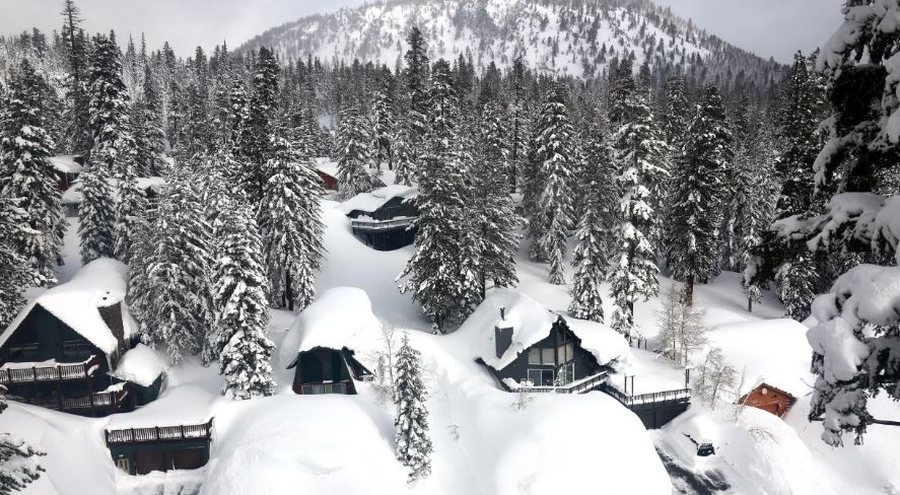
Snowfall is decreasing globally as temperatures continue to rise due to human-caused climate change, NOAA's climate scientist says, according to CNN .
However, less snow falling from the sky is not as harmless as it may sound, as it threatens to exacerbate global warming as well as create food and water problems for billions of people globally.
Scientists say the future of snowfall is pretty clear. A warmer world driven by human pollution means precipitation is more likely to fall as rain rather than snow.
It is possible in the near term that climate change will cause more extreme winter storms and some years of increased snowfall, as data for the northeastern US shows, but as global temperatures warm we may consequently face non-existent snowfall.
" Ultimately, the laws of thermodynamics mean that as the world continues to warm simply snow will turn more and more into rain, " said Brian Brettschneider, a scientist with the National Weather Service in Alaska.
There has already been a 2.7% decline in annual global snowfall since 1973, according to Brettschneider's analysis of data from the European Union's Copernicus Climate Change Service. The downward trend is particularly evident in the mid-latitudes of the Northern Hemisphere, the mid-zone north of the tropics and south of the Arctic, where the US and most of the world's population are located. The sun is more direct there compared to higher latitudes, especially during spring and fall when it still snows.
Less snow falling from the sky also means less snow accumulating. This is essential to the water supply because it acts as a natural reservoir, storing water as snow during wet periods and then releasing it as snowmelt when water is harder to come by, he said. University of Washington environmental engineering professor Jessica Lundquist told CNN.
The threat to water supplies from snowfall is most pronounced in climates that undergo more extreme rainfall cycles, such as the Mediterranean climate found in California and other parts of the American West, Lundquist said.
As the map shows, the decline in snowfall over the past 50 years has been particularly pronounced in parts of the western US. This trend is consistent with other studies that have shown a decrease in snow accumulation in more than 90% of the western countries where measurements are taken.
The increase in Northeast snowfall seen on the maps illustrates the complex nature of changing precipitation patterns with climate change, scientists told CNN.
" Even though the total snowfall trend was positive, the days per year with the snowfall trend are negative ," Brettschneider told CNN. That means more snow was falling in fewer days, which could be a sign of more extreme snowfall events predicted along with climate change.
Understanding the implications of less snowfall on global water supplies is much more complicated than simply saying that less snow means less available water, Mankin said. This is highly dependent on location and a number of other snow dynamic factors.
The important thing to track for water availability is not the amount of snow, but the amount of water in the snow, Mankin said, which can vary widely. A light, fluffy snow will have a low water content, but a dense, heavy snow will have a high water content.







Lini një Përgjigje