


 Shkruar nga Pamfleti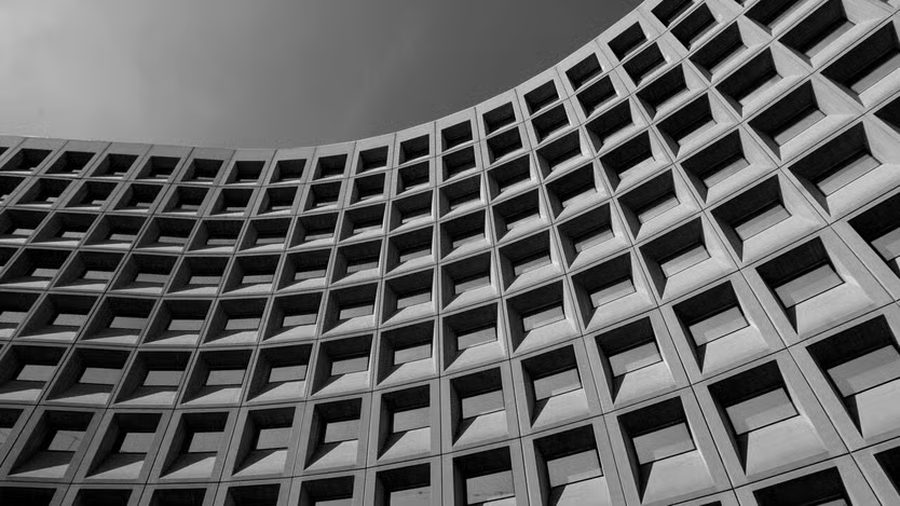
Trump declares war on brutalism, post-war architecture in the US on the verge of extinction
Marcel Breuer adored concrete. His mastery of the material made him famous. His design for the Department of Housing and Urban Development (HUD) building in Washington, D.C., was listed on the National Register of Historic Places not so much for the building's odd shape, which resembles a headless body in an open position, but because it was the first federal building constructed of precast concrete.
Today, employees who use the building don’t share the same enthusiasm: they call it “ten floors of basement.” They complain about black mold, toilets, and elevators that haven’t worked for months. “Welcome to Club HUD,” a weary employee says sarcastically.

Donald Trump has little love for the public administration, and even less for HUD, whose mission is to provide housing for people in need. But when it comes to its brutalist building (pictured above and below), he and its staff agree: After half a century, it’s time to move on. Earlier this year, the Trump administration announced it would sell the building, along with three other federal properties in the capital, managed by the General Services Administration (GSA), the agency that oversees the government’s property portfolio.
But in December, there was a sudden twist. A former GSA official told a court that the Trump administration’s real plan is to demolish the buildings, not just sell them. The government denied it, but preservationists were sounding the alarm. They, taken aback by the sudden demolition of the East Wing of the White House to build a new stateroom, fear that Trump could bypass D.C.’s landmark preservation rules and public consultation, as he did with the White House. Of particular concern to them are several New Deal-era murals on one of the four buildings in question. They say the HUD building is a symbol of the brutalist architecture that inspired the city’s subway line and other monumental public projects.

In the case of the collapse of the East Wing of the White House, public opinion did not take long to react. Images of bulldozers circulated in the news for days, and the president's approval ratings plummeted. But in the case of brutalist architecture, the story is more complex. This movement, known for its large, bare concrete structures, was widespread in the 1960s due to the cheapness of the materials, but it has often been described as "the architecture that the public hates, while architects love it." It has also been described as a "bulletproof bunker" style, "deliberate ugliness," "the enemy of human life," or "neoclassical prison." In Washington, brutalism has left a huge mark, including the FBI headquarters, which the bureaucrat who approved it called in 1967: "the most frightening thing being built in the city."
Trump has banned any future federal projects that contain Brutalist elements. Admirers of the style see this as a direct attack on the postwar welfare state, as Brutalist buildings symbolize collective interest over individual interest, something deeply unacceptable to Trump's political philosophy.
Ironically, little is said about the fact that these buildings are in poor, non-functional condition, and that their reconstruction costs much more than building from scratch. The office market in Washington is still stagnant since the pandemic, so renting new premises is more profitable. The US Congress established a public buildings reform board to reduce the federal budget due to billions of dollars in unfulfilled maintenance and low levels of space utilization. As Dan Mathews, a member of this board, says, if these buildings were privately owned, no one would rent premises in this condition.
At the same time, the real estate community is enthusiastic about the idea of demolition, not just sale, since conversion costs more than new construction. Both HUD and the Departments of Energy and Health are located in Brutalist buildings near the Mall. The offices themselves are considered a “burden,” while the value lies in the land, according to developer Doug Firstenberg, who sees southwest DC as an area with high potential for shopping malls and residences.
Developer Richard Levy says that confronting heritage defenders is tiring, but not impossible. He spent eight years in court to turn a former GSA heating plant into luxury Four Seasons apartments in Georgetown. What gave him strength during the process? A quote from the I Ching hanging on his wall: “Perseverance brings progress.”/ Adapted from The Economist








Lini një Përgjigje