


 Shkruar nga Pamfleti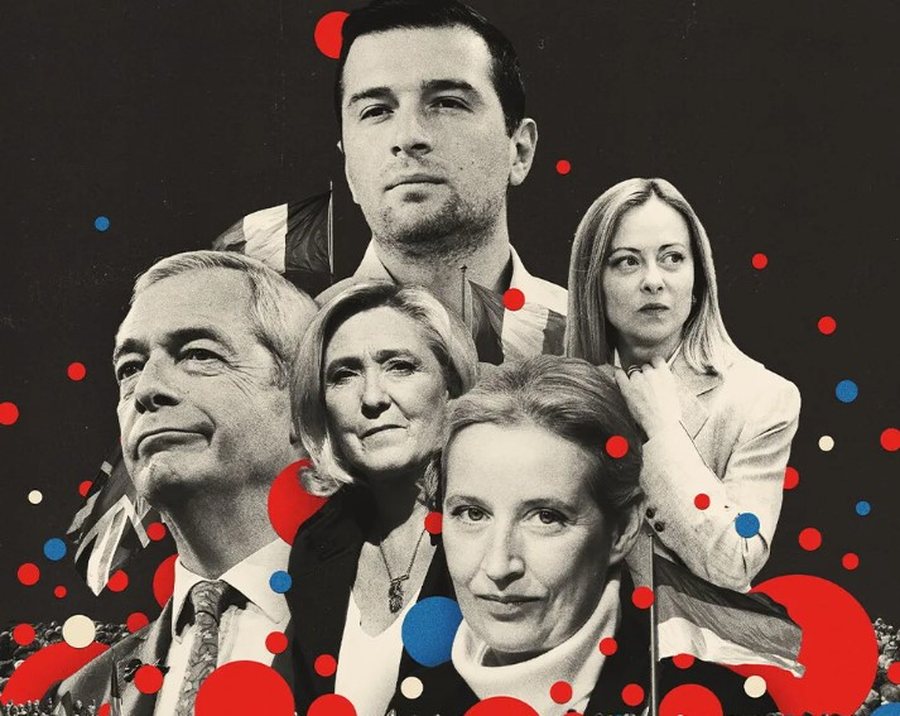
Can anyone stop the populist right in Europe?
The leaders of Western Europe's three major powers (Britain, France and Germany) are facing a grim political season: living standards are not rising, their influence in the world is fading, and right-wing populist rivals are preparing to seize power. In Britain and France, populist parties are close to victory, while in Germany, the Alternative for Germany (AfD) could win regional elections. Meanwhile, the US has accused Europe of heading towards a "civilizational collapse".
Traditional leaders themselves have become the most vocal warners of this crisis. Macron spoke of the risk of civil war after his defeat in the European elections. Friedrich Merz sees his government as “the last chance for the center.” While Starmer, the British prime minister, sees the Reform UK party as a threat to the nation’s very identity.
But the apocalyptic rhetoric is not working. Many voters no longer trust the elites who have not brought about change. On the contrary, populists are becoming increasingly acceptable: Jordan Bardella is meeting with French businessmen, British conservative politicians are switching to Reform UK. Only in Germany, the establishment still rules out any cooperation with the AfD.
In this climate, efforts to demonize the populist right are failing. When the establishment dismisses voters as ignorant, they themselves appear arrogant. When they warn that populists will destroy Europe, they inspire those who want to shake up the system.
Instead, a smarter approach is needed. Populists have capitalized on the sense of urgency for change. In economics, they offer tax cuts, less bureaucracy and support for technology, but often without a clear plan. Bardella calls for a wealth tax, Farage promises realistic budgets without detail, while the AfD clashes with the EU.
On the issue of immigration, they tap into public anxiety, but with harsh and often xenophobic solutions. Even though illegal immigration is declining, the rhetoric of mass deportations is inhumane. In geopolitics, populists show sympathy for Putin and Trump's divisive rhetoric.
Elections in France are due in 18 months, in Germany in March 2029, in Britain in August 2029 at the latest. There is time, but if elites spend the next few years demonizing their opponents, they will not help their countries. They would be better off confronting populists through democratic debate and transparency.
Populism cannot be fought with panic. It requires ideas, self-criticism and a concrete approach. If the center is to survive, it must convince, not intimidate. / Adapted from “The Economist”







Lini një Përgjigje