


 Shkruar nga Anton Troianovski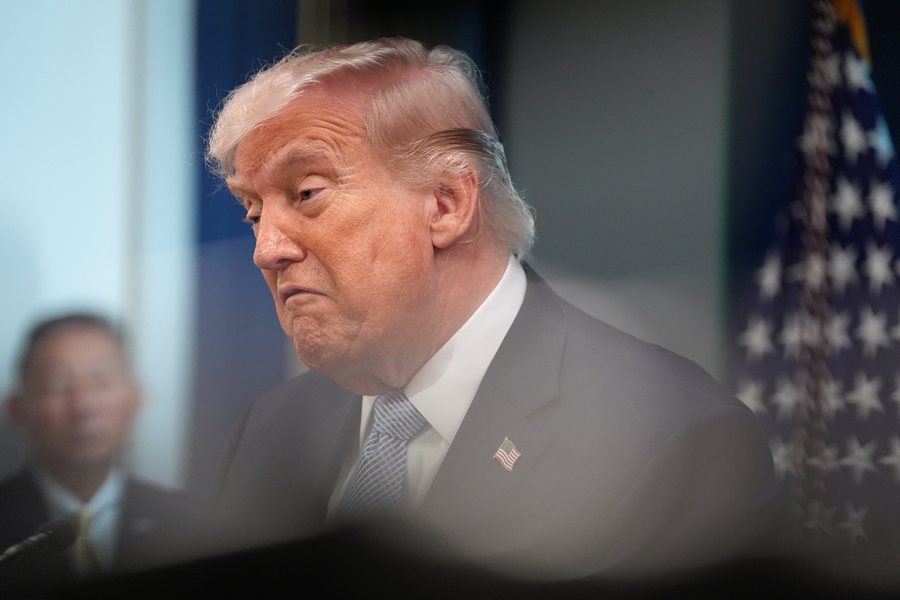
What did Donald Trump achieve in Iran?
President Donald Trump launched the war on February 28th, promising to prevent Iran from obtaining a nuclear weapon, destroy its missile capabilities, weaken regional allies, eliminate its navy and create the possibility of regime change.
After five weeks of bombing, Trump agreed to a ceasefire without any of these objectives clearly being achieved.
In a social media post on Tuesday announcing the suspension of US bombing, for the time being, if Iran reopens the Strait of Hormuz, Trump declared that “ we have met and exceeded all military objectives .” Defense Secretary Pete Hegseth told reporters on Wednesday that the United States had achieved a “ historic and overwhelming victory ,” adding that the Iranian military has been rendered “ ineffective for years .”
However, even supporters of the president have expressed doubts about whether Iran has truly been defeated. Fox News host Mark Levin stressed that the Iranian regime “still survives.” Far-right activist Laura Loomer wrote that “we really got nothing” out of the ceasefire talks and that “the terrorists in Iran are celebrating.” Republican Senator Lindsey Graham warned that Congress should scrutinize any deal.
These reactions show the gap between the great military power of the United States displayed over the past month and the more complex consequences of the war for American security and influence. They also reflect concern about the outcome of a war that, for the time being, has produced a reality different from the ambitions proclaimed by Trump at the beginning of “major combat operations.”
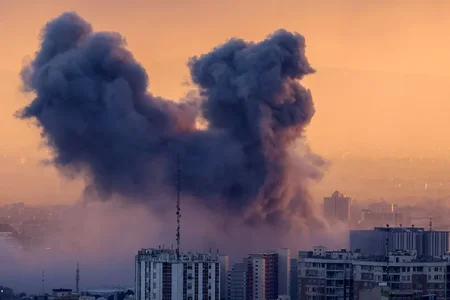
“ If anyone challenges the strength of the United States, they will quickly learn the consequences ,” Trump declared on February 28. But Iran defied that, even as the US struck more than 13,000 targets, according to the Pentagon. Tehran responded by attacking US allies in the region and blocking maritime traffic in the Persian Gulf.
On the nuclear front, despite the initial declaration that “ Iran will not obtain nuclear weapons ,” the ceasefire was announced while Iran still possesses hundreds of kilograms of enriched uranium. Trump declared that there would be no more enrichment and that the US would “ work with Iran ” to “ take out and remove ” the stockpiles, but there is no sign that Tehran has accepted these terms.
Trump also promised to “destroy the missiles and the missile industry.” According to General Dan Caine, the US hit more than 450 ballistic missile depots and about 80% of the production capacity. However, analysts estimate that up to a third of Iran’s missile arsenal still remains intact.
The United States managed to destroy a large part of the Iranian naval fleet, but Iran retains influence in the Strait of Hormuz, a key point for the global economy, where it can operate through simple means such as small boats, drones and land-based missiles.
In terms of the network of allies, Iran's partners have weakened but still pose a threat. Israel appears to be continuing operations against Hezbollah in Lebanon, while Houthi rebels in Yemen have signaled that they may become involved in the conflict. The Iranian regime remains in power, and there is no clear evidence that the new leaders are "more moderate," as Trump has claimed.
Analyst Brian Katulis of the Middle East Institute said the war has demonstrated US military power, reducing Iranian capabilities, but added that Iran remains a threat through asymmetric means. He compared the situation to “Muhammad Ali facing a teenage boxer.”
“ The real threat posed by Iran remains asymmetric ,” he said, citing low-cost drones, a network of allies and control over the Strait of Hormuz. “ The balance does not look positive .” / Adapted from “Pamphlet” by “NYT”


Kini djalin të qete se ka shume luftra për të fituar më Kannada, Greenland, Iran. Aq i hutuar është sa edhe floket ka harruar t’i lyeje me boje.