


 Shkruar nga Jessica T.Mathews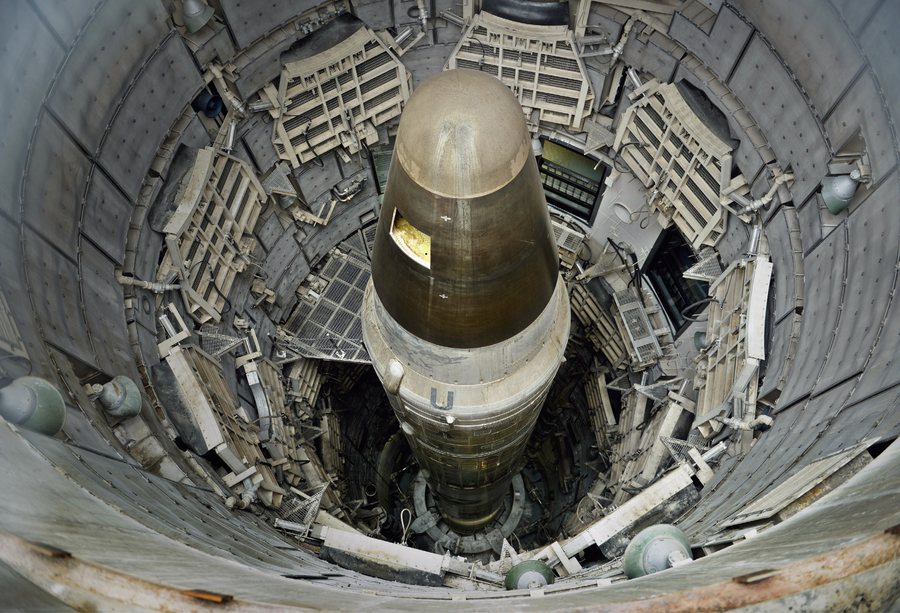
With the re-election of Donald Trump at the helm of the country, there is little doubt that the country will respond aggressively to what it sees as a serious threat from China.
At the 1985 Geneva summit, US President Ronald Reagan and Soviet leader Mikhail Gorbachev spoke openly about the dire scenario of a possible nuclear war their countries were facing at the expense of hundreds of billions of dollars. "A nuclear war cannot be won by either side, and it should never take place!" they declared.
However, they left out something else: even a nuclear arms race cannot be won. However, that unique statement in terms of honesty succeeded in strengthening the arguments in favor of arms control and subsequent non-proliferation commitments.
Decades of negotiations have created a complex fabric of treaties, agreements and even unilateral initiatives on the issue of short-, medium- and long-range offensive and defensive nuclear weapons, complete with provisions for controls and inspections, and even the possibility of travel in the respective territories to observe the state of armaments.
Often, both sides gave up only the systems they no longer needed. Likewise, the harsh language of these agreements has often become a cause of friction. Moreover, in the United States the political cost of ratifying treaties by the Senate has sometimes been very high.
But with all the restrictions, the number of nuclear weapons in the hands of the 2 superpowers was reduced from 60,000 to about 11,000 (the exact number remains secret). According to the most recent treaty, NEW START or the New Beginning (more precisely the Strategic Arms Reduction Treaty), signed in 2010, the arsenals of both countries will be limited to 1,550 bombs each.
The rest of the weapons should be stored in warehouses. So the 80 percent reduction (95 percent, if only the ready bombs are considered) is a great achievement. Or at least it was. But the United States withdrew from the Anti-Ballistic Missile (ABM) Treaty in 2002, while NEW START expires in 2026, and Washington and Moscow will be free for the first time in half a century from any restrictions on their arsenals. nuclear.
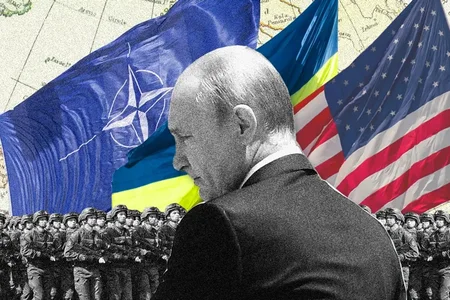
And with tensions rising between the great powers, a new arms race seems to be starting today. The new nuclear age will be much more dangerous than the first, because there will be 3 protagonists (today it is also China), and it will be much more unpredictable than that of the Cold War.
Moreover, it will be enhanced by the emergence of technological weapons, artificial intelligence, the possible militarization of space and other innovations. After several decades with a modest nuclear arsenal, only as a modest deterrence mechanism, China is rapidly expanding it.
It is estimated that today it has 500 nuclear bombs, which could reach 1,000 by the end of the decade and in 2035 reach the levels of the USA and Russia. For now, Washington can only try to guess the reason for China's moves. In fact, Beijing has never wanted to participate in arms control negotiations, and the US government has little detailed information on its nuclear strategy.
Perhaps China is preparing for a war to retake Taiwan, or more generally is trying to impose its hegemony in the Indo-Pacific. Perhaps it is retaliating against what it sees as US aggression. Or perhaps he is taking steps he deems necessary for great power.
Russia has also modernized its nuclear weapons. During an aggressive speech in 2018, President Vladimir Putin introduced the new nuclear weapons, calling them a response to the US withdrawal from the ABM treaty and its missile defense system, which he believes is aimed at neutralizing the Kremlin's missiles. .
Paradoxically, despite decades of effort and great expense, US anti-missile defenses have never been able to do this. Multiple it can intercept a small number of North Korean missiles, but by no means a large-scale Russian attack.
The truth is that the decision to withdraw from the ABM treaty was wrong. From a security point of view, but above all because it angered Russia. Among the new weapons announced by Putin is an intercontinental hypersonic war missile, which can change its trajectory in flight.
Recently, the Kremlin has lowered the threshold regarding the use of nuclear weapons. Despite these developments, there is no doubt that the threat of an overwhelming US response to any nuclear use remains an effective deterrent for Russia. Washington has launched an ambitious process of modernizing its strategic triad (air, ground and naval weapons), which includes new bombs and their carriers (bombers, submarines, missiles), and command and control support systems.
Assuming no further overruns, the cost of developing, building and operating the new systems will be at least $1.5 trillion. But this summer, some US officials warned that the growing nuclear threat could force the country to replace the idea of modernizing its nuclear arsenal with that of significantly strengthening it.
This would lead to "a new nuclear age," senior Pentagon official Vipin Narang said on August 1. "In the absence of a change of course in the attitude of Russia and China, the Americans may have to leave the post-Cold War years behind," he added.
But at the moment, it is not known for sure whether the secret directives signed by Biden in March 2024 include reorienting nuclear planning around China. By raising the threat level, the US government may be trying to push Moscow and Beijing down a different path.
With the re-election of Donald Trump at the helm of the country, there is little doubt that the country will respond aggressively to what it sees as a serious threat from China. Last summer, Robert C. O'Brien, Trump's fourth and final national security adviser in his first term, said that "the United States must maintain numerical superiority over the combined nuclear stockpiles of Russia and China." .
Therefore, it seems that a new arms race has begun, strongly influenced by a third competitor - China - as well as by new technologies. It is easy to predict how it will develop and how it will end. Each country will spend large sums to respond to the most pessimistic hypotheses about the movements of its adversaries.
The diversion of funds from other domestic goals and the increase in public debt will weaken all parties. This race will continue until fear, among political leaders, and perhaps in public opinion, drives clearer minds toward diplomacy and negotiated arms control.
Note: Jessica T. Mathews, American international relations expert. During the years 1997-2015, he was the president of the Carnegie Endowment for International Peace study center./ Adapted "Pamphlet" from "International"




Lini një Përgjigje