


 Shkruar nga Pamfleti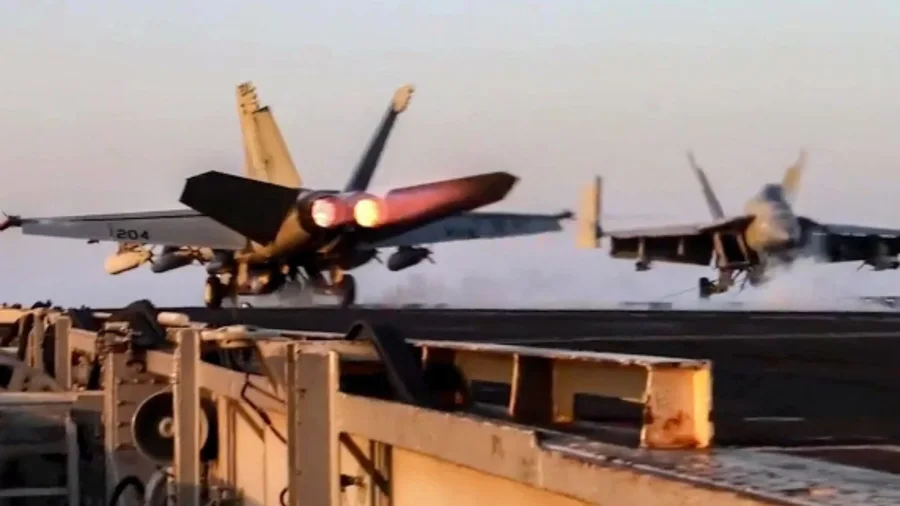
The decision to intervene had been expected by the US President for several days.
Researcher Michael Rozenblat, who previously worked in the Israeli security apparatus, argues that under current conditions "a regime change now" may be more advantageous than pursuing a lengthy diplomatic process.
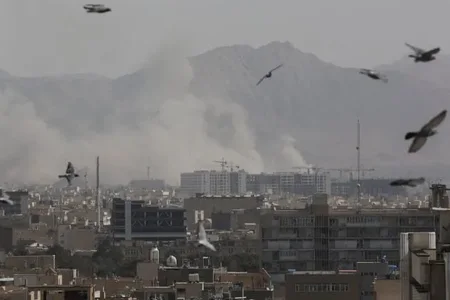
The decision to intervene, according to the analysis, had been expected by the US President for several days. In a statement on the Truth platform, he said: "The regime will never be able to have a nuclear weapon. This operation is to protect the American people from the threats of Tehran, which has attempted to rebuild its nuclear program and was developing long-range ballistic missiles capable of reaching the United States. We will strike the regime's military targets, destroy their missiles, flatten their weapons production facilities, and annihilate their naval fleet."
According to the analysis, preparations had been underway for weeks. The US had moved a significant number of military forces to the region, in positions suitable to support a prolonged operation.
The military buildup continued in parallel with diplomatic contacts between the delegations of Washington and Tehran. However, many American officials expressed skepticism about reaching an agreement. President Trump demanded a complete cessation of the nuclear program, including a ban on uranium enrichment, while Israel also insisted on dismantling the Iranian missile arsenal.
Israel, for its part, had been preparing for weeks for a possible clash, just eight months after a 12-day conflict during which the US and Israel struck Iranian military and nuclear facilities.
The American presence in the region was considerable: dozens of fighter jets and aerial refueling tankers, two aircraft carrier strike groups USS Abraham Lincoln and USS Gerald R. Ford accompanied by cruisers, destroyers, and submarines.
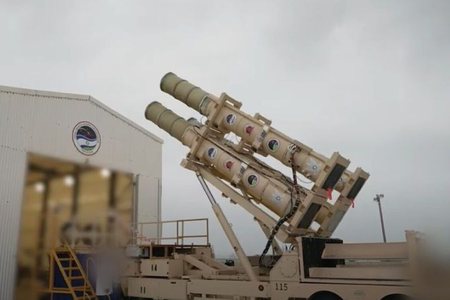
According to the analysis, until a few weeks ago the Pentagon did not consider itself fully prepared to support such an operation, as the approximately 30-40 thousand American troops at eight bases had insufficient air defense. Over the past month, Patriot and THAAD systems were deployed to intercept Iranian missiles, as well as F-35, F-22, F-16 aircraft and strategic bombers on standby.
Six main reasons according to the analysis
1. A favorable moment for the reconfiguration of the Middle East
According to Rosenblatt, Iran is in one of its weakest periods since the 1979 revolution, due to internal protests, the 12-day conflict with Israel and the weakening of its regional allies such as Hamas, Hezbollah and the Houthis. A decisive intervention, he said, could reopen American initiatives in the region, including expanding the Abraham Accords and bringing countries such as Lebanon and Iraq closer to the West.
2. Internal tensions in Iran
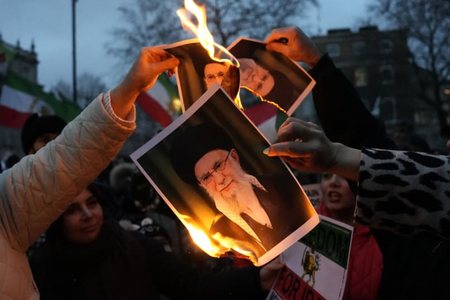
The crackdown on protests has fueled domestic discontent. Although the casualty figures remain controversial, the reports are considered worrying. According to the analysis, the promise to support the Iranian people must be accompanied by concrete steps.
3. The issue of international credibility
Inaction, the author argues, would draw comparisons to the 2013 situation in Syria, when the Obama administration did not respond militarily after the Assad regime used chemical weapons. A withdrawal could be perceived as weakness by Tehran.
4. Economic factors
A regime change could restore Iran's vast energy reserves – the world's second largest for natural gas and third for oil – to Western markets, also affecting global energy balances and China's supplies.
5. American influence on the political transition
Internal structural weaknesses, including hyperinflation, water shortages, and corruption, the analysis says, point to a fragile regime. Direct American engagement could influence the transition process and avoid Russian or Chinese intervention.
6. Nuclear danger
The June attacks on nuclear facilities are estimated to have only delayed the Iranian program by a few months. President Trump has repeatedly stated that he will not allow Iran to acquire nuclear weapons, which, by this logic, makes action necessary. / Adapted from Corriere della Sera


Lini një Përgjigje