


 Shkruar nga Pamfleti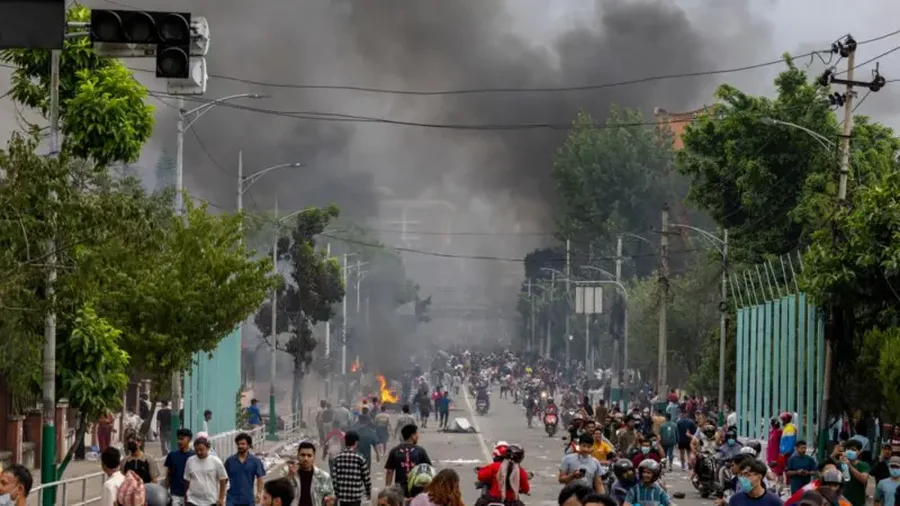
900 prisoners on the run, smoke and chaos everywhere..
The unrest that has engulfed Nepal over the past two days has entered a critical phase, as the country's Armed Forces have warned that they will take control of the situation throughout the territory, starting at 10:00 PM local time.
In a harsh statement, the Nepalese military accuses protesters of exploiting the political crisis to engage in widespread violence, including burning public and private property, vandalizing state institutions and, most shockingly, causing two mass prison escapes in the country.
What started as a student protest against a social media ban has turned into a nationwide revolt against Nepal's political system. Generation Z youth, mainly university students in Kathmandu, Pokhara and Itahari, have mobilized large crowds on the streets, accusing the government of systemic corruption, censorship and total mismanagement of the country.
Although the ban on social media was lifted on Monday evening, the wave of discontent has only increased, with calls for the resignation of political leaders and total reform of the system.
Prisons collapse: 900 prisoners escape
The situation further escalated when protesters entered two penitentiary institutions in the west of the country:
773 prisoners escaped from Kaski prison when protesters broke into the security facilities.
Another 127 were released from prison in Tulsipur, Dang province.
Other unconfirmed reports speak of similar incidents in other areas of the country, raising concerns about a collapse of the public security system.
Army Response: From Calls for Calm to Warning for Action
In a direct message to the nation, Nepal Army Chief of Staff General Ashok Raj Sigdel said the army is committed to protecting the country's national unity and territorial integrity. He called for restraint, dialogue and cooperation with institutions, expressing condolences for the dozens of victims who have already lost their lives.
But alongside this conciliatory tone, the military officially warned that from 10 p.m. it would take “control of the situation,” without giving details of what this action would entail. This has raised concerns that the country could move towards declaring a state of emergency, curfews, and direct military intervention in major cities.
Consequences so far
-At least 22 dead since the protests erupted.
-Hundreds injured, including civilians and police officers.
-Parliament and the homes of senior politicians have been attacked and vandalized.
-The government remained silent, while President Ram Chandra Poudel called for a peaceful solution.
Although initially caused by a technical decision on social networks, the current crisis reflects a deep social and political frustration, especially among young people who feel excluded from decision-making processes and disappointed by the unfulfilled promises of the political elite.
All eyes are now on the army: will it exercise real control on the streets, or will it try to broker a solution? The international reaction is also expected to be decisive in the coming days. India and China, two powers that directly influence neighboring Nepal, have not yet officially reacted. / Pamphlet


Lini një Përgjigje