


 Shkruar nga Pamfleti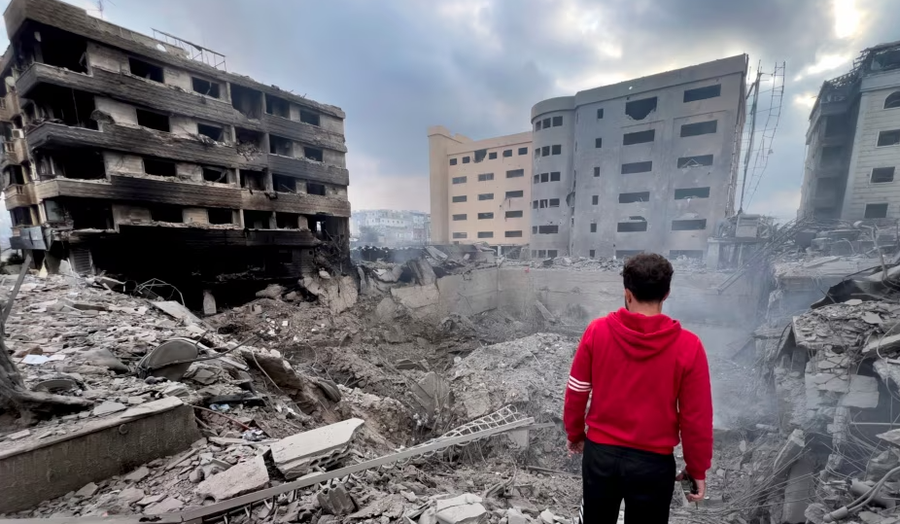
Researchers say Hezbollah is running out of cash after weeks of Israeli strikes against the Iran-backed group have cut off three of its main sources of cash.
Researchers in the United States and Lebanon, as well as US Treasury Department reports, identify the main source of the money as Al-Qard al-Hasan, or AQAH, a Lebanese semi-banking institution but without a banking license, run by Hezbollah. which has been declared a terrorist organization by the United States. Researchers say other sources of money for Hezbollah include Lebanon's now-bankrupt but licensed commercial banks and airlifts to Beirut airport.
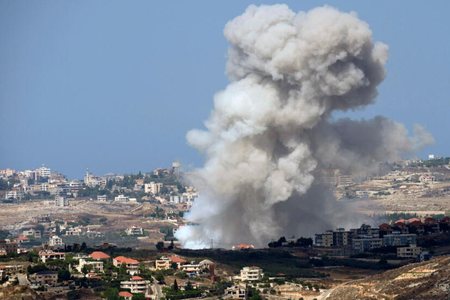
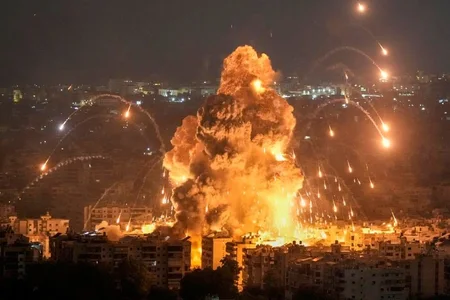
The Israeli military escalated attacks on Hezbollah leaders and facilities last month, after 11 months of limiting its response to daily attacks by the Hamas-backed militia in northern Israel. The Palestinian terror group, also backed by Iran, attacked southern Israeli territory from Gaza last October, prompting a fierce Israeli response.
Hezbollah founded AQAH in 1982 as a charitable institution providing interest-free loans to needy Lebanese, mostly Shiites, according to Israel's Intelligence and Terrorism Information Center (ITIC), a nongovernmental research group made up of veterans of the community. Israeli discovery.
ITIC says AQAH has since grown into a major institution, with branches in the Hezbollah stronghold of southern Beirut, Dahiyeh and other Hezbollah-dominated parts of Lebanon.
The U.S. Treasury Department imposed sanctions on AQAH in 2007. In a 2021 announcement of further sanctions against AQAH employees, the Treasury Department said the institution had raised about half a billion dollars.
AQAH was hit hard by Israel's initial airstrikes on Hezbollah targets in Dahiyeh in late September, according to MTV Lebanon, one of the country's leading television networks.
In an Arabic-language announcement on September 30, the MTV Lebanon channel said that Israeli airstrikes had hit Hezbollah's "cash storage centers," including a large portion of AQAH's vaults, plunging the organization into a "financial crisis".
Hilal Khashan, a professor of political science at the American University of Beirut, said in a telephone interview Wednesday that Israel "destroyed" most of AQAH's branches during the airstrikes.
"Hezbollah is facing a very serious financial problem. They are unable to pay members who have left their homes and need to feed their families," said Professor Khashan.
A 2021 Treasury Department sanctions notice against six AQAH employees says they used personal accounts at licensed Lebanese banks to transfer more than $500 million to AQAH over the past decade. He said that this activity gave AQAH access to the international financial system through the personal accounts of employees in Lebanese banks.
David Asher, a former U.S. Department of Defense and State Department official who worked on cracking down on Hezbollah's global drug-trafficking and money-laundering networks, said in an interview Wednesday that the organization is in "deep trouble." , because it is also losing access to the Lebanese banking system.
"I'm hearing from Lebanese bankers, including Hezbollah financiers, that the richest bankers in Lebanon who can afford to fly away have fled to Europe and the Persian Gulf, fearing that they might be targeted later by Israel because they helped Hezbollah," said Asher, now a researcher at the Washington-based Hudson Institute.
Asher said he is in contact with sources in Lebanon recruited over the years by the United States to obtain information about Hezbollah.
"These Lebanese bankers, most of them billionaires, see that the wind is blowing against Hezbollah, so they will not allow it to take millions of dollars from their banks, which still have cash despite being bankrupt on paper. They know that if they do that, Israel will probably eliminate them too," Asher said.
Another source of funding Hezbollah has depleted, according to Asher and Khashan, is the delivery of cash on planes flying to Beirut airport, particularly from Iran, the group's main backer.
Israeli military spokesman Daniel Hagari told reporters on September 27 that Israeli warplanes had begun patrolling the airspace of Beirut airport and would not allow flights carrying weapons to land on a civilian facility. He did not mention the issue of carrying cash aboard what Israel considers to be enemy aircraft.
The next day, Lebanon's Ministry of Transport told Lebanese and Western media that it ordered an Iranian plane bound for Beirut to leave Lebanese airspace. The ministry attributed the move to an Israeli warning to Beirut's air traffic control tower that Israel would use force if the plane landed there.
"I heard from my Israeli counterparts that Iranians are afraid to send money to Lebanon right now because Israel is threatening to shoot down planes traveling to Beirut. "The Israelis are warning that they will also hit flights carrying money, not just those with weapons," Asher said.
Professor Khashan said Iran organized regular flights from Tehran to Beirut to smuggle money to Hezbollah without going through the Lebanese government's customs department.
"In the weeks since Israel escalated its attacks on the southern suburbs of Beirut, the Lebanese government has demanded more control over the airport and now there is no flow of money to Hezbollah," he said.
Lebanese Minister of Public Works and Transport Ali Hamieh told the Agence France-Presse news agency on Tuesday that Beirut airport "is subject to Lebanese laws and the inspection of various relevant departments and security agencies".
Hamieh added that an aircraft carrying weapons must be approved by the Lebanese army and licensed by his ministry.
Saudi television network Al Arabiya in a report on Thursday quoted a Lebanese army source as saying that the army and other security agencies have "scrambled" to establish control over the airport by starting cargo inspections to ensure that the contents theirs is what is declared.
Mr. Khashan said Hezbollah's lack of cash was unlikely to soon stop thousands of its operatives from fighting Israeli forces.
"The continuation of the war depends more on the availability of food and ammunition. When the war is motivated by religious zeal, there are more fundamental issues to worry about than the availability of hard cash," he said./VOA




Lini një Përgjigje