


 Shkruar nga Pamfleti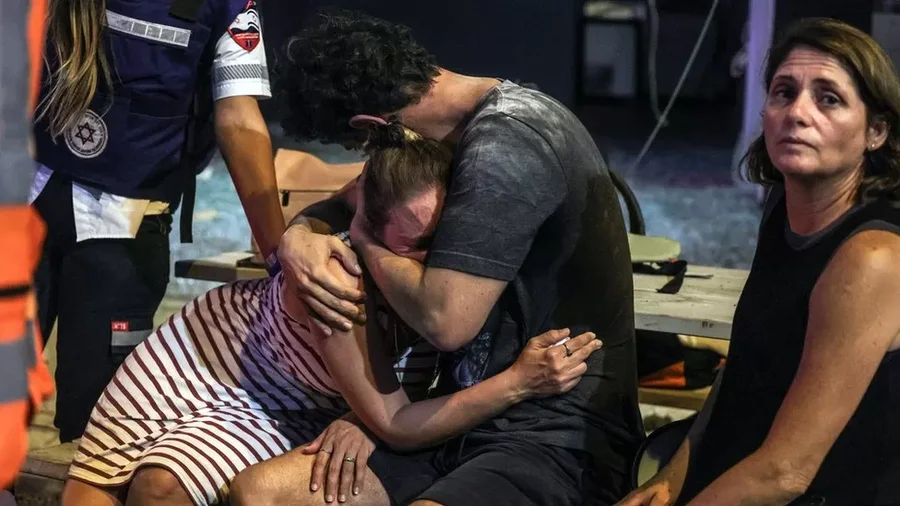
Fifty years after the Yom Kippur War, which began with a surprise attack on Israel by Egypt and Syria, Palestinian militants have launched a major offensive.
This too was unexpected, on a weekly Jewish holiday (Shabbat).
Tensions had recently risen in the Gaza Strip, but the idea was that neither Hamas, the Islamist group that rules there, nor Israel wanted an escalation.
Instead, Hamas had planned a sophisticated and coordinated operation. Early this morning, as a heavy barrage of rockets was fired with some reaching as far as Jerusalem and Tel Aviv, Palestinian fighters entered southern Israel by sea, land and air.
They have kept Israeli cities and military posts under siege for hours, killed many people and taken an unknown number of Israeli civilians and soldiers hostage in Gaza.
The horrific drama played out live on social and mainstream media.
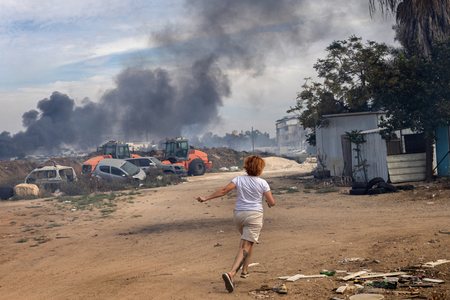
Thousands of Israelis, who had been out for a nighttime walk in the fields near Gaza, quickly came under fire. Footage showed partygoers running for their lives.
After her partner drove to find her, Gili Yoskovich told the BBC how she hid from the heavily armed fighters in the trees. "They went tree to tree and shot everywhere. From both sides and I saw people dying all around."
"I said, 'OK, I'm going to die, it's OK, just breathe, close your eyes,' because [there were] gunshots everywhere. It was very, very close to me."
Israel HaYom newspaper quoted Ella, a resident of Kibbutz Be'eri, as speaking of fear for her father, who had gone to a safe room after sirens went off to warn of the rocket attack.
"He wrote to me that the terrorists are in the shelter, I see his picture on Telegram from inside Gaza. I still hear gunshots," she said.
Many Israelis have expressed shock that Israeli security forces did not come to their aid sooner. Meanwhile, footage shared on Hamas channels showed that soldiers at Israeli army posts and a tank had been captured or killed.
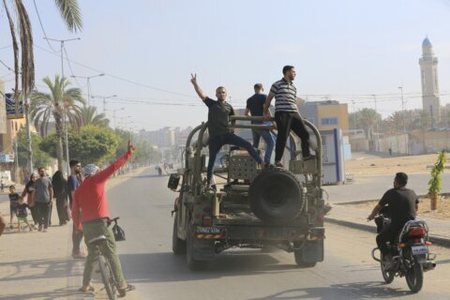
There were initial photos of the celebrations in Gaza, with hijacked Israeli military vehicles driving through the streets.
"I am happy with what Hamas has done so far, retaliating for Israeli actions at al-Aqsa," a young man in Gaza City told the BBC, referring to the recent increase in Jewish visitors to the compound. in Israeli-annexed East Jerusalem during the holy holidays.
Al-Aqsa Mosque is the third holiest site in Islam and is also the holiest site for Jews, known as the Temple Mount.
However, the man, who was leaving his home after warnings that the Israeli army would strike nearby, expressed his fear of what would happen next.
"We are worried, already my family lost our shop when the Shorouk Tower was hit by Israel in the 2021 war," he said. The action that Hamas has taken this time is much bigger, so there will be an even bigger Israeli response.
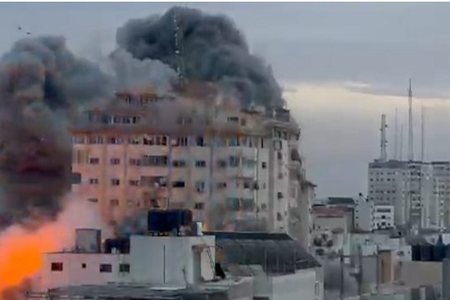
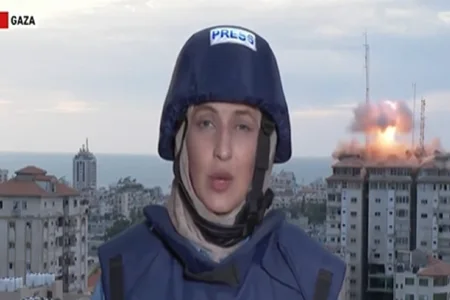
Palestinian hospitals are already overwhelmed by casualties from Israeli airstrikes which have caused massive destruction.
The Gaza Strip - a small coastal enclave home to around 2.3 million Palestinians - was seized by Hamas in 2007, a year after it won parliamentary elections. Israel and Egypt then tightened their blockade of the territory.
It remains poor with unemployment at around 50%.
Pas konfliktit serioz midis Izraelit dhe Hamasit në vitin 2021, bisedimet indirekte të ndërmjetësuara nga Egjipti, Katari dhe OKB-ja ndihmuan në sigurimin e mijëra lejeve për banorët e Gazës për të punuar në Izrael dhe lehtësimin e kufizimeve të tjera në këmbim të qetësisë relative.
Muajin e kaluar, kur qindra palestinezë filluan t'i bashkohen protestave pranë gardhit rrethues në brez në përkujtim të demonstratave masive që filluan pesë vjet më parë, supozohej se kjo ishte një presion nga Hamasi dhe kishte për qëllim që të merrte më shumë lëshime nga Izraeli dhe paratë e ndihmës nga Katari.
Me këtë operacion të fundit, Hamasi duket i prirur të njollosë kredencialet e tij edhe një herë si një organizatë militante. Karta e tij mbetet e përkushtuar për shkatërrimin e Izraelit.
Speaking at the start of the offensive, Hamas militant commander Mohammed Deif called on Palestinians and other Arabs to join the drive to "wipe out the [Israeli] occupation."
A big question now is whether Palestinians in the occupied West Bank and East Jerusalem or elsewhere in the region will heed his call.
Israel clearly sees the potential for a war that could unfold on multiple fronts.
A worst-case scenario is that it could attract the powerful Lebanese militant group Hezbollah.
Meanwhile, the Israeli army has ordered a massive reinforcement of troops. As well as its intensive airstrikes in Gaza, it has indicated that it is planning a ground operation there./BBC


Lini një Përgjigje