


 Shkruar nga Pamfleti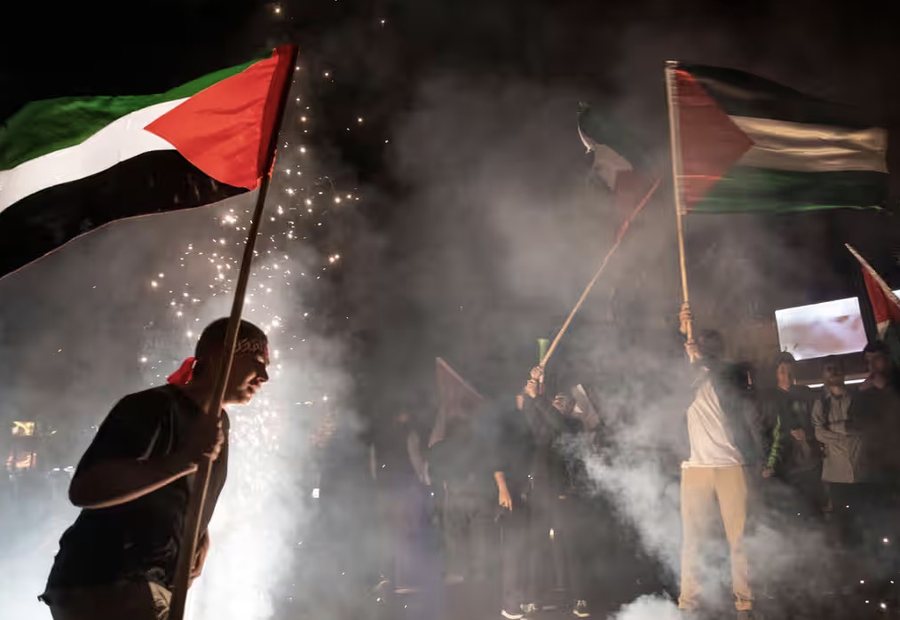
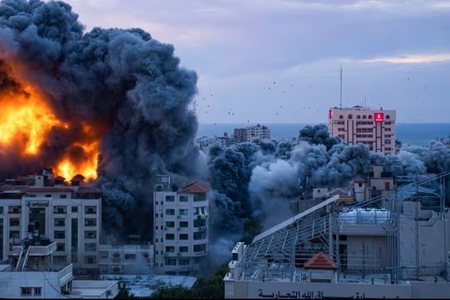
As the death toll mounts and the security implications mount, Israel is pointing the finger of blame at Tehran for orchestrating the attacks executed by Hamas. The attacks may have been born of anger, particularly at months of behavior by the Netanyahu coalition, including the provocations at the al-Aqsa mosque, but Iran and the forces it supports have a long-term strategic goal: to thwart the US-led effort to achieve a normalization of relations between Saudi Arabia and Israel, a move that would plant the US with both feet in the Middle East – and in the eyes of Iran, deprive the Palestinians of their last influential sponsor.
Iran's goal is to denormalize the region and make it nearly impossible for Saudi Arabia to reach an agreement. Israel, by contrast, wants to shrink the Palestinian conflict diplomatically, so that it gradually becomes an inconsequential thing, a historical trinket, like the Yom Kippur war. The aid it gives to Gaza through Qatar is one of the points of this strategy.
In a speech early last week, Iran's Supreme Leader Ayatollah Ali Khamenei sent a coded warning to Riyadh that any Gulf state that supports the US is backing the wrong horse. "The final position of the Islamic Republic is that governments that prioritize the game of normalization with the Zionist regime will suffer losses," he said in comments broadcast by Iran's state and semi-official media. "As the Europeans say, they are betting on a lost horse. Today, the situation of the Zionist regime is not such that it should motivate rapprochement with it; they must not make this mistake.”
He was joined on Friday by the head of Islamic Jihad, Ziad al-Nakhala, who said: "Those who rush towards normalization with the Zionist project must know, and they know, that this is their admission that Palestine is not ours, and that Jerusalem with its mosque is not ours."
Saudi Arabia, whose economy is expected to shrink this year according to the World Bank due to cuts in oil production, has been desperate for foreign investment and covets Israel's technological dynamism. The UAE's trade with Israel is set to double to $2.56 billion in 2022, following the conclusion of a free trade agreement. But Riyadh, now a member of the growing diplomatic trend of transactions, also wants new US defense guarantees, similar if not better than those given to Bahrain in September, and access to civilian nuclear power. He also needs something tangible for the resumption of Israeli-Palestinian talks. Antony Blinken, US Secretary of State,
Now, with the start of what could become a regional war, the calculus of risk has changed. Hamas has shown its firepower and extended its base beyond Gaza. The conflict has not only not shrunk, it has expanded. Riyadh's initial response to the attack by Hamas, a group with which it has little contact, was the first critical indication of how Riyadh viewed the diplomatic fallout. It was not encouraging to Israel, and given the passions that were burning, it could not afford to be.
Saudi Arabia's Ministry of Foreign Affairs noted the unprecedented situation between certain Palestinian factions and the occupation forces and called for restraint from all sides. But then he recalled "her repeated warnings about the dangers of the situation exploding as a result of the continued occupation, the deprivation of the Palestinian people of their legitimate rights and the repetition of systematic provocations against their holy places". It also urged the international community to resume a credible peace process based on a two-state solution.
Qatar was even more unequivocal, saying that Israel was "solely responsible for the escalation, due to the ongoing violations of the rights of the Palestinian people, including the recent repeated incursions into al-Aqsa Mosque, under the protection of the Israeli police ".
Since then, the Saudi foreign minister has spoken to Blinken, EU High Representative Josep Borrell, and every counterpart in the Gulf. The fruits of these talks will be reflected when the UN Security Council meets in emergency session and hears repeated calls for restraint. But many diplomats privately admit they are paying a price for letting the Middle East crisis slide to the bottom of their agenda.
Puna e vërtetë diplomatike do të bëhet privatisht. Në afat të shkurtër, Turqia dhe Egjipti do të veprojnë si ndërmjetës. Egjipti, i cili përballet me zgjedhjet në dy muaj, nuk mund të përballojë kaosin në Gaza. Synimi fillestar i Hamasit do të jetë ta bëjë Izraelin të mendojë dy herë për shkallën e ndëshkimit të tij. Zëdhënësi i brigadave të Hamas al-Qassam, Abu Ubaida, tha: “Numri i të burgosurve [izraelitë] është shumë herë më i madh se sa njoftoi Benjamin Netanyahu, dhe ata janë të pranishëm në të gjitha akset në Rripin e Gazës dhe ajo që ndodh me njerëzit e Gazë, do t’u ndodhë edhe atyre, dhe kini kujdes nga llogaritë e gabuara.”
Edhe Hezbollahu i ka dërguar një mesazh Izraelit nëpërmjet Egjiptit për pasojat e mundshme të një sulmi të plotë në Gaza. SHBA nga ana e saj po i kërkon Izraelit të ulë tensionin, të ndalojë një sulm tokësor dhe të mbështetet në masa të tilla si ndërprerja e furnizimit me energji elektrike të Gazës për të detyruar Hamasin të negociojë. Brenda Izraelit ka edhe zëra që bëjnë thirrje për qetësi, duke thënë se pas një dështimi të tillë të sigurisë, kërkohet një qeveri uniteti që do të lejojë që Netanyahu t’i japë fund mbështetjes së tij katastrofike te ekstremistët, për të qëndruar në pushtet. Me jetën e kaq shumë pengjeve në rrezik, ndëshkimi do të duhet të kalibrohet me kujdes.
Netanyahu's political survival skills are well known, but it will be difficult to avoid blame for such an intelligence fiasco. Golda Meir stepped down as prime minister within six months of the Yom Kippur War, giving way to Menachem Begin and, further, the Camp David accords with Egypt's Anwar Sadat in 1978. For now, it is difficult to foresee a repeat of so optimistic chain of events. / The Guardian – Bota.al


Lini një Përgjigje