


 Shkruar nga Pamfleti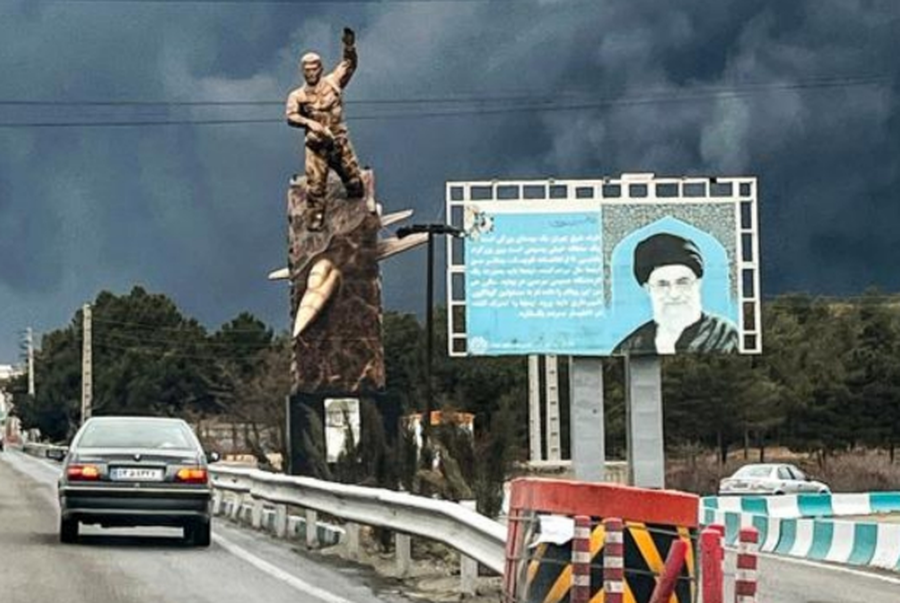
The decision on Iran's new supreme leader has been made quietly by Tehran's clerics. The name is being kept secret as the region teeters on the brink of escalation and major powers watch with anxiety the most dangerous transition of power since the 1979 revolution...
The decision to choose Iran's new supreme leader has been made. But the fact that the name is still being kept secret is the clearest indication of how fragile the political moment is in Tehran and how tense the geopolitical situation is in the Middle East.
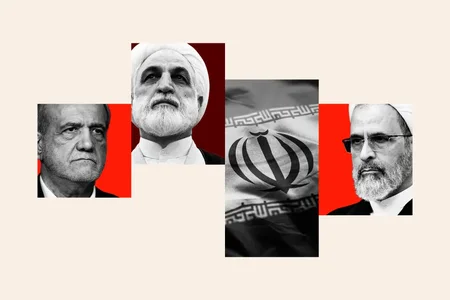
According to sources cited by regional and Iranian media, the Assembly of Experts, the religious body that has the constitutional authority to choose the supreme leader, has completed voting and reached a consensus on a successor to Ayatollah Ali Khamenei. But in an unusual development for the Iranian system, the name has not been publicly announced. The reason is clear: the transition is taking place in a climate of direct military threat and at a time when the regime faces both external and internal pressure.
The supreme leader in Iran is not a ceremonial figure. He is the absolute authority of the Islamic Republic: commander of the armed forces, controller of foreign policy, the intelligence services, and the security apparatus. In practice, the president and the government are secondary structures compared to the supreme leader's power. This means that choosing a successor is not simply a religious or institutional process; it is a decision that will determine Iran's strategic direction for decades to come.
The main problem for the Iranian elite is that the system was not built for such a transition at a moment of crisis. Since the 1979 revolution, the Islamic Republic has had only two supreme leaders: Ayatollah Ruhollah Khomeini and then Ali Khamenei. This long stability has created a highly centralized power structure, where the balances between the clerics, the Revolutionary Guard, and the political institutions were maintained by the personal authority of the leader.
Now this unifying figure no longer exists.
Behind the scenes, a silent battle is taking place between the three main power blocs in Iran: the traditional religious establishment, the Islamic Revolutionary Guard Corps, and the conservative political elites who control state institutions. Any choice of a new leader must balance the interests of these groups, otherwise the system could enter a phase of internal rivalry.
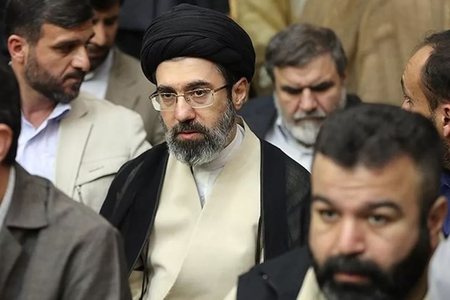
In this context, the name most often mentioned is Mojtaba Khamenei, the son of the late leader. He has been considered for years one of the most influential figures behind the scenes of Iranian power and has strong ties to the Revolutionary Guard. His election would guarantee continuity for the current elite and maintain the security structures' control over the state.
But a family succession would be a historical paradox for the Islamic Republic. The 1979 revolution was designed to overthrow the Shah's monarchy and establish a theocratic system based on religious authority, not family inheritance. If Khamenei's son takes over, the regime risks facing accusations of transforming into a "religious monarchy," something that could undermine the ideological legitimacy of the system.
On the other hand, a compromise figure from among the clergy might seem more institutionally acceptable, but would have another problem: the lack of real authority to control the Revolutionary Guard, which is today the most powerful military and economic structure in the country.
Herein lies Iran's strategic dilemma: the system needs a leader who is both a cleric with religious legitimacy and a strong political figure who can control the security apparatus. The combination of these two elements is increasingly rare among the current elite.
On the geopolitical front, the transition in Tehran is being followed with extraordinary attention by the US, Israel, Russia and China. Iran is one of the key actors in the security architecture in the Middle East and any internal weakness could change the regional balance.
Israel considers Iran its greatest strategic threat, and any instability in Tehran could be seen as an opportunity to weaken the regime. On the other hand, Russia and China have an interest in the Iranian system remaining stable, because Tehran is an important partner in the anti-Western architecture that is gradually taking shape in Eurasia.
For this reason, the selection of a new supreme leader is not simply an internal Iranian matter. It is a moment that could determine whether Iran will enter a phase of even greater radicalization, or a period of pragmatism forced by economic and diplomatic pressure.
One thing is certain: the transition of power in Tehran is perhaps the most dangerous moment for the Islamic Republic since its founding. And how this phase is managed will show whether the system is still capable of surviving crises, or whether it is entering the most unstable phase of its history./ Pamphlet


Lini një Përgjigje