


 Shkruar nga Pamfleti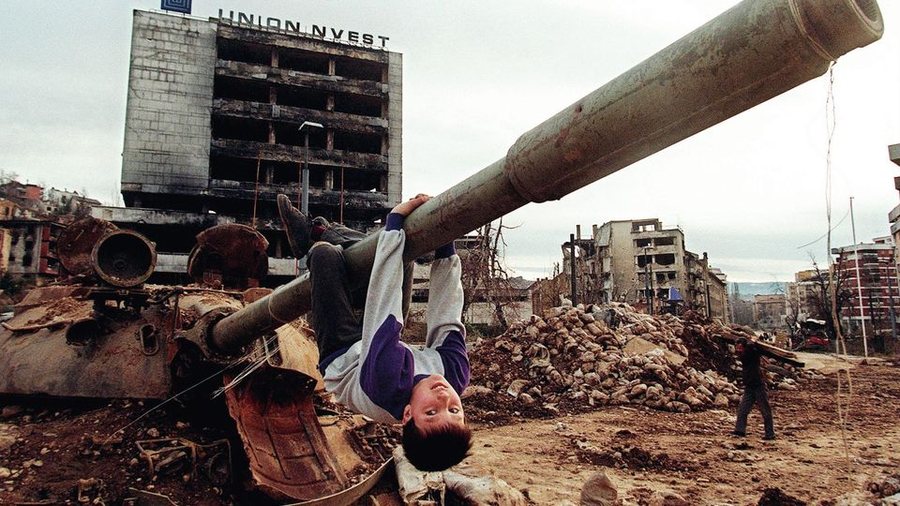
The failure of the countries of the former Yugoslavia to address their violent pasts has had devastating consequences for human rights and could ultimately lead to a return to conflict in the region, according to a new Council of Europe report.
The report, released Thursday by the council's human rights commissioner, Dunja Mijatovic, said the region had suffered years of backsliding in seeking justice and accountability for the brutal 1990s wars in Croatia, Bosnia and Kosovo, which killed more than 130,000 people.
The impact of legal advances after those wars, such as the creation of a war crimes court in The Hague, and the arrest and conviction of many of the political and military leaders responsible for the mass killings, have begun to fade and go unpunished. is coming back, the report suggests.
It was hoped that national courts would continue to prosecute thousands of other perpetrators, but their momentum has slowed dramatically. Ethno-nationalists are politically dominant throughout the region, promoting hate speech and denial of genocide and other crimes against humanity.
"After the trials in The Hague, most of the people who served their sentences and were recognized as war criminals return to their communities as heroes, which I find devastating," said Mijatović.
Her report, Dealing with the Past for a Better Future, concludes: “Time is running out and the victims have waited too long.
"Worse still, the divisive and hateful narratives that presided over the wars of the 1990s are back and regaining strength," the report said. "This threatens not only reconciliation, but also peace. Failure to fully confront the region's violent past has devastating consequences for respect for human rights and the rule of law."
The predominantly Serb areas of northern Kosovo have recently proved a flashpoint. On September 24, there was an exchange of fire near an Orthodox monastery in the village of Banjska between a heavily armed Serb paramilitary group and Kosovo police. Three Serb gunmen and a policeman from the ethnic Albanian majority were killed in a clash that the government in Pristina blamed on the Serbian leadership in Belgrade.
In Bosnia, the Serb-run half of the country, Republika Srpska, which was largely carved up by ethnic cleansing in the 1992-95 war there, is led by a militant separatist, Milorad Dodik, who describes the 1995 genocide in Srebrenica as "a fabricated myth".
Dodik and Serbian President Aleksandar Vucic both have close ties to Moscow. In her report, Mijatović, who will leave her post in March, said: "Russian support for right-wing Serbian activists and organizations is multifaceted and ranges from support for online activities to military training."
Last week, Ukrainian President Volodymyr Zelensky warned that Vladimir Putin planned to spark a new conflict in the former Yugoslavia.
"Pay attention to the Balkans. Trust me, we get the information. Russia has a long plan: the Middle East, the second distraction will be the Balkans. If the countries of the world do nothing now, there will be another such explosion," said Zelensky. / The Guardian



Lini një Përgjigje