


 Shkruar nga Angiolino Lonardi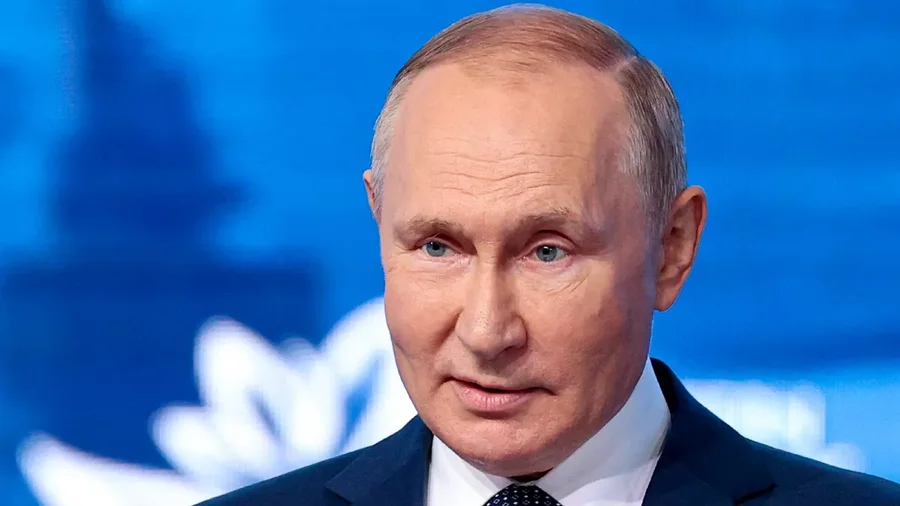
It is about a medium-term political plan to replace the ruling class, with the knowledge that Putin will be able to rely for at least another 6 years on an absolute power that does not foresee any real opposition but at best a facade.
Since Tuesday, Russian authorities have begun recruiting 300,000 new men into the army to continue the siege of Ukraine's second-largest city, Kharkiv. In the jargon it is called "Mobilization 2.0", but there will be nothing more digital than the first.
It is enough to demonstrate how the Russians "know how to fight in a civilized way", unlike what happened in Mariupol. After this "abnormal" statement, after the terrorist attack that hit Putin's Russia and his victory with 87 percent of the vote, there is something new that must be understood and memorized.
She is destined to change the face of the new "presidency". It is about a medium-term political plan to replace the ruling class, with the knowledge that Putin will be able to rely for at least another 6 years on an absolute power that does not foresee any real opposition but at best a facade.
Putin had made clear his intention to renew the country's so-called "political elite", bringing to power war veterans whose loyalty to the regime has been shown since the start of the 2022 invasion of Ukraine.
A renewal that, for the first time, would see power slip drastically from the hands of the first post-1990s oligarchs, such as Roman Abramovich, Oleg Deripaska, Vladimir Potanin and others who grew rich from the breakup of the Soviet Union. .
But also of those who were born under Putin's first government, such as Igor Sechin, Alexey Miller or Arkady Rotenberg himself, considered a close friend of the president. It was Putin himself who clarified what the elite meant: "Those who saw no merit in the eyes of society, consider themselves a caste with special rights and privileges, especially those who filled their pockets in the 1990s, of course that cannot be considered elite".
Whatever the outcome of the Federation's courtrooms, after many suspicious suicides involving key figures of Russian energy giants, there is no Russian who has not caught the signal: the time of the old Putin regime will not end. continue in the future.
So far there are 20 oligarchs and top state managers who have mysteriously died, from Vladimir Nekrasov to Alexander Subbotin, Tyulakov, Avayev and 15 others. Roman Abravomich's ill-fated attempt to carry out a prisoner exchange in exchange for the release of Alexei Navalny should also be read in this approach.
An attempt that failed even to not increase the position of one of the oligarchs (former?)
Putin's most influential. On Tuesday, in a sudden move, the Deputy Commander-in-Chief of Customs, Russia's No. 2 import-export chief, was fired, with the implicit warning that the party at the border is over, both for those who traffic goods out and those who work with the goods. input, often through schemes with third countries.
"Time of Heroes", the official name of Putin's project, coincides with the prize reserved for the new elite, that is, the true and loyal servants of Russia. It is about reliable workers and fighters, about "worthy people who have shown their loyalty to the country", to use the president's own words in his message to the Federal Assembly on February 29.
This is the plan through which Putin intends to renew the Russian political class and heads of state administration in the coming years, promoting those who have distinguished themselves in this field in these 2 years of war. "I look at these courageous people, sometimes very young, and I can say for sure that they will not withdraw, they will not fail and they will not betray Russia" - emphasized the head of the Kremlin.
So who are the patriots who will become part of active politics in the coming years? "As regular soldiers and volunteers or civilians, they were mobilized to provide service to their country. They are the ones who should take leadership positions in the education system, in public associations, in state companies, in business, in the public and municipal administration, to lead the regions, businesses, ultimately, the biggest national projects" - underlined Putin.
A day later it was not easy to perceive the exact meaning of those statements, but today it is clear that the call to arms of 300 thousand young soldiers is based on a bet: The state is the one that protects the state. Seen from this perspective, the war in Ukraine will not slow down in any way, and no other priority - including terrorism - will be a reason for a slow down or a reflective pause.
On the other hand, a change is now being seen compared to what happened after the wars in Afghanistan and Chechnya, when only generals and senior officers were allowed to penetrate the highest spheres of power, while ordinary fighters did not have the same chances . Now Putin is openly addressing not only professional military personnel, but also workers and volunteers involved directly or indirectly in the "special military operation", who have higher education and can boast of having a good experience in management of people.
And this is a reversal of the trend, or at least a change, that could change the face of the Russian Federation for years to come. Meanwhile, not much else will change: neither freedom of expression, nor the rule of the state budget based on the value of $60 per barrel of oil, nor the primary importance of protecting borders by attacking and invading neighbors.
The bodies of the General Prosecutor's Office are working for the return to state ownership of a number of large enterprises and real estate complexes: the re-nationalization of the properties of large corporations "is justified in situations where assets were acquired through circumvention of laws, especially when they were used to the detriment of the state".
Prosecutors in the courts managed to return assets of strategic enterprises worth more than 1 trillion rubles to the state, Prosecutor General Igor Krasnov told Putin. But there is more to it than that. Moscow claims that many assets among those illegally removed from Russian Federation properties, including those obtained through corruption, were also used to "finance terrorist activities from Ukraine".
And this is where Putin's circle closes: accusing the circle of friends of the previous presidential stages of intelligence with the enemy, is a sign of a powerful deviation and
unexpected that no one would have considered just a few days before the plebiscite. The fight continues with "new heroes". The protection of Russian assets exported abroad is no longer a priority, and international law must deal with it./ Adapted from Pamphlet, taken from "Il Sussidiario"



Lini një Përgjigje