


 Shkruar nga Pamfleti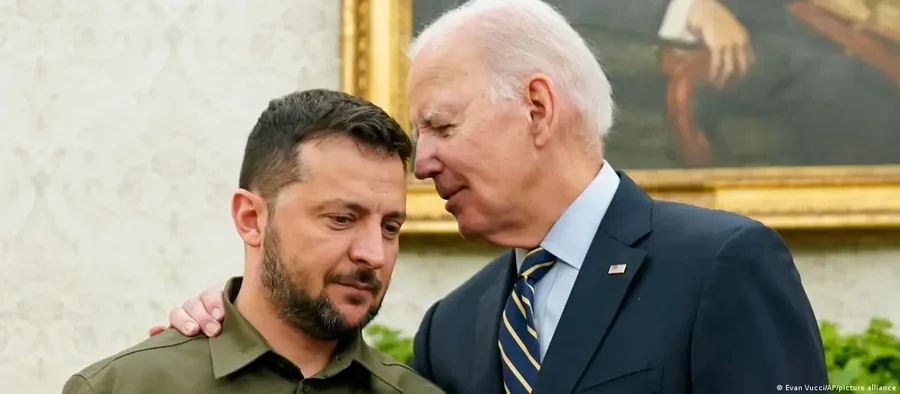
US President Joe Biden has promised to support Ukraine "as long as necessary". German Chancellor Olaf Scholz echoed this statement, which was also included in the final communique of the last NATO summit.
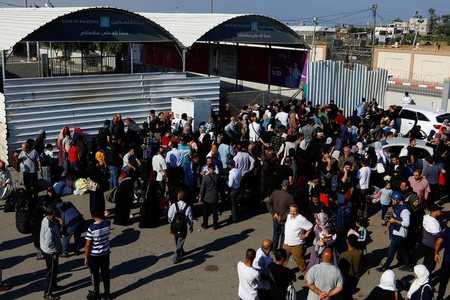
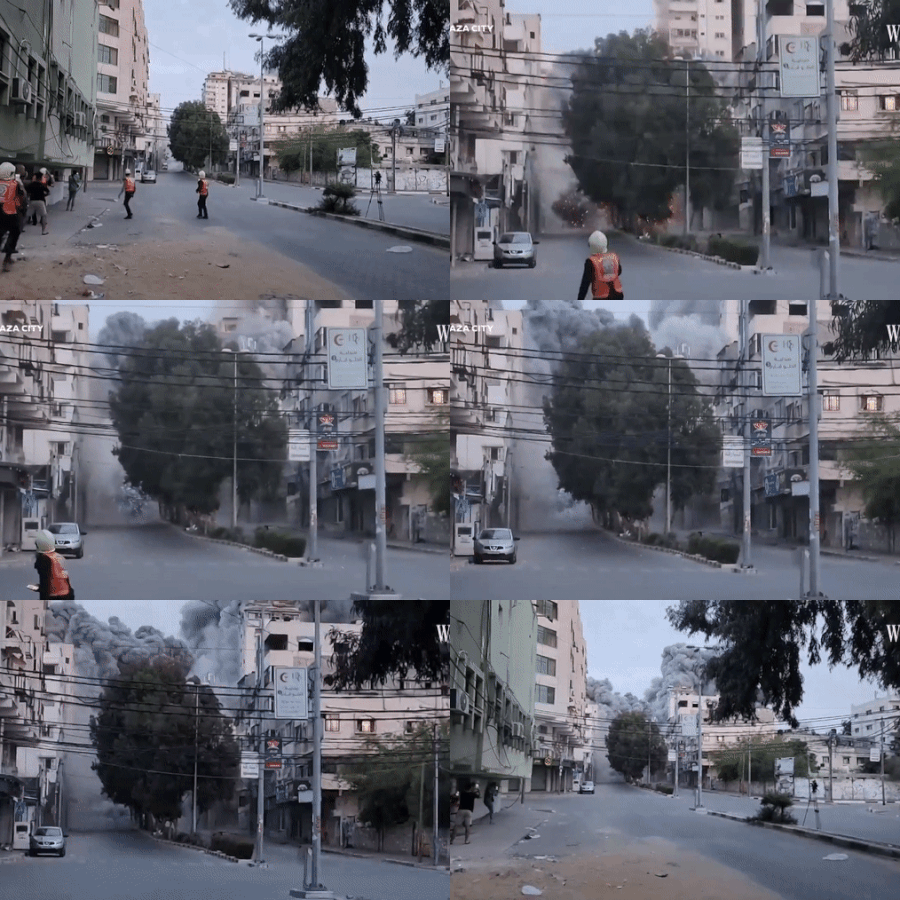
But since the terrorist attack by Hamas against Israel on October 7, a new international crisis has emerged that has attracted the attention of global public opinion. And the conflict in the Middle East can tie up the resources of those who support Ukraine in particular, for example, the USA.
Russia would benefit from this. Ukrainian President Volodymyr Zelensky recently called on NATO countries not to cut off their support, stating that Russia will try to exploit the situation in the Middle East.
How will the conflict between Hamas and Israel affect the war in Ukraine?
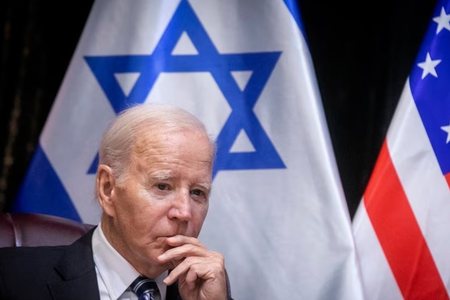
Of course, the US can deal with both crises simultaneously, was Biden's response to a reporter's question, adding: "If we don't do it, who will?" Biden, however, is at odds with Republicans in the country, who want to cut aid to Ukraine. In any case, with the chaos currently reigning in Congress, no new money will reach Ukraine for now.
Political scientist Johannes Varwick of the University of Halle believes that attention shifted to the US long before the latest crisis in the Middle East erupted. There is "competition for attention and resources. I don't think the major players will stop supporting Ukraine now, but the priorities will change," he told DW.
Support also weakens in Europe
Solidarity with Ukraine is also on the decline in Europe. The Polish government temporarily threatened to suspend arms shipments, angered by cheap Ukrainian wheat imports. Slovakia, which until now has also been a strong supporter of Ukraine, has recently seen the electoral victory of Robert Fico, who during his campaign promised that under his leadership Slovakia would not supply "a single shot of ammunition" to Ukraine , while calling for better relations with Russia. Hungary never accepted EU sanctions against Russia and continues to buy Russian gas. Prime Minister Viktor Orban is also actively trying to block the EU from providing further financial aid to Ukraine.
In the West as a whole, "support for Ukraine has already waned, cohesion is crumbling, voices are rising calling for a 'dictated peace,'" where a weaker Ukraine would be forced to accept terms imposed by a stronger Russia. strong, policy expert and conservative MP Roderich Kiesewetter told DW. While Roman Goncharenko of DW's Ukrainian section also recently told DW's "To the Point" program: "There is frustration in Ukraine that the West is tired."
Is a Ukrainian military victory possible?
Western arms deliveries have allowed Ukraine to repeatedly achieve limited military success in its counteroffensives, but so far no progress has materialized.
Once again, President Zelenskiy is asking the West for weapons, such as fighter jets. From Germany he wants Taurus missiles. But Chancellor Scholz is not willing to give them away. And a 55% majority of Germans recently polled by the YouGov polling institute support his decision.
But continued hesitation is precisely the problem, Kiesewetter believes: "The liberation offensive is being thwarted by the West itself, because it is giving too little, too late," he argues. "A sufficient number of superior and precision weapons can turn the tide."
Russia awaits Trump's return
The Kremlin, for its part, is playing for time, hoping that Donald Trump will win the 2024 US presidential election and that this will bring an end to US support for Ukraine.
For Europeans, making up for this loss is "simply not possible in terms of scale," says Johannes Varwick, noting that the United States has provided almost 50 billion euros in military aid alone, with Germany the second most important support. contributed about 12 billion euros.
"If the US stops or massively reduces its support, Ukraine will have a problem that the Europeans will not be able to cover," admitted the EU's foreign affairs envoy, Josep Borrell.
Ukraine rejects peace deal in exchange for land
War weariness in the West puts pressure on politicians and diplomats to seek a negotiated end to the war. Johannes Varwick believes that a negotiated peace is inevitable anyway. In this process, he says, there should also be negotiations "for territorial changes in Ukraine, for the neutrality of Ukraine." "All of this needs to be put on the table today, not tomorrow. In fact, it should have happened yesterday. But now is the time to start those initiatives."
However, according to DW's Roman Goncharenko, a solution based on the "land for peace" formula would have no chance of being accepted in Ukraine: "A lot has happened, the suffering has been too great. This would be a reward for Russia". /DW


Lini një Përgjigje