


 Shkruar nga Pamfleti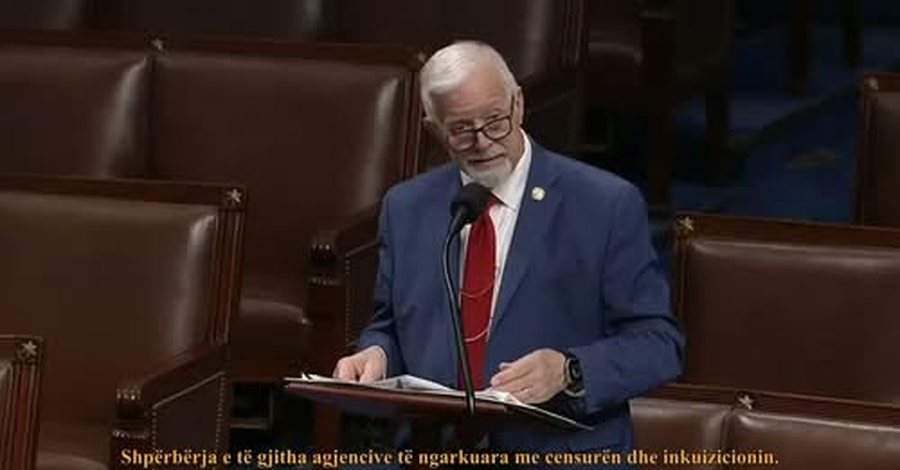
US Congressman Randy Weber, during a speech delivered in Congress, compared the Iranian people's struggle for freedom to key chapters of American history.
Weber stressed that the movement in Iran is not led by foreign powers, but arises from the people themselves, who demand the dignity that is theirs. He said that the restoration of sovereignty in Iran will come from the Iranians themselves, but America and the free world must support them, not to impose a path on them, but to protect their right to choose it themselves.
The congressman emphasized that what Iranians are experiencing today, the struggle against oppression, the quest for sovereignty and fundamental rights, is very similar to the experiences of Americans during the Independence Revolution, the Great Depression, and the civil rights movement.
Weber recalled that the founders of the US rose up against absolute power, risked everything for a society based on freedom and rights, and today that same spirit is alive in Tehran, Shiraz, Isfahan and hundreds of other Iranian cities.
He stressed that despite economic collapse, political repression and constant fear, the Iranian people continue to stand and hope. Weber recalled leaders like Roosevelt and Churchill, who in dark times spoke clearly and courageously, giving people moral strength. Today, he said, this role is played by Maryam Rajavi, a courageous voice representing the aspirations of the Iranian people.
He focused specifically on Maryam Rajavi's ten-point plan, describing it as a clear roadmap for a free Iran: rejection of velayat-e faqih, a republic with free voting and political pluralism, fundamental freedoms of speech and the press, abolition of the death penalty, separation of religion from state, full gender equality, an independent judiciary, the rights of nations and ethnicities, a free market economy, environmental protection, and a non-nuclear Iran committed to peace.
In conclusion, he noted that history shows that when peoples rise up for freedom and the free world stands by them, history changes, as in 1776, in 20th-century Europe, and in the American civil rights movement.
This, according to him, could happen again for the Iranian people.






Lini një Përgjigje