


 Shkruar nga Brahma Chellaney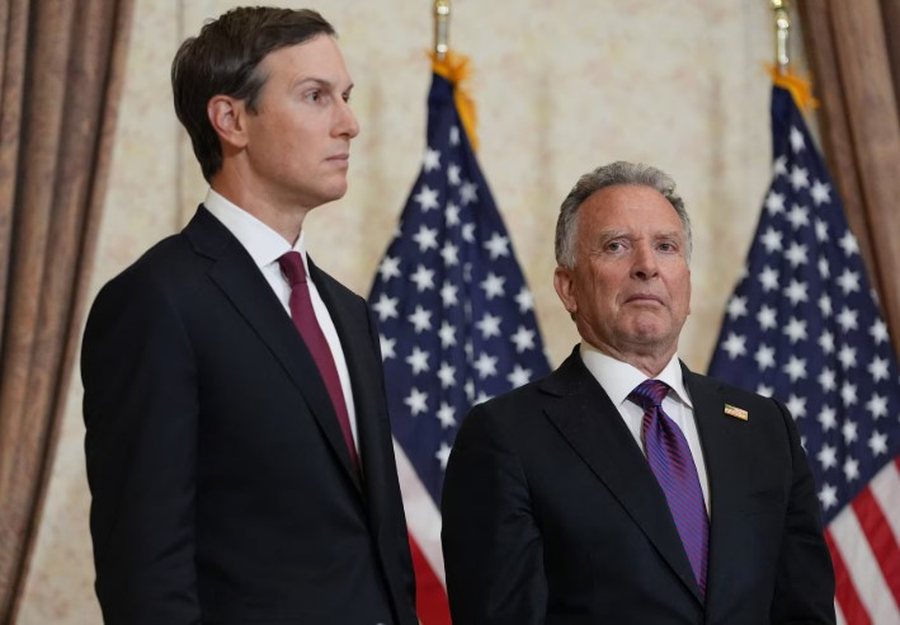
Effective diplomacy depends on credibility, consistency, and a clear alignment with national interests. The U.S. administration’s personalized, opaque, and corrupt shadow diplomacy offers none of these and will leave the U.S. less respected, less credible, and less effective on the world stage.
In most democratic countries, a leader delegating high-level diplomacy to family members and business associates would provoke outrage. But US President Donald Trump has faced little opposition to the move.
Many people downplay his crony diplomacy as mere “heterodoxy.” However, the long-term consequences of this action will be severe.
Trump is not the first American president to rely on personal envoys. But he is the first to regularly sideline career diplomats and the national security apparatus in favor of a narrow circle of loyalists who have neither the right experience nor official responsibility.
In doing so, he has created a shadow foreign policy system that operates outside established channels of checks and balances. Most prominently, Trump's son-in-law, Jared Kushner.
Despite having no prior foreign policy experience, Kushner was entrusted with the monumental task of brokering peace in the Middle East and managing highly delicate relationships with countries like China, Mexico, and Saudi Arabia.
This approach has made U.S. foreign policy look more like a family business than a great power strategy. This kind of private diplomacy undermines the professionalism of the U.S. foreign service.
When career diplomats are sidelined, institutions are weakened. Morale at the State Department has plummeted as senior officials find themselves excluded from key meetings and decision-making.
This institutional dismantling will take years to repair, leaving America with a weaker diplomatic apparatus in the face of growing global challenges. Moreover, Trump’s nepotistic diplomacy blurs the line between national interest and personal gain.
When private emissaries or family members engage in state relations, questions inevitably arise about whether policies are being crafted to advance U.S. strategic objectives or to protect the Trump family's business interests.
This lack of transparency erodes public trust at home and America's credibility around the world. Even America's allies are left confused. They no longer know whether to speak to the official ambassador, the State Department, or seek a private line with the president's inner circle.
This unpredictability pushes traditional US partners to seek alternatives or make special agreements that bypass Washington, thus weakening the alliance architecture that has supported American global power for decades.
Ultimately, crony diplomacy undermines America’s moral authority. The United States has long urged other countries to strengthen the rule of law and root out nepotism. But when the White House itself practices the opposite, these calls ring hollow.
By adopting the methods of the authoritarian leaders he admires, Trump is helping to normalize political corruption globally and undermining America's unique strength: its open, rules-based system.
The damage done by this transactional and familial approach will not simply disappear with a change of administration. America’s global power rests on its institutions as much as on its military. By undermining these institutions for short-term interests, Trump is leaving behind a legacy of diminished American power and a more dangerous and unpredictable world. / Adapted from “Pamphlet” by “Project Syndicate”



Lini një Përgjigje