


 Shkruar nga Pamfleti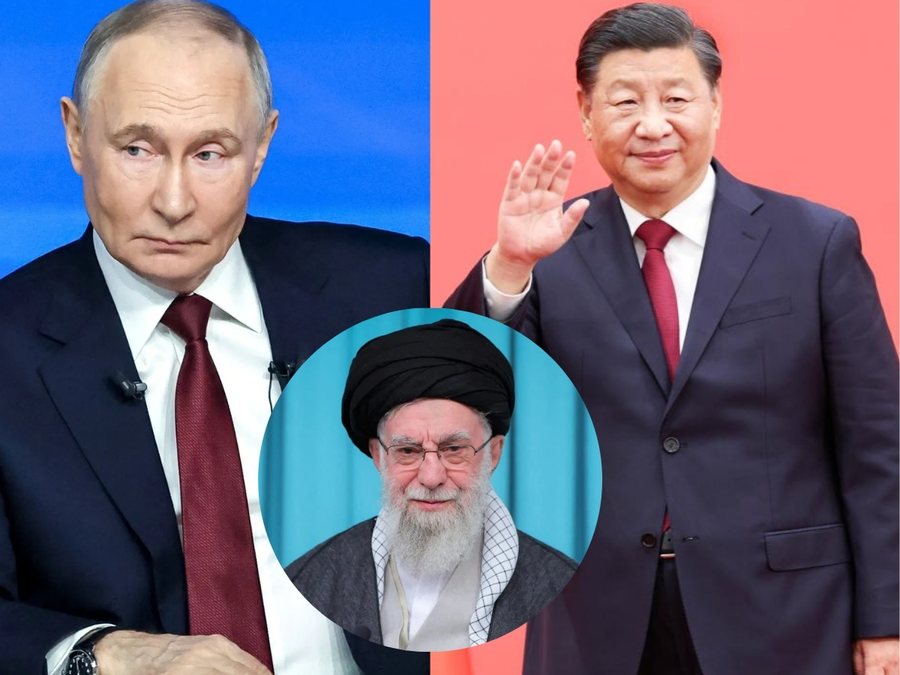
Russia and China condemn US and Israeli attacks on Iran, but avoid any military engagement. Journalist Nils Adler's analysis explains the real limits of the partnership with Tehran
Russia and China, Iran's two most important diplomatic partners, have publicly condemned the war launched by the United States and Israel against Tehran, but have not signaled a willingness to offer military support. Moscow and Beijing's reaction shows the real limits of the partnership these two powers have built with Iran in recent years.
According to an analysis by journalist Nils Adler, published on March 5, 2026, Russia and China have described the military offensive against Iran as a clear violation of international law. Russian President Vladimir Putin described the assassination of Iranian Supreme Leader Ali Khamenei as a cynical act that violates fundamental moral and legal norms. At the same time, Chinese Foreign Minister Wang Yi told his Israeli counterpart Gideon Saar that the use of force cannot resolve conflicts and called on the parties to avoid further escalation of the situation.
Both countries also called for an emergency meeting of the United Nations Security Council to discuss the conflict. These reactions reflect the solidified relations that Iran has developed with Moscow and Beijing in recent years, including bilateral economic agreements, military cooperation and joint naval exercises. However, these relations do not constitute a formal defense alliance.
In January 2025, Russia and Iran signed a comprehensive strategic partnership treaty covering areas such as trade, defense, science, and infrastructure. The agreement provides for coordination in the defense sector and the development of transport corridors connecting Russia to the Persian Gulf through Iranian territory. But the document does not include a mutual defense clause that would force Moscow to intervene militarily in the event of war.
Andrey Kortunov, former director of the Russian Council on International Affairs and a member of the Valdai Discussion Club, explained that the treaty with Iran does not create direct military obligations. He compared the agreement to the mutual defense treaty that Russia signed with North Korea in 2024. In that case, Russia pledged to support Pyongyang in any conflict it was involved in. In the agreement with Iran, the parties only pledged to refrain from hostile actions against each other in the event that one of them was involved in a war.
Kortunov stressed that Moscow is unlikely to take military action in support of Iran due to the high risks of international escalation. He added that Russia is prioritizing relations with the United States regarding the conflict in Ukraine and diplomatic efforts related to this crisis.
The relationship between China and Iran also has clear boundaries. In 2021, Beijing and Tehran signed a 25-year cooperation agreement aimed at expanding cooperation in energy, investment, and infrastructure, linking Iran to China's Belt and Road Initiative. The agreement has significantly increased economic cooperation between the two countries.
Jodie Wen, a scholar at the Center for International Security and Strategy at Tsinghua University in Beijing, said that China sees its relationship with Iran as pragmatic and stable. She stressed that the Chinese government follows the principle of non-interference in other countries' conflicts and is not expected to supply Iran with weapons or become militarily involved.
Instead of military intervention, Beijing is expected to focus on diplomacy and mediation. Wen stressed that China is trying to communicate with the United States and Gulf countries to reduce tensions and avoid further regional escalation.
However, the economic relationship between the two countries is not symmetrical. According to data from the maritime trade monitoring service Kpler, about 87.2 percent of Iran's annual oil exports go to China. This makes Beijing the most important energy partner for Tehran, while Iran remains a relatively minor partner in China's global trade.
Dylan Loh, an associate professor in the Public Policy and Global Affairs program at Nanyang Technological University in Singapore, believes that China's role towards Iran is evolving towards a defensive role at the diplomatic level. According to him, Beijing is trying to prevent regional destabilization that would endanger its economic and security interests in the Middle East.
Nils Adler's analysis shows that the relations between Iran, Russia and China are important in diplomatic and economic terms, but they do not constitute a military alliance comparable to traditional collective defense treaties. In the context of the current conflict, Moscow and Beijing have chosen to support Iran in international forums and diplomacy, avoiding direct involvement in the war. /Al Jazeera



Lini një Përgjigje