


 Shkruar nga Pamfleti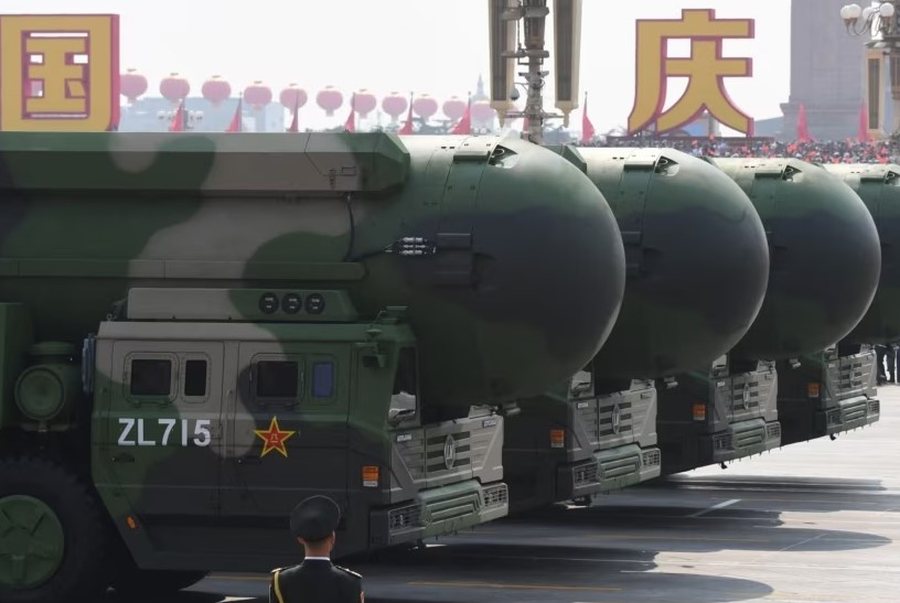
The nine nuclear-weapon states have continued to modernize their arsenals and some of them deployed new nuclear systems, a Sweden-based institute said.
"We are entering one of the most dangerous times in human history," said Dan Smith, director of the International Peace Research Institute (SIPRI).
"It is imperative that world governments find ways to cooperate in order to reduce geopolitical tensions, slow the arms race and deal with the consequences of environmental damage and increased world hunger," he said in a statement.
SIPRI said that of the world's total inventory of 12,512 nuclear warheads, in January 2023 about 9,576 were in military stockpiles ready for possible use, or 86 more nuclear warheads than in January of the previous year.
This independent institute said that the states that have nuclear weapons are: the United States, Russia, the United Kingdom, France, China, India, Pakistan, North Korea and Israel.
In this year's report, SIPRI said the United States and Russia have more than 1,000 nuclear warheads that they had previously removed from military use and are gradually being dismantled.
As for China, SIPRI said that the nuclear arsenal of this country increased, from 350 nuclear warheads as of January 2022, to 410 as listed in January of this year. According to the institute, China's arsenal is expected to grow in the coming years.
"Depending on how it decides to structure its forces, China could potentially by the end of the decade have as many intercontinental ballistic missiles as the US or Russia," the SIPRI report said.
The institute said nuclear arms control and disarmament diplomacy have suffered major setbacks since the launch of Russia's unprovoked invasion of Ukraine in February 2022. Washington has suspended bilateral strategic dialogue with Russia, and Moscow announced in February it was suspending its participation. in the nuclear treaty, New START.
Allowing inspections at sites where weapons are kept and providing information on sites where ICBMs and submarine-launched ballistic missiles are deployed, as well as tested, are key components of the New START treaty.
This treaty was signed in 2010 by the then American president, Barack Obama, and the Russian one, Dmitry Medvedev.
However, according to SIPRI's assessment, the deployment of the strategic nuclear forces of the two states until January 2023 is based on the limitations imposed under the New START treaty. / REL






Lini një Përgjigje