


 Shkruar nga Pamfleti
In recent days, the US ambassador to the EU has undertaken a media campaign in several European media outlets to convey a double message.
Since the start of the conflict in the Middle East, at least eleven ships loaded with liquefied natural gas, originally destined for Europe, have changed course to arrive in Asia, where buyers are willing to pay higher prices.
This panorama, documented by the monitoring company Kpler, is one of the many alarming signals that are emerging in the European LNG market following the closure of the Strait of Hormuz and that are influencing the political decision-making of institutional actors.
One of these decisions is expected to be concrete today around noon, when the European Parliament will vote on the ratification of the trade agreement with the United States: barring any unlikely surprises, this time MEPs are expected to give their approval to the agreement signed last July in Scotland.
The approval process was frozen by the European Parliament in January, following US threats against Greenland. It remained blocked even after Donald Trump's pressure on Spain and the European Union in general on the trade front.
Faced with the risk of new tariffs, the European Parliament had decided not to ratify the agreement.
Now tensions in transatlantic relations remain high, with key European leaders maintaining a clear and official distance from the military operation in Iran.
However, precisely because of the economic consequences of the conflict, especially in the energy sector, Europe currently has no intention of jeopardizing the situation, even if it means submitting to another American blackmail.
In recent days, the US ambassador to the EU has undertaken a media campaign in several European media outlets to convey a double message.
First , that Brussels must give the green light to the trade deal with the US, otherwise it risks losing "favorable access" to the American LNG market. In other words: 'if you block the deal, we will turn off the liquefied gas taps'.
Second , the Commission should review the rules on methane emissions standards. The current regulation imposes a series of obligations on companies exporting gas to Europe, which must provide detailed data on emissions throughout the supply chain.
"If the EU wants to have affordable energy for the long term, it must reduce current regulatory requirements and restrictions," said Ambassador Andrew Puzder.
Blackmail very similar to what the European Union has experienced for years from Russia.
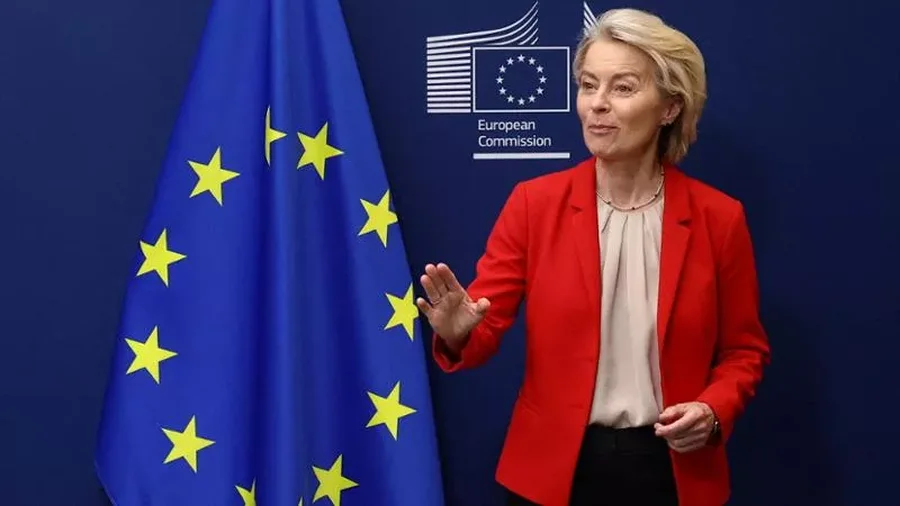
The United States has played a key role in the process of diversifying supplies after the cessation of Russian gas purchases, given that in 2025 Europe imported about 56% of its LNG from the US and aims to increase this share precisely in light of the trade agreement signed by Trump and Ursula von der Leyen.
This dependence has been further exacerbated by the Hormuz crisis and the blockade of supplies from Qatar, which particularly affects Italy.
“The boost in liquefied natural gas imports from the United States has created a new, potentially high-risk geopolitical dependency,” explains Ana Maria Jaller-Makarewicz, an analyst at the Institute for Economic and Financial Energy Analysis.
According to her, "The EU's plan to increase dependence on a single energy supplier is a déjà vu for a continent still recovering from an energy crisis."
However, fear of the consequences in the energy sector seems to be prevailing over the will to respond forcefully to American blackmail. For this reason, the European Parliament is expected to approve the ratification of the tariff agreement with a strong majority, although the rapporteurs of the Committee on International Trade have attempted to impose several conditions, including: an expiry date for the agreement (March 31, 2028), safeguard measures for products containing steel and aluminum, and a suspension clause in the event that the US imposes new tariffs.
However, there are fears that governments could change the text during interinstitutional negotiations that will follow today's vote and precede final approval.
"These are the minimum conditions for our support," warns Brando Benifei, MEP for the Democratic Party and head of the delegation for relations with the US, "without the proper inclusion of these guarantees, we cannot give approval to the final agreement."
In this context, a new front has opened in the energy war between Ukraine and Hungary. Viktor Orbán has announced that Budapest will no longer supply gas to Kiev until Russian oil flows through the Druzhba pipeline are restored./ La Stampa



Lini një Përgjigje