


 Shkruar nga Pamfleti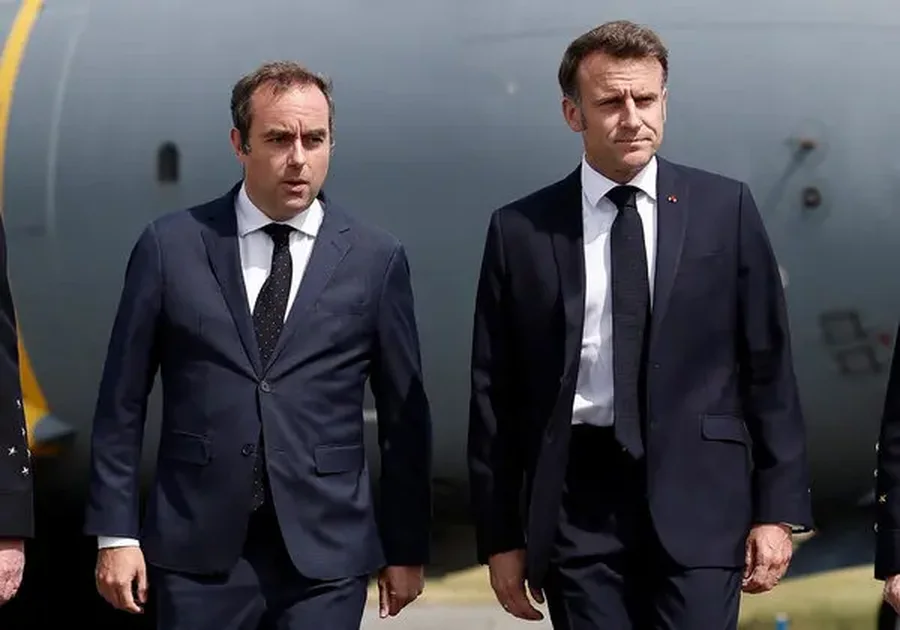
President Emmanuel Macron's office announced that new Prime Minister Sebastien Lecornu resigned on Monday morning, October 6, just hours after forming his new government.
Lecornu's resignation, which makes him the shortest-serving prime minister in recent French history, plunges the country back into political uncertainty.
On Sunday evening, almost four weeks after his appointment by Macron, Lecornu presented his cabinet, which was almost identical to that of his ousted predecessor, François Bayrou.
But problems immediately emerged, with members of several parties within the ruling coalition expressing doubts and criticism of the lack of changes.
Jordan Bardella, president of the far-right Rassemblement National (RN) party, called for immediate snap elections. “There can be no return to stability without a return to the polls and without the dissolution of the National Assembly,” he stressed.
Mathilde Panot, a prominent figure in the radical left-wing party La France Insoumise, called for Macron's resignation in a post on X following Lecornu's resignation. "The countdown has begun. Macron must go," she wrote.
In early September, Macron appointed 39-year-old Lecornu as his seventh prime minister in office, in an attempt to defuse the deepening political crisis.
French politics has been in turmoil since Macron risked calling early elections last summer in a bid to solidify his authority. But the move backfired, producing a parliament divided between three rival blocs.
Lecornu's two predecessors, François Bayrou and Michel Barnier, were ousted in a clash over France's austerity budget in a deeply divided parliament. Macron chose one of his closest allies instead of trying to broaden the government's support across the political spectrum.
Over the past month, Lecornu held a series of consultations with centrist allies and opposition leaders, both from the left and the right, with the aim of reaching a non-aggression pact in parliament and approving the budget.
No party has enough seats to govern alone. Most left-wing parties had announced they would support a no-confidence vote, while Marine Le Pen's far-right threatened to support the initiative as well.





Lini një Përgjigje