


 Shkruar nga Pamfleti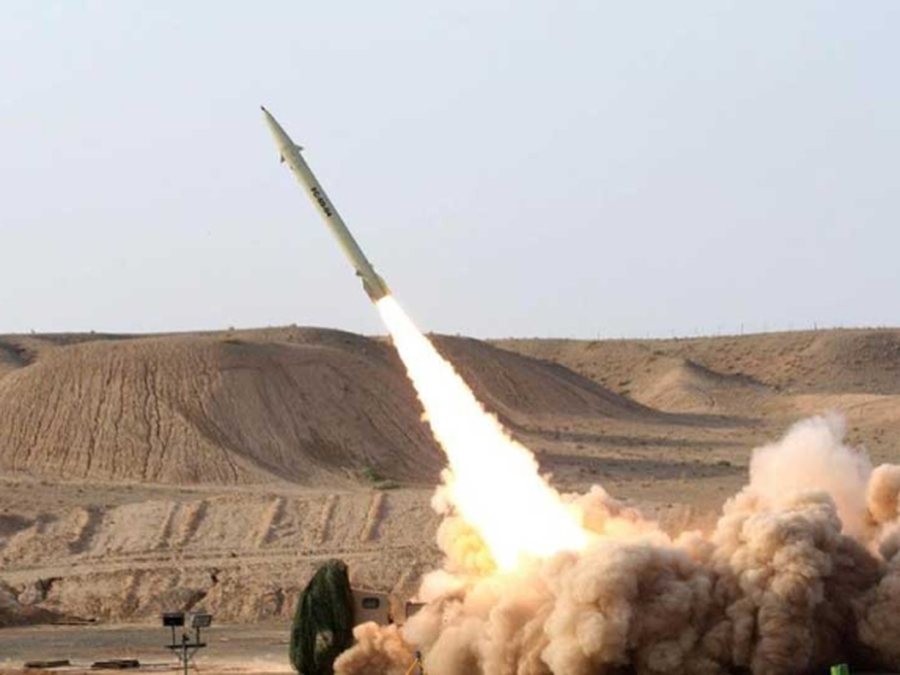
Despite strong strikes from the US and Israel, Iran retains a significant portion of its military capabilities, including thousands of missiles, while damage to the industry and uncertainty about long-term production remain key challenges.
It is a battle of numbers over Iran's real or alleged military capabilities. Official sources, from Washington to Tel Aviv, highlight the successes of Operation Epic Fury, while intelligence "voices" provide more cautious assessments.
The latest estimates come from the Wall Street Journal, which gives great space to intelligence analysis: despite the attacks suffered, the Pasdaran still has thousands of short- and medium-range missiles.
Many of them have escaped the attacks, while others are "buried" in tunnels hit by bombing, but can be recovered. The distribution of the arsenal, the creation of the so-called "missile cities" and good defense systems have guaranteed the Revolutionary Guards a significant reserve, supplemented by a reduced component of anti-ship cruise missiles, useful in the challenge for the Strait of Hormuz. As for the suicide drones, essential to keep the Gulf monarchies under pressure, it is estimated that they have lost about 50%.
The situation remains uncertain for Iran regarding the production of military equipment, as factories have been among the main targets of attacks. Extensive damage has been caused to various industries, both those producing military equipment and those in support sectors. In the second phase of the campaign, it was mainly the Israelis who struck these targets. The impact of these strikes is expected to be visible in the medium and long term, as the damage cannot be recovered within a few weeks. In addition, sanctions and the difficult economic situation of the Islamic Republic are also affecting.
The Wall Street Journal's analysis is consistent with previous reports that emphasize that the Pasdaran have prepared by considering other confrontations, taking advantage of territorial depth and adopting more flexible tactics.
In recent days, the Pentagon and the Israeli military (IDF) have presented their data to highlight the results achieved. According to the US, 13,000 “munitions” were used, 80% of the air defenses were neutralized, 450 missile depots, 800 drone-related facilities and 2,000 command centers were hit. On the Israeli side, over 10,800 airstrikes were carried out against 4,000 targets; 18,000 combat vehicles (bombs, missiles and suicide drones) were used; 60% of the missile launchers (out of 470 that the Pasdaran had) were destroyed; 85% of the air defense systems were put out of action; Leader Ali Khamenei was killed and over 40 senior leaders were eliminated; and damage was caused to nuclear facilities.
Israeli generals have added that Iranian missile launches towards Israel have gradually decreased, to about 10-15 missiles per day, attributing this decrease to the effectiveness of preventive strikes. Experts dispute this interpretation, stressing that the Pasdaran have been operating with greater precision, using weapons with multiple warheads, which has been sufficient to keep the adversaries on constant alert. The same tactic has also been used in Dubai and Kuwait, via drones.
The IRGC's missiles have served not only as a military weapon, but also as a political and propaganda instrument, to show that the ayatollahs' regime has not been defeated and that it still has the capacity to confront its opponents. At the same time, the selective closure of the Strait of Hormuz has strengthened Tehran's position.
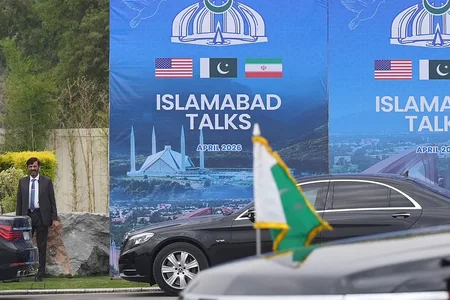
The start of a fragile negotiation process gives the parties a chance to regroup. The US has continued to deploy troops and military equipment, while the aircraft carrier "Ford", after maintenance, has been repositioned in the eastern Mediterranean and reinforcements for amphibious operations are expected. On the other hand, Iran may receive drones from Russia and, according to a CNN report, air defense systems from China through a third country. These are portable low-altitude anti-aircraft missiles, a scenario linked to possible ground operations. Beijing has denied this information.
Finally, two open questions remain regarding the missile launchers. It is not excluded that the initial estimates of Iranian capabilities were incorrect. Experts estimate that building new launchers is not particularly difficult, as the Pasdaran could follow models used by North Korea, adapting transport vehicles into mobile platforms for launching missiles. / Adapted from "Corriere Della Sera"






Lini një Përgjigje