


 Shkruar nga Pamfleti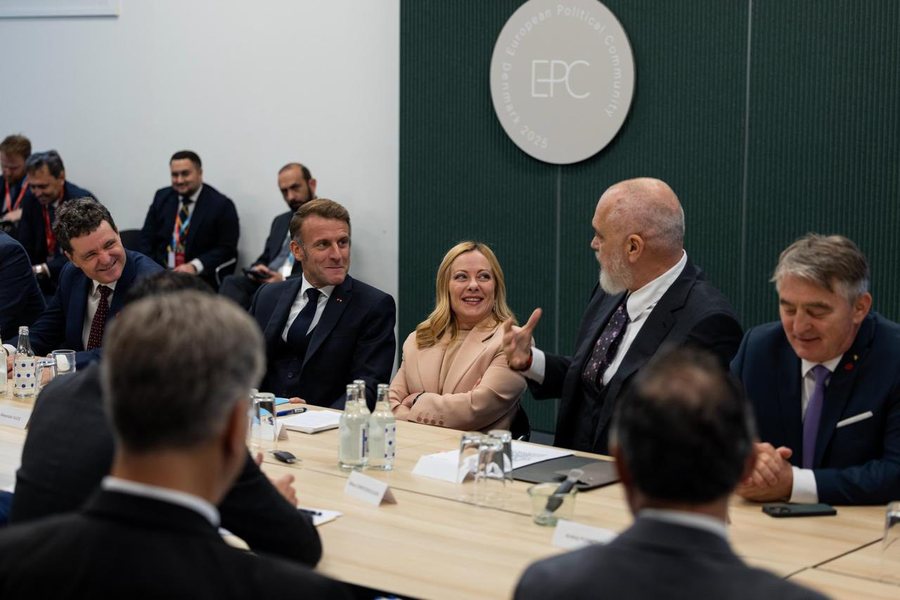
Eastern Europe seeks confrontation with Russia, France and Germany call for caution. No concrete decisions, many empty words...
On October 1, European Union leaders gathered at Christiansborg Castle in Copenhagen for an informal summit of the European Council, with the stated aim of discussing strengthening common European defense and support for Ukraine. The meeting, chaired by European Council President António Costa and hosted by Danish Prime Minister Mette Frederiksen, ended as another diplomatic failure with no tangible results.
According to "Politico", the session dedicated to defense, which was originally planned to last two hours, was extended in time due to the active participation of all the leaders, who surprised the Danish hosts by breaking away from prepared speeches and entering into lengthy discussions. But this dynamic did not bring any noticeable progress. On the contrary, as "Berliner Zeitung" writes, deep divisions emerged between the countries of Eastern Europe, which are calling for a more aggressive approach against Russia, and the founding countries such as Germany and France, which, despite the recently toughened rhetoric, continue to insist on caution and balance.
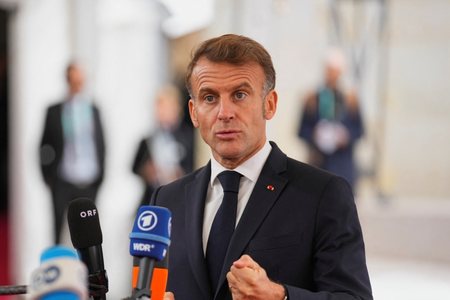
One of the most sensitive issues of the discussion was that of using frozen Russian assets to finance the war in Ukraine. Danish Prime Minister Frederiksen spoke out in favor of this idea, while European Commission President Ursula von der Leyen proposed that the interest generated by these funds be used for an aid and armaments fund for Kiev. However, French President Emmanuel Macron strongly opposed this approach, warning that it could undermine the credibility of European financial institutions and scare off investors. France proposes instead the issuance of joint loans on the financial markets, with the aim of sharing the burden equally and protecting its national budget. Luxembourg, through Prime Minister Luc Frieden, also raised doubts about the possible return of these loans and the risk that a dangerous precedent could be set.
There were also major divisions over airspace protection from Russian drones. Denmark, Latvia and Lithuania called for immediate action, proposing the construction of a “drone wall” that would create a technological network to detect and shoot down enemy drones in response to incursions into Polish and Romanian airspace. The plan involves using radars, sensors and anti-drone weapons to identify and neutralize targets. But German Defense Minister Boris Pistorius expressed skepticism, calling the project “too vague” about its size and cost. Other diplomats raised concerns that such a network could duplicate existing NATO infrastructure.
The second part of the agenda, which was supposed to focus on support for Ukraine and accelerating its integration into the EU, was postponed and only dealt with for an hour at the end of the summit. António Costa was set to present plans to simplify EU rules and speed up Ukraine’s accession process, bypassing a veto by Hungarian Prime Minister Viktor Orbán. But, according to insiders, the issue was barely touched upon, except for the time Orbán used to harshly criticize him. “The summit,” writes Politico, “fell into the usual deadlock.” As always, lots of rhetoric, zero concrete action. / Adapted from “Inside Over”


"Hëngrëm pimë sa u dhjemë, morras ishim e morras mbemë".