


 Shkruar nga Pamfleti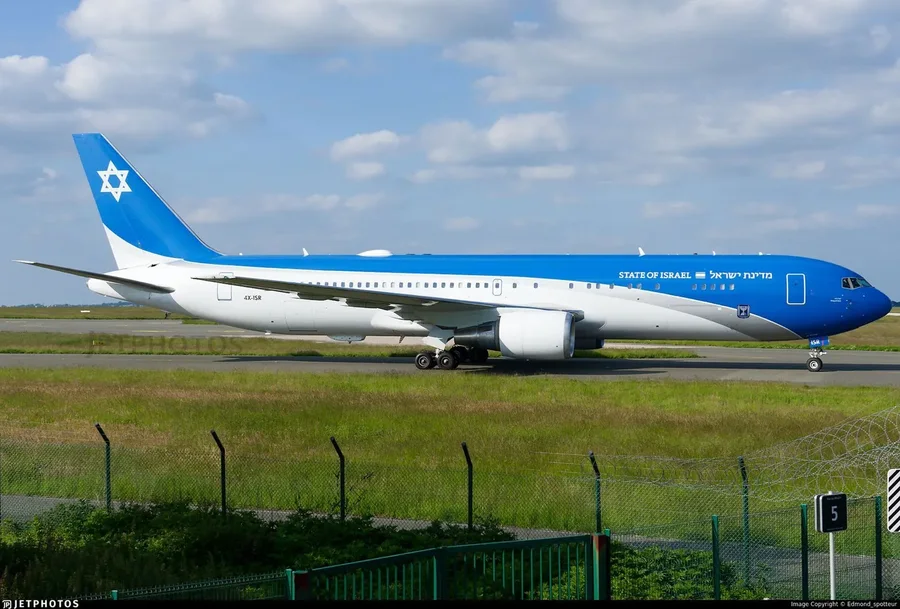
Has Israeli Prime Minister Benjamin Netanyahu fled to Greece amid military escalation with Iran? Israeli media reports that the “Wing of Zion,” Israel’s version of “Air Force One,” took off from Ben-Gurion Airport today as Israel launched an attack on Iranian nuclear facilities as part of Operation Rising Lion.
The plane, which serves Prime Minister Benjamin Netanyahu and President Isaac Herzog as their official means of transportation during international visits, departed for Athens amid fears of an Iranian retaliatory attack.
Users on Platform X tracked the flight's route, time, and final landing in Greece using publicly available data from aviation monitoring service FlightRadar24.

However, it was not clear whether Netanyahu or any members of his family were on the plane.
In response to the escalation of hostilities, Greece's highest foreign policy and defense council, KYSEA, was scheduled to convene under the leadership of Prime Minister Kyriakos Mitsotakis.
The Greek Foreign Ministry has issued a security advisory for citizens in Israel, urging them to stay close to shelters and follow the instructions of local authorities. The advisory comes as Israel closes its airspace and halts all flights to Ben Gurion Airport.
The Greek Crisis Management Unit has been activated, with emergency hotlines and support from embassies available to citizens in Tel Aviv.
-Stop in Athens raises questions
As tensions rise following Israel's overnight strikes on Iran, the unexpected presence of Netanyahu's plane in Athens has sparked intense speculation.
Observers point to several possible strategic motives behind this action, including reinforced security protocols and possible diplomatic or military planning.
One possible explanation is that this action serves as a security precaution. With the heightened risk of Iranian retaliation, Israeli authorities may be implementing enhanced security protocols to protect the senior leadership.
The positioning of Netanyahu's plane in Athens may be a calculated move to remove him from potential attack zones by missiles or drones targeting Israeli air infrastructure.
There is also speculation that Netanyahu may have traveled to Athens with his family members as a precaution. In situations involving credible threats of retaliation, it is not uncommon for national leaders to temporarily relocate key figures, especially if intelligence suggests an increased risk of targeted attacks.
While Israeli authorities have not confirmed his location, the timing and destination of the flight have raised questions about whether the move was part of a broader security strategy to protect the prime minister and his inner circle.
A third possible explanation points to diplomatic efforts in covert channels. Reports of US aircraft personnel repositioning overnight suggest preparations for a possible Iranian counterattack.
In this context, Athens may have been chosen as a neutral and safe location for high-level, in-person coordination between Prime Minister Netanyahu and US military or intelligence officials.
With no official statement confirming Prime Minister Netanyahu's whereabouts or the purpose of the flight, questions continue to mount over the true motive behind the stop in Athens.
Is this a defensive measure in anticipation of further escalation, a discreet diplomatic engagement with Western allies, or a signal of deeper strategic maneuvering?






Lini një Përgjigje